Log In Register

Flush again or more?

  • Thread starter Thread starter 204budzz
  • Start date Start date
  • Tagged users Tagged users None

Flush again or more?

204budzz 4 Replies 4,334 Views
Page 1 of 1 · Replies 1–5 of 5
1
204budzz

204budzz

Posts
2
Joined
Jul 24, 2020
Points
1
Hey everyone, first time grower here.
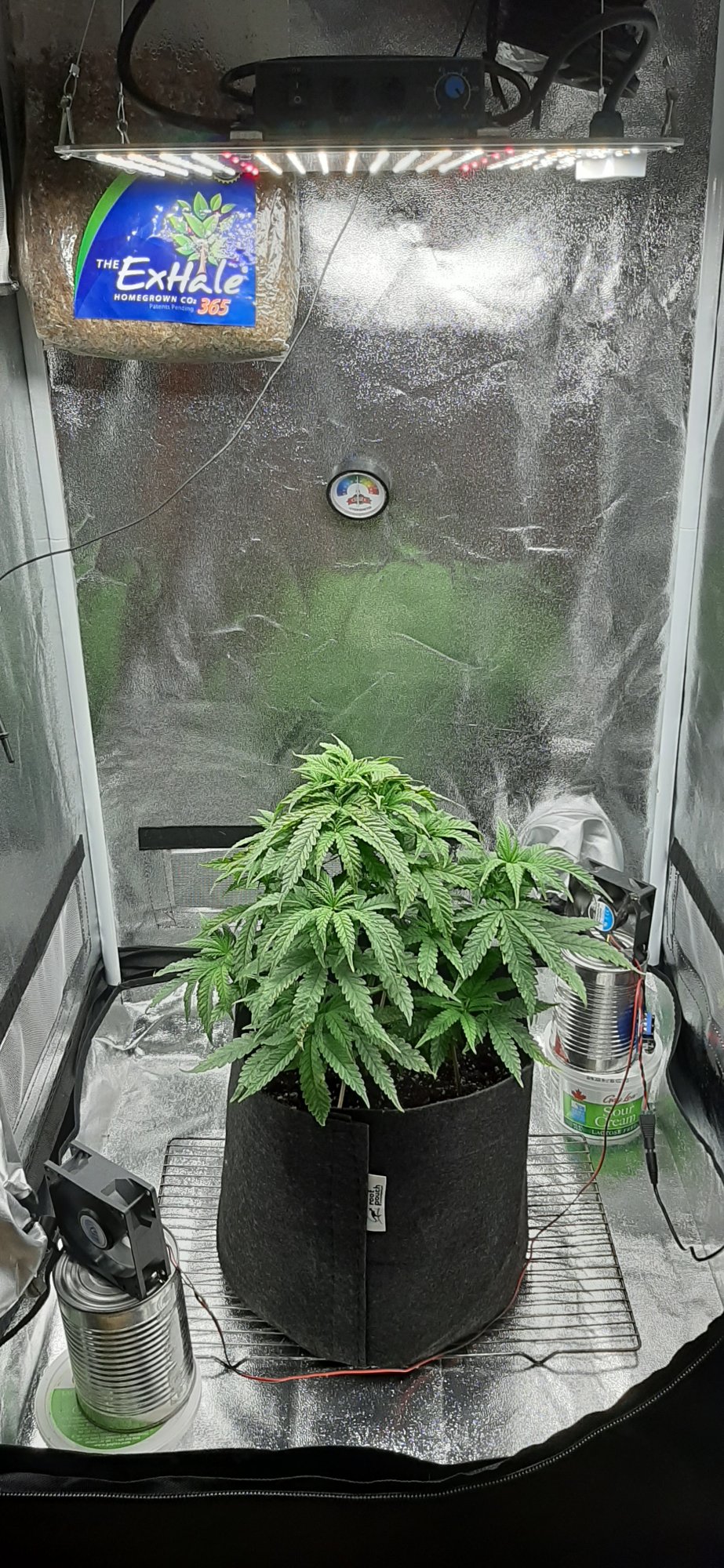
Flush again or more 4


To start off I'll share my setup:
-2' by 2' by 4' grow tent

-4" 195cfm duct fan for exhaust to outside

-Spiderfarmer SF-1000 grow light (have only had for last 2 weeks, prior was just two Amazon basic LEDs in a homemade grow box originally with all my vegetables)
Running 24/7 at 42cm/16" from the top of the plant.

-x2 80mm cpu fans for air circulation (will upgrade soon)

-5 gallon fabric pot, using soil (3gal promix herb and vegetable and topped up with Dutch Treat soil when I went to the 5gal)

- Nutrients using are;
Optimum Grow A and B, Remo VelvoKelp and Calmag.
8ml/gal each ppm reading 1040ppm with a base water of 298ppm

Temperature in the tent averages 26°c/78°f
Humidity 50-60%
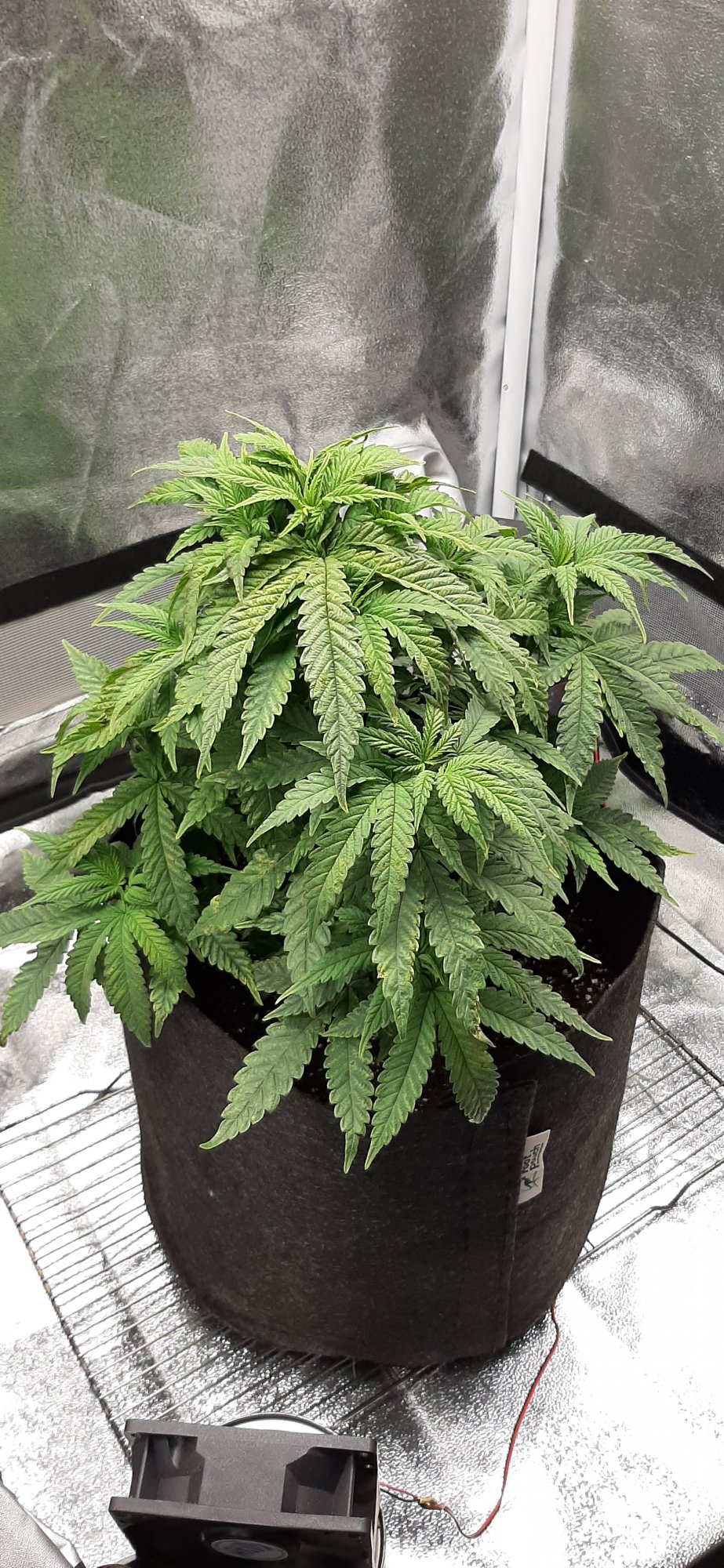
Flush again or more 6


Unknown seed strain, was told Ak47, found in some bud.
Plant is now 6 weeks old today from sprout.

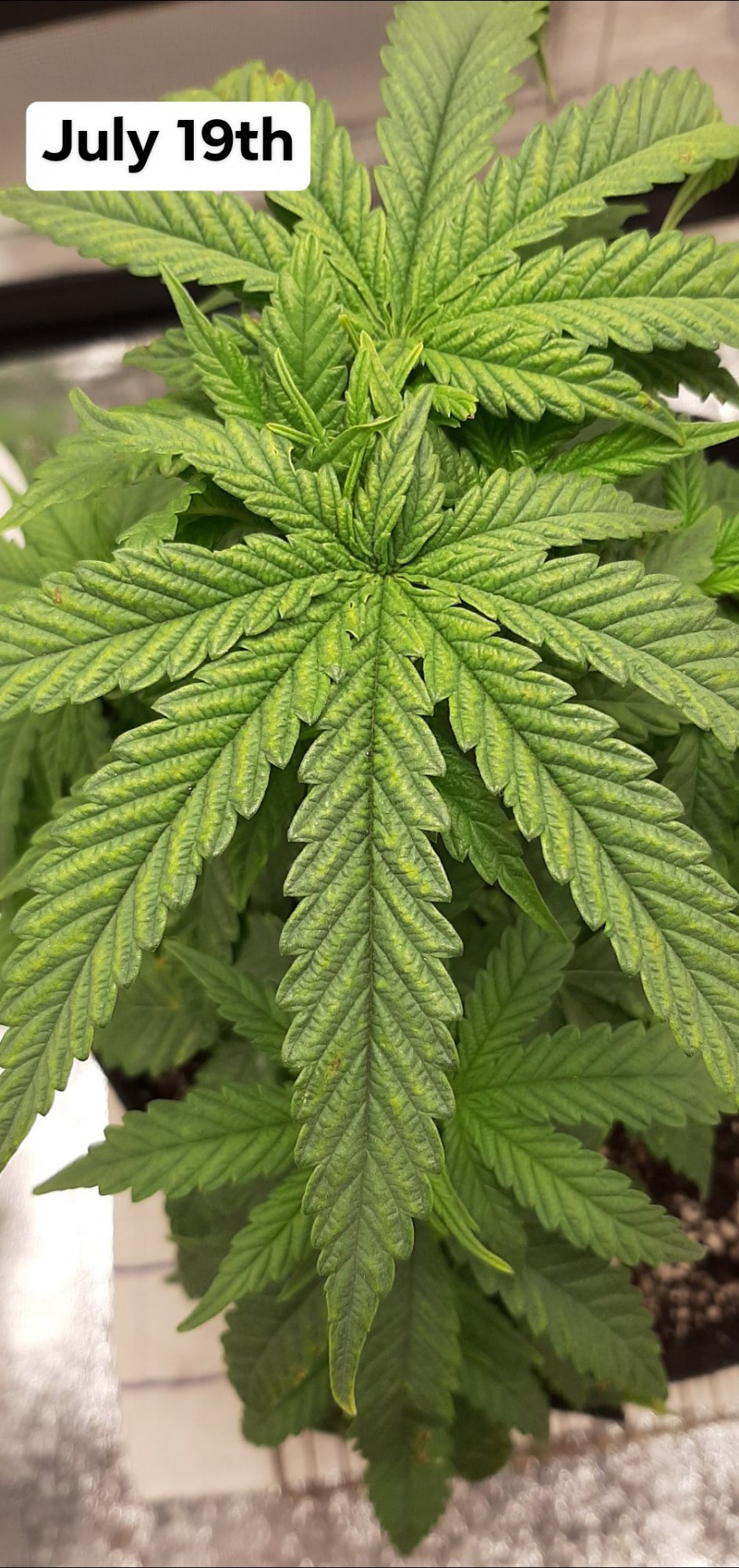
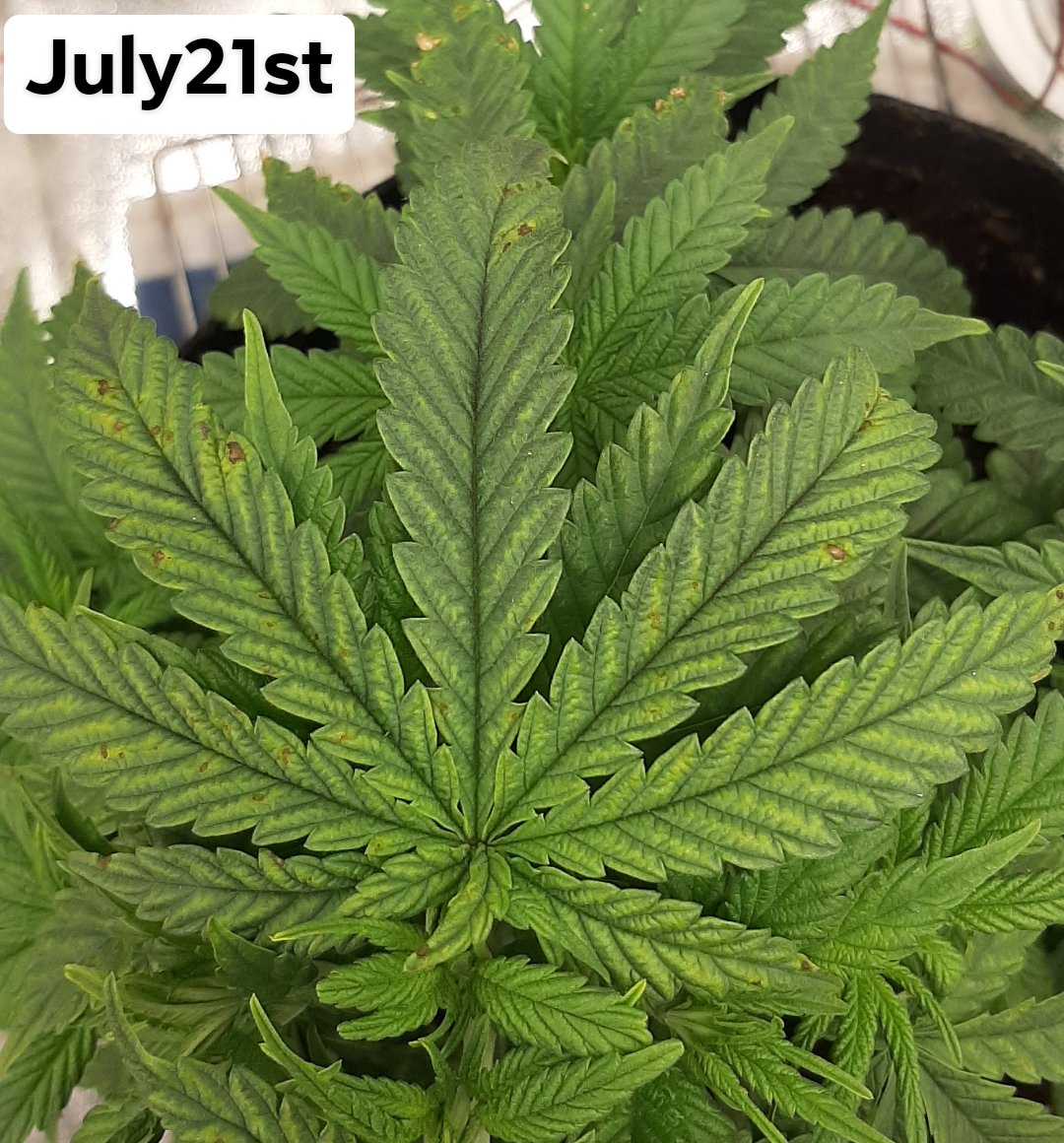
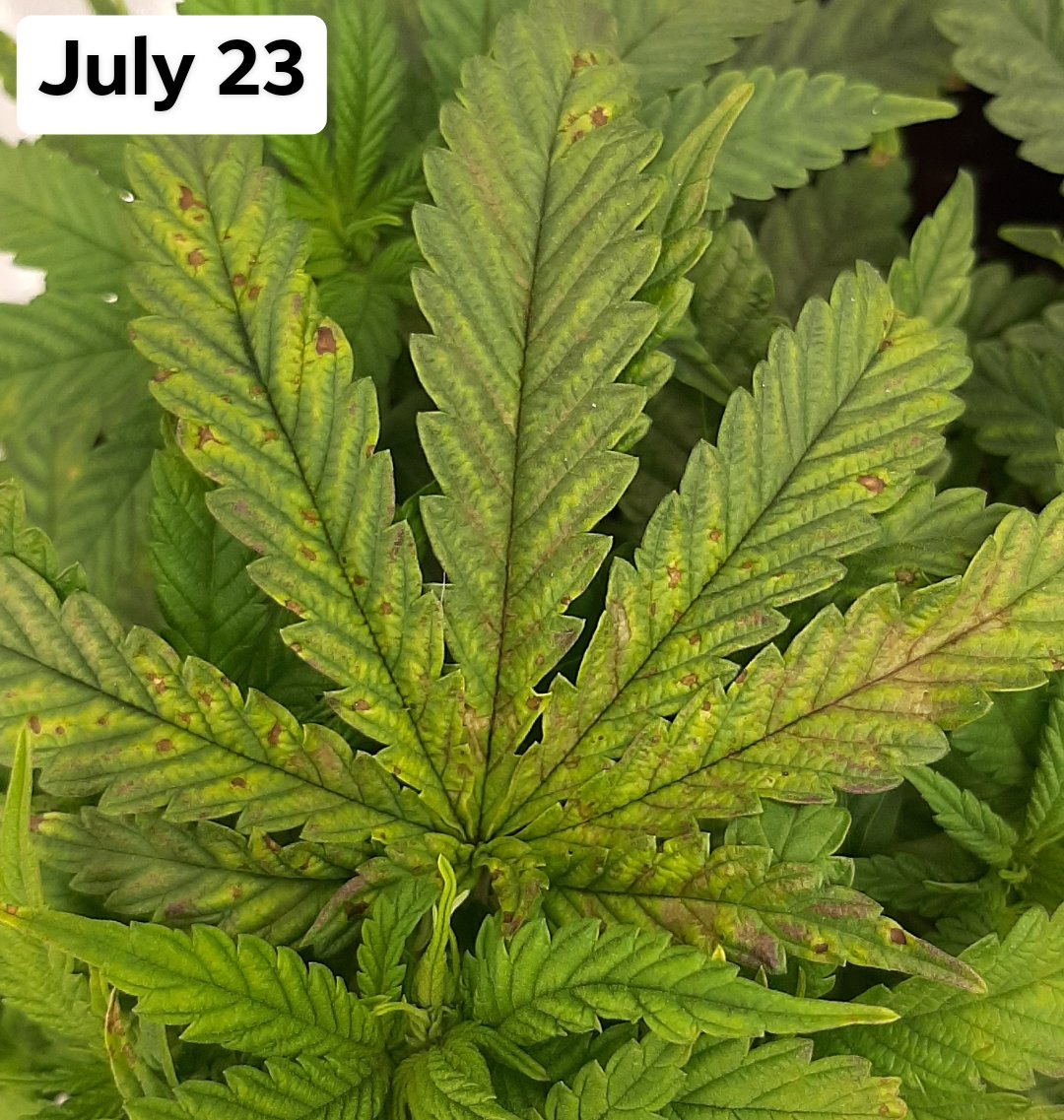
Okay so last week I was noticing some yellowing and brown spots on my leaves. Doing some more research and slowly watching things get worse I suspected a Nutrient Lock out. I let the plant dry over a few days and then flushed with 4L of water until I had run off.
Run off was 5.23pH and 1840ppm. Out of my first few samples of the run off.
Flushed another 8L of water threw the soil and let dry over night. I felt it needed more flushing so I ran 4L of water through and later that evening another 4L but of distilled water reading 12ppm, my tap water I had used before was 298ppm and I let it sit in a container with a air stone over night to remove the chlorine. (Why I also had to do over two days)
So after 20L of water flushed through the last few sample run offs I was testing I was reading 6.32ph and 930ppm. Much better than before at 5.22ph and 1870ppm.
Let the plant dry out fully over 4 days and then watered with 4L of Nutrients mixed at 50% strength to make sure it had something to help bring it back after the flush. Was measured at 6.58ph at 820ppm
After feeding 4L until I had run off I was measuring still 6.34ph and lower ppm at 820ppm
Over the last week and half I was slowly seeing issues of yellow and brown spots and it slowly got worse and up the plant. The last 2 days since feeding it looks dramatically worse than it did before.

So do I need to flush more and I didn't fully get all the salt build up off all the roots and it's still locked out? Or do I just still need to wait longer for things to get better? I'm noticing the very new growth is light green and some brown spots with burnt tips so it's getting worse and I want to know what I should do next before it gets out of control.

Thanks in advance I hope I provided enough information and happy to answer anything else you need to know for a recommendation of what I should do next. I know I probably over stressing but I hate seeing things get worse and I'm fairly certain I'm doing everything right now and was a simple over feeding at first.
Flush again or more 2

Flush again or more 3

Flush again or more
 

Attachments

  • flush-again-or-more-5.jpg
    flush-again-or-more-5.jpg
    508 KB · Views: 244

Think you might have mites my dood.. Plant looks really OFF and it starting to match the broad mites pictures..

Also a magnesium def or at least early stage. your new growth is all fucked up.


^^^ POSSIBLY..


^^ Most Ded,, FIx this tho with a FOLIAR spray 1-2 tsp per gallon of water (epsom salts) Spray the plant daily for a week or so new growth should NOT look like older leaves that are deficient.
 
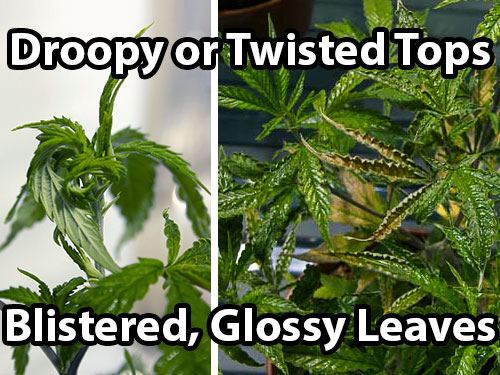
Looks a bit like this, doesn't it?

1595589246801


MynameStitch uses the picture as an example of pH problems before nutrient lockout occurs; given the details provided, it's definitely a strong contender for causality. Here's what MynameStitch has to say on the subject:

pH Problems
One of the first signs of having a slight ph problem is, your plant having part of the leaves kind of twisty, spotty with brown, yellowish, red spots within each other.
Sometimes they don’t have to have all the colors, they could just be spots that have yellowish brown, or just reddish brown and can happen anywhere on the plant. Mainly starts on big fan leaves then goes to little leaves.
When this happens you need to check your soil ph, water ph before and after adding your nutrients. One of the biggest causes is adding nutrients like earth juice; they take the ph down quite a bit. Also can happen when you add bone and blood meal to your soil, that will throw the ph off as well, so it’s smart to test the mix before putting your plants into the mix. After the spots happen you will soon see nutrients being locked out, when that happens DO NOT ADD ANYTHING TO FIX THE PROBLEM UNTILL YOU GET YOUR PH FIXED!! Reason why is, because the plant isn’t absorbing that nutrient, by adding the nutrient it is deficient in, you are causing it to have a build up in the soil therefore can cause that nutrient to become toxic to the plant, because of buildup, to much buildup of certain nutrients will lock out other nutrients. In order to fix the problem you will need to first fix the ph and then if the soil is deficient in nutrients you can add it to fix the problem. A digital PH tester is the best tester to use as they are the most accurate. If you can’t afford a digital ph meter, then your best bet is to get ph testing papers. DO NOT get soil testers, those are the cheapest junk I ever seen and do not give good readings, so you cant rely on one of those. There are a lot of good ph testers out there, one of them is hanna. That is the one I use and is the best money ever spent! Vast majority of problems with soil ph comes from the soil if it has additives like peat moss, which is HIGHLY acidic… and or the water you are using, as well as nutrient deficiencies from using the wrong ph for watering. You want to be careful when adjusting your ph, doing this over a week is the best idea, to fast will cause shock to the plant. If you can’t get a hold of a ph tester or ph test papers. If you have some dolomite lime, its always better to use it in soil rather than every time you water, imo and from others (Uncle Ben) That it really doesn’t stabilize as many people think it does, Soil pH and micronutrient availability are interrelated. Don’t Use to much lime to decrease the soil pH to a point where micronutrients can’t be unavailable to plants. The micronutrients affected by pH include iron, manganese, zinc and, not as often copper. The problems when you apply to much lime can make it harder to correct your ph than what you would have when you didn’t add as much lime. You can always add more lime, but if you add to much you can’t remove it if you put to much lime in the soil. With great soil moisture, lime will work immediately and pH will start to change over a few months. However, it can take up to a year for the real benefit of lime to work. As the soil pH rises, the time it takes for lime to react decreases due to lower levels of soil acids. If you need to change your ph when its to high, if you choose to use lime it will not help as much as you think in lowering your ph, it would need alot of lime to lower your ph to a point where it would cause a toxcicity to the plants so look else where to use something to lower your ph rather than using lime.

So here at the bottom is a list of some buffers that are good to go with when raising and lowering ph!

Here are some ph buffers when your ph is too high: Use these SOIL PH Adjustments to lower your ph: sawdust, composted leaves, wood chips, cottonseed meal, leaf mold and peat moss. Sawdust, composted leaves, woodchips and, lemon juice, PH DOWN.

Hydro PH Adjustments: PH Down (vinegar and lemon juices are good for soil, but not recommended for hydro use) Thanks goes out to syko2 for that one! (Only quality PH buffers should be used to adjust ph and be sure the buffer and nutrient work’s well together.)

Here are some that will raise the ph: use these SOIL Adjustments when your ph is to low: PH UP, dolomite lime, hardwood ash, bone meal, crushed marble, or crushed oyster shells, potassium hydroxide <— Thank you Uncle Ben!

Hydro Adjustments: PH UP, sodium bicarbonate or lime.(Only quality PH buffers should be used to adjust ph and be sure the buffer and nutrient work’s well together.)

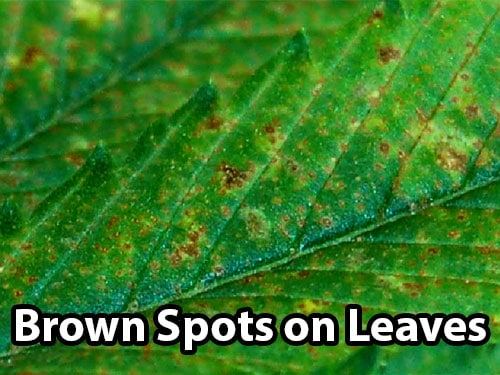
Here are a few pictures of ph spotting before nutrient lockout occurs. The last pic is shown:

1595589608572


is high ph with the twisty leaves. Note the edges are brown, this is a potassium deficiency that is caused by ph lockout.(Sometimes this gets confused with a nitrogen toxicity, so always keep your ph in check and test it often!)
 
I have a digital meter now, I suspected the strips I had were not good and I was right.

I already determined it's definitely nutrient lockout caused by over feeding and slightly low pH.

The pH of the soil is good now at 6.33ph

My question now is do I need to flush the plant more than the 20L I did last week or does it just take a bit of time and will get a little worse before it's gets better?

I was considering getting some Flawless Finish and give the plant a second flush with another 8L.

Just wanted some opinions and feed back before I do.

Looks a bit like this, doesn't it?

View attachment 1004927

MynameStitch uses the picture as an example of pH problems before nutrient lockout occurs; given the details provided, it's definitely a strong contender for causality. Here's what MynameStitch has to say on the subject:

pH Problems
One of the first signs of having a slight ph problem is, your plant having part of the leaves kind of twisty, spotty with brown, yellowish, red spots within each other.
Sometimes they don’t have to have all the colors, they could just be spots that have yellowish brown, or just reddish brown and can happen anywhere on the plant. Mainly starts on big fan leaves then goes to little leaves.
When this happens you need to check your soil ph, water ph before and after adding your nutrients. One of the biggest causes is adding nutrients like earth juice; they take the ph down quite a bit. Also can happen when you add bone and blood meal to your soil, that will throw the ph off as well, so it’s smart to test the mix before putting your plants into the mix. After the spots happen you will soon see nutrients being locked out, when that happens DO NOT ADD ANYTHING TO FIX THE PROBLEM UNTILL YOU GET YOUR PH FIXED!! Reason why is, because the plant isn’t absorbing that nutrient, by adding the nutrient it is deficient in, you are causing it to have a build up in the soil therefore can cause that nutrient to become toxic to the plant, because of buildup, to much buildup of certain nutrients will lock out other nutrients. In order to fix the problem you will need to first fix the ph and then if the soil is deficient in nutrients you can add it to fix the problem. A digital PH tester is the best tester to use as they are the most accurate. If you can’t afford a digital ph meter, then your best bet is to get ph testing papers. DO NOT get soil testers, those are the cheapest junk I ever seen and do not give good readings, so you cant rely on one of those. There are a lot of good ph testers out there, one of them is hanna. That is the one I use and is the best money ever spent! Vast majority of problems with soil ph comes from the soil if it has additives like peat moss, which is HIGHLY acidic… and or the water you are using, as well as nutrient deficiencies from using the wrong ph for watering. You want to be careful when adjusting your ph, doing this over a week is the best idea, to fast will cause shock to the plant. If you can’t get a hold of a ph tester or ph test papers. If you have some dolomite lime, its always better to use it in soil rather than every time you water, imo and from others (Uncle Ben) That it really doesn’t stabilize as many people think it does, Soil pH and micronutrient availability are interrelated. Don’t Use to much lime to decrease the soil pH to a point where micronutrients can’t be unavailable to plants. The micronutrients affected by pH include iron, manganese, zinc and, not as often copper. The problems when you apply to much lime can make it harder to correct your ph than what you would have when you didn’t add as much lime. You can always add more lime, but if you add to much you can’t remove it if you put to much lime in the soil. With great soil moisture, lime will work immediately and pH will start to change over a few months. However, it can take up to a year for the real benefit of lime to work. As the soil pH rises, the time it takes for lime to react decreases due to lower levels of soil acids. If you need to change your ph when its to high, if you choose to use lime it will not help as much as you think in lowering your ph, it would need alot of lime to lower your ph to a point where it would cause a toxcicity to the plants so look else where to use something to lower your ph rather than using lime.

So here at the bottom is a list of some buffers that are good to go with when raising and lowering ph!

Here are some ph buffers when your ph is too high: Use these SOIL PH Adjustments to lower your ph: sawdust, composted leaves, wood chips, cottonseed meal, leaf mold and peat moss. Sawdust, composted leaves, woodchips and, lemon juice, PH DOWN.

Hydro PH Adjustments: PH Down (vinegar and lemon juices are good for soil, but not recommended for hydro use) Thanks goes out to syko2 for that one! (Only quality PH buffers should be used to adjust ph and be sure the buffer and nutrient work’s well together.)

Here are some that will raise the ph: use these SOIL Adjustments when your ph is to low: PH UP, dolomite lime, hardwood ash, bone meal, crushed marble, or crushed oyster shells, potassium hydroxide <— Thank you Uncle Ben!

Hydro Adjustments: PH UP, sodium bicarbonate or lime.(Only quality PH buffers should be used to adjust ph and be sure the buffer and nutrient work’s well together.)

Here are a few pictures of ph spotting before nutrient lockout occurs. The last pic is shown:

View attachment 1004929

is high ph with the twisty leaves. Note the edges are brown, this is a potassium deficiency that is caused by ph lockout.(Sometimes this gets confused with a nitrogen toxicity, so always keep your ph in check and test it often!)
 
I recommend you to grow 4 plants there instead of 1 and dont use CO2 if u dont have all parameters perfect (temperature, humidity, nutrient lacks...)
 
Page 1 of 1 · Replies 1–5 of 5
1
Back
Top Bottom