

Frankster
Supporter
Never trust a doctor who's plants have died.
- Posts
- 5,188
- Reactions
- 16,483
- Joined
- May 26, 2020
- Points
- 313
Interesting subject; that has implications for outdoor growers; especially in semi arid regions.


example; They must be competing with crops for water, the logic went.

Guiera senegalensis is a semi-evergreen to evergreen shrub, usually growing 1 - 3 metres tall, with occasional specimens up to 5 metres. The whole plant is covered with small black glands...
The leaves have a high reputation in Africa as a 'cure-all'; they are commonly harvested from the wild and sold in markets. A tea made from the leaves is tasty as well as health-promoting, and has potential for commercial production. In addition, the plant also supplies a range of materials for local use and can be used in soil restoration projects.
When farmers turn to the sandy plains to plant their crops during the rainy season, the shrubs – which have been thrive in these regions for thousands of years – create "fertility islands" by locking in topsoil, cooling the surroundings and bringing up water to the surface from deep underground beyond other crops' natural reach. Their leaves and branches, if pruned, shredded and spread on the ground, provide fertilizing biomass. Perhaps most important, the plants are indigenous to West Africa, and, when they're trimmed, small branches don't block the basic plows and weeding tools used by small-holder farmers.

example; They must be competing with crops for water, the logic went.
Your enemy turns out to be your friend The shrubs are not enemies
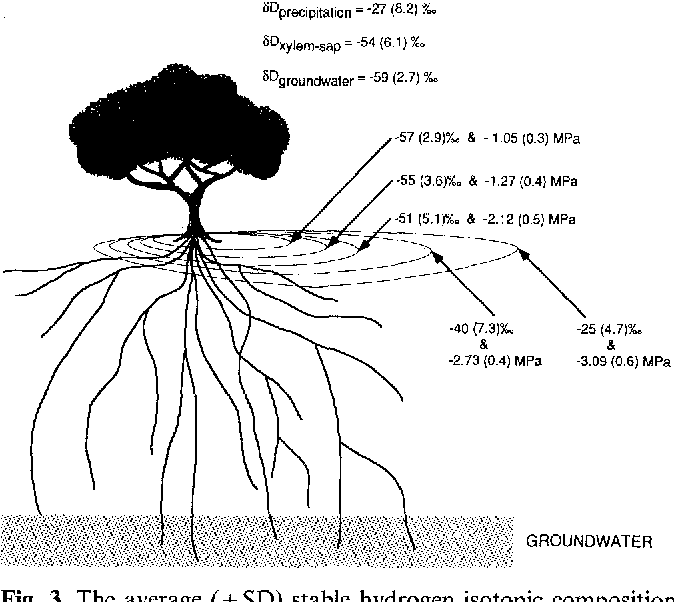
– in fact, they'll draw up more water for your crops, through a process called hydraulic lift, also known as hydraulic redistribution. At night, when photosynthesis stops, excess water drawn up to the surface from their deep roots leaks out, nourishing the soil near the surface.Guiera senegalensis is a semi-evergreen to evergreen shrub, usually growing 1 - 3 metres tall, with occasional specimens up to 5 metres. The whole plant is covered with small black glands...
The leaves have a high reputation in Africa as a 'cure-all'; they are commonly harvested from the wild and sold in markets. A tea made from the leaves is tasty as well as health-promoting, and has potential for commercial production. In addition, the plant also supplies a range of materials for local use and can be used in soil restoration projects.
When farmers turn to the sandy plains to plant their crops during the rainy season, the shrubs – which have been thrive in these regions for thousands of years – create "fertility islands" by locking in topsoil, cooling the surroundings and bringing up water to the surface from deep underground beyond other crops' natural reach. Their leaves and branches, if pruned, shredded and spread on the ground, provide fertilizing biomass. Perhaps most important, the plants are indigenous to West Africa, and, when they're trimmed, small branches don't block the basic plows and weeding tools used by small-holder farmers.