How to Increase “DLI” for Bigger Yields (Daily Light Integral Tips)
by Nebula Haze
What is “DLI” (daily light integral) and how can you increase it for bigger yields?
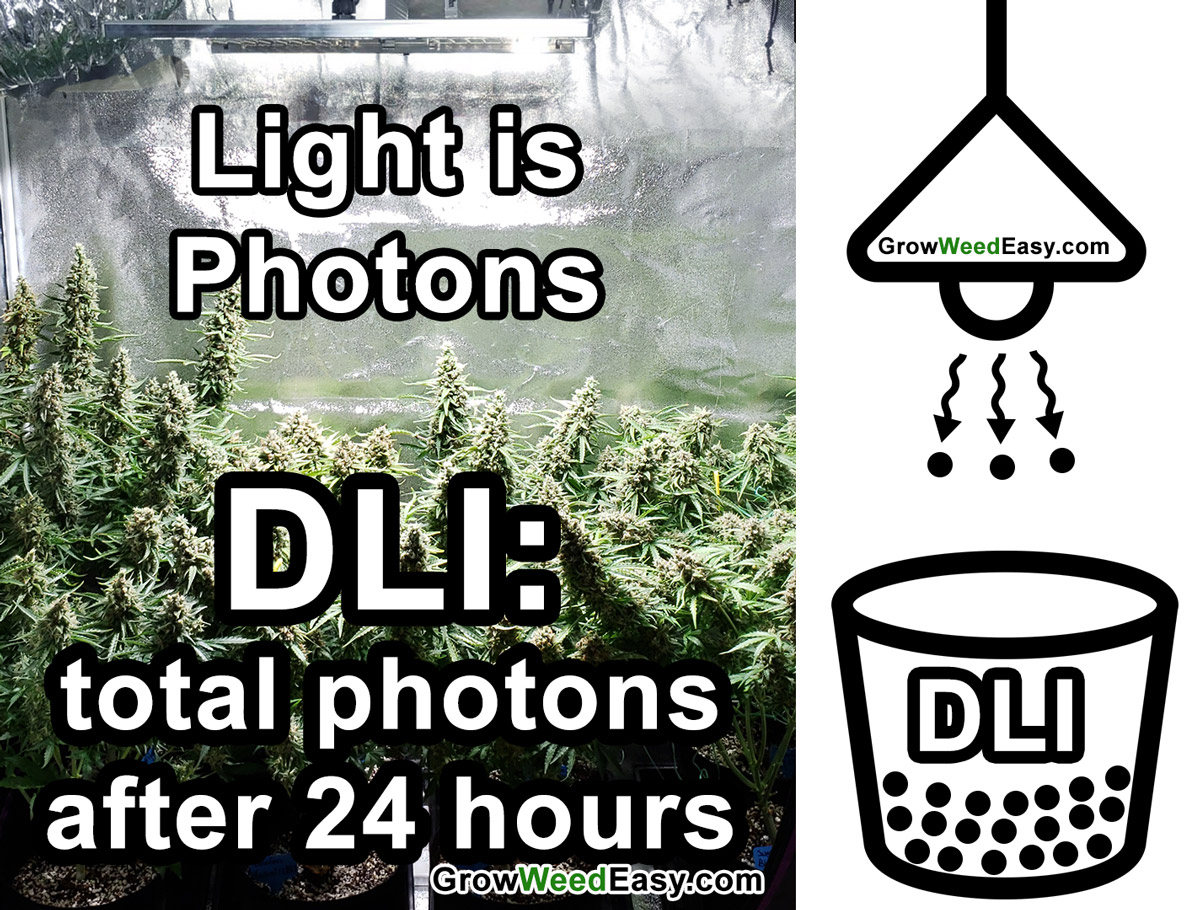
Definition: DLI stands for daily light integral. It describes how much light in the PAR (Photosynthetically Active Radiation) range is delivered within a 24-hour period to an area. “Daily” because it’s how much in a 24-hour period, “Light” because it measures photons, and “Integral” because scientists need to use an integral (calculus term) to calculate the DLI.
DLI is a measure of the total number of photons in the PAR range received in a day for a specific space. Imagine a bucket that catches photons. DLI measures how full the bucket is after 24 hours.
 What does that actually mean?
 Light is made of many photons, but scientists have found plants can only use photons in a certain range on the spectrum, which they’ve named the PAR range. That’s why DLI is such a useful measurement for growing cannabis. If you imagine photons raining down on your plant like rain, DLI is like if you took a container and captured only PAR photons for a day, then counted the number of photons in the bucket. Essentially, it tells you how many usable photons land on your plant in a day.
Why is DLI important to you as a marijuana grower?
Because increasing your DLI (properly) is an effective way to increase yields. A higher DLI increases total photosynthesis and drives cannabis plants to produce big buds in the flowering stage. To a point, of course, too much light can harm yields.
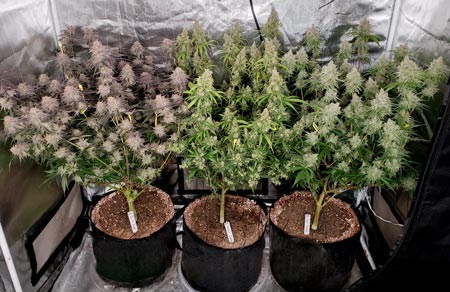
The right DLI results in faster growth and bigger buds. These cannabis plants were grown under a
Mars Hydro TSL 2000 LED (here’s the
full grow journal) and given excellent DLI to produce over 10 ounces at harvest.
 What is the optimal DLI for cannabis plants?
Unit of measurement: DLI is measured by scientists in
moles of light per square meter per day or mol·m^2·d^1 (moles per day). However, I’ve noticed most growers will just say a number and DLI, like “40 DLI” instead of saying “40 mol·m^2·d^1”. Much simpler so I will be doing that for the rest of the article.
Healthy mature cannabis plants typically thrive in
35-45 DLI
Why a range and not a number? The exact answer is hard to pin down because…
- Spectrum, light intensity, and type of grow light affect the optimal DLI for cannabis plants (for example, good cannabis LEDs can deliver more DLI and produce overall greater photosynthesis without harming your plants)
- Optimal DLI changes throughout a plant’s life because mature plants can handle higher DLI
- Plants can utilize a higher DLI if it’s spread over more hours
- Plants can handle higher or lower DLI at different temperature and humidity ranges
- Health matters – happy plants thrive with high DLI, but sick plants get sicker under high DLI
- Each strain is different. Genetics from the equator can often handle higher DLI than genetics from cold climates.
How to understand DLI in your head: Light intensity x hours of light per day
How to officially calculate DLI: 3.6 · 10^-3 · PPFD (umol/(m^2·s) · light-hours/day (
search google for a free DLI calculator)

It seems a little confusing with all the numbers and calculus equations, but don’t worry, keep reading and I’ll teach you how to give your cannabis the optimal DLI for
your grow light and environment so you get the fastest growth and biggest yields without making plants sick or sacrificing bud quality.
Most important point to remember about DLI: Giving plants optimal DLI helps them grow faster without negative consequences. Give a lot of light, but not too much!
Keep reading and learn how to give optimal DLI without any calculations whatsoever
 How to Increase DLI
DLI is how much light a plant gets on a daily basis, but only counting the light that a plant can use for photosynthesis. To increase DLI you need to either…
- More intense light
- Stronger grow light
- Move light closer
- More hours of light a day
Now you know that DLI describes how much light your plant receives each day, but that’s not the end of the story. There’s more to DLI than just making sure your plant gets the right number of photons each day. The intensity of the light (number of photons hitting the plant at a time) and spectrum (wavelength of the photons) change the DLI your plant can handle each day. On top of that, the optimal DLI changes depending on the specific light source, growing environment, and overall health of the plant. A great environment and happy plants allow you to increase DLI (either by increasing light intensity or increasing the number of hours of light each day) and the cannabis plant will grow more because you’ve increased the total amount of photosynthesis each day. But increasing the DLI above the max won’t make plants grow faster and may even harm them. A plant receiving more intense light can typically handle fewer hours of light a day because their DLI gets maxed out faster.
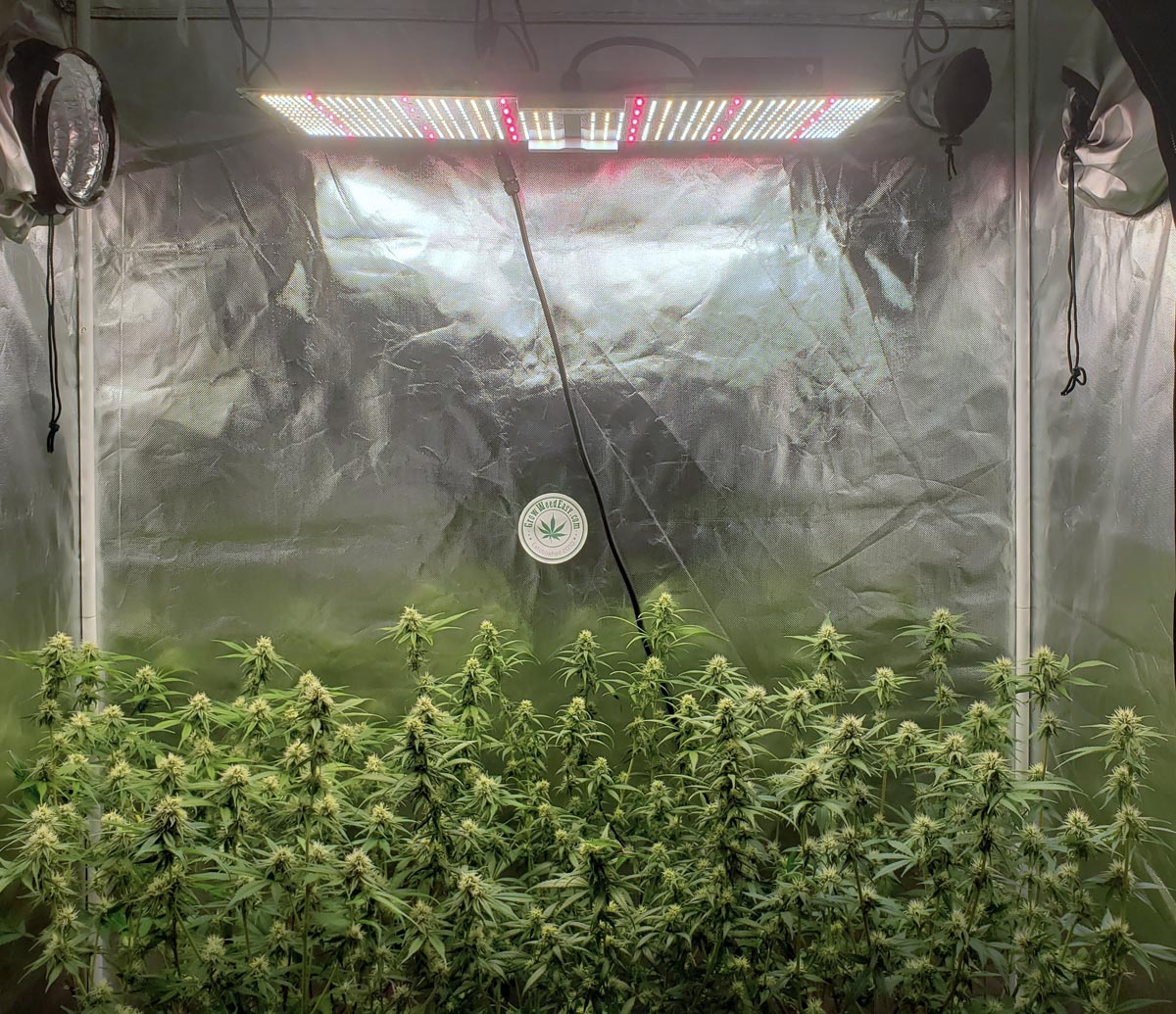
Optimizing DLI helps you get the most from your grow lights, but having good equipment matters, too. This
Spider Farmer SF-2000 produced over 10 oz of weed with just 200W of electricity (
check out the full grow journal).

Optimal Cannabis DLI in the Vegetative Stage
In the vegetative stage, I personally think looking at your plants is the best way to determine how to give light to your plants. The cannabis plant’s light needs differ greatly from week to week, especially over the first few weeks after germination.
Remember, as far as you’re concerned, DLI =
light intensity x hours of light per day. So what you focus on as a grower regarding DLI is only the light intensity and the hours of light a day.
Best light intensity in the vegetative stage
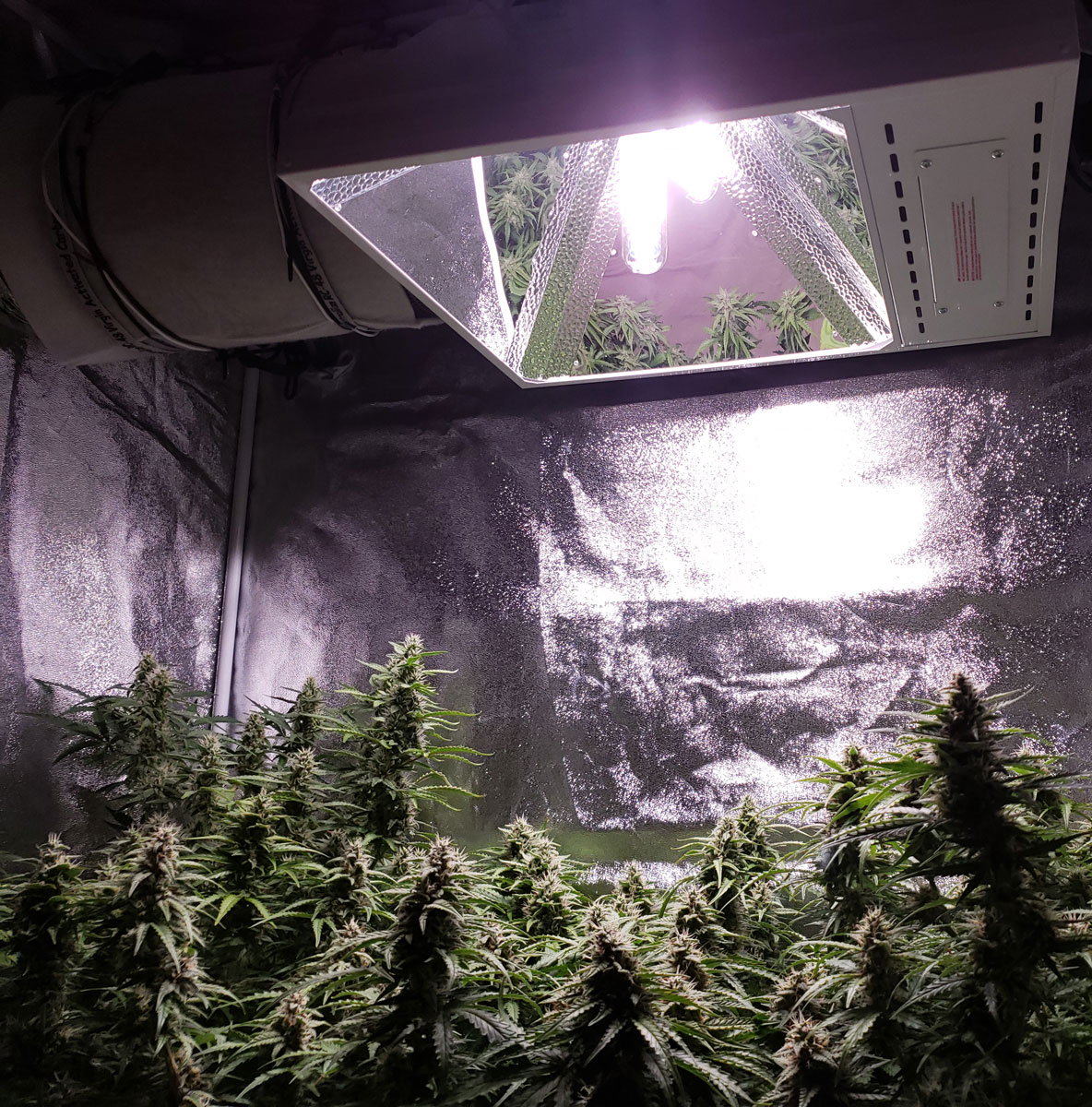
- Most grow lights come with a recommended vegetative stage distance. That’s the best place to start because the distance is suggested by the people who actually made the light. But if you’re not sure, cannabis grow lights in the 200-400 watt range typically have an optimal light distance somewhere in the 18-24″ range (except 250W HPS which is 12-13″ and 400W HPS is 13-15″ away)
- If you are noticing light stress, you should move grow lights further away.
- If plants look green and healthy without any signs of stress, you may be able to move the light closer.
- Seedlings can’t handle much light yet, but mature healthy cannabis plants in the vegetative stage can handle extremely high amounts of DLI (sometimes as much as 50 DLI)
I keep this
ES300 LED 2-3 feet away from seedlings and then about 24″ away once plants are 3-4 weeks old.
Best number of hours of light per day
18-24 hours of light per day recommended in the vegetative stage.
- 18 hours (pros and cons)
- plants can handle more intense light since fewer hours of light lowers your overall DLI
- this schedule can help control heat by setting 6-hour dark period to hottest part of the day
- plants less sensitive to problems since for any light intensity there is a lower overall DLI
- less likely to see nutrient deficiencies
- plants seem to gain hardiness benefits from having a dark period
- 24 hours (pros and cons)
- healthy cannabis plants grow faster under 24 hours of light due to the higher DLI
- plants are more sensitive to problems and nutrient deficiencies
- more likely to see light burn or yellow leaf tips on plants
- great choice in a cold grow room since grow lights never turn off and can keep plants warm 24 hours/day
Anything between 18-24 hours is great in the vegetative stage (or
autoflowering strains from seed to harvest). I recommend choosing on the lower end if you’re dealing with heat, plants seem sensitive, or you just want to reduce the overall chance of running into growing problems. I recommend 24 hours of light a day if you want to push your plants to max growth. 24 hours is also a great choice if you have a cold grow space and want to prevent the plants from getting cold when the light turns off.
DLI trick: If you want the same ease-of-growth as 18-hour days but prefer to keep lights on 24 hours a day for temperature reasons, move your grow lights a little further to reduce the overall DLI and you’ll get the best of both worlds.
Optimal Cannabis DLI in the Flowering Stage
In the cannabis flowering stage, your plants start growing buds. For photoperiod plants, this is initiated by reducing the number of light hours each day and giving plants a 12/12 light schedule with a 12 hour dark period daily. For
autoflowering plants, you don’t change the light schedule. Autoflowering plants will naturally start making buds around 4 weeks from germination so you give them 18-24 hours of light a day from seed to harvest.
Keep reading to learn how to maximize DLI in the flowering stage for the best growth, bud quality, and marijuana yields
How should you increase DLI in the cannabis flowering stage?
Either by giving plants more intense light, or giving them more hours of light a day. Just remember that you don’t have a whole lot of wiggle room when it comes to light hours for photoperiod plants in the flowering stage, so the main thing you can change to affect DLI is the light distance.
Best light intensity in the flowering stage
- Most grow lights come with a recommended flowering stage distance, which is typically closer than what was recommended in the vegetative stage. You can understand why now since the reduced hours of the flowering stage lowers the overall DLI (so your plants can handle more intense light)
- Autoflowering plants typically need a somewhat further light distance than photoperiod plants in the flowering stage because the extra hours of light a day increases the DLI. With autoflowering plants you may end up giving about the same intensity as during the vegetative stage.
- If you are noticing light stress, move grow lights further away.
- If plants look green and healthy without any signs of stress, you may be able to move the light closer, but watch plants closely and make any changes slowly over several days. I personally feel it’s better to keep lights a little too far than too close because bud quality suffers under too-intense light while yields usually are still good even if the light is a bit further away. But to maximize yields you want to keep lights as close as possible without harming plants.
This
ES300 LED performed excellently about 24″ away in the flowering stage (
check out the full grow journal)
Best number of hours of light per day in the flowering stage
Most growers know all about increasing light levels, but what about hours of light a day in the flowering stage?
Photoperiod strains: 12 hours light per day (average)
This is where cannabis strain can make a difference. Some strains can readily flower in up to 14 hours a day, but some will stay vegetating on that schedule. Nearly all strains will flower normally with a 12/12 light schedule so that is typically what’s recommended for indoor growers to reduce the chance of flowering problems that can result from long days like
revegging or
hermies.
Autoflowering strains: 18-24 hours of light per day (no change from the vegetative stage)
Since an autoflowering strain is able to flower under 18-24 hours of light a day, it’s hard to beat how fast autoflowering buds grow. The increased DLI from those extra hours allows some autoflowering strains to yield as well as photoperiod strains in less time.
How to calculate DLI for the flowering stage
- Determine light intensity (find the PPFD measurement for your grow light at its current distance from plants)
- Many LED grow lights list PPFD measurements for a specific distance in the product specifications
- Measure light intensity where your plants are with a lux meter and convert to PPFD (not totally accurate, but can give a good estimate, check google for lux to PPFD calculators)
- A professional PAR light meter like the Apogee MQ-500 ($600) is better at measuring how much light is in the PAR range. Lux meters were made for human eyes, PAR meters were made for plants. PAR light meters will give you the most accurate measurement to calculate DLI but they cost a ton of money. People were always telling me that you need a PAR meter so I actually bought an Apogee MQ-500 and compared the readings to various lux meters. In the end, they all give you an excellent idea of how much light is getting to any particular part of the tent.
- Determine light hours per day
- Take those two numbers and plug into a DLI calculator (many on Google) – or calculate yourself with DLI = 3.6 · 10^-3 · PPFD (umol/(m^2·s) · light-hours/day
Optimal DLI in Flowering Stage = ~40. But always pay more attention to how your plants look than this number. If you see
light stress, move the grow light further away (at least for a few days) even if the DLI number is exactly 40. If plants are growing green and healthy without any sign of light stress, you may be able to move lights closer and increase the DLI over 40. Since plants need a different DLI throughout the flowering stage, and each strain is different, pay attention to what your plants are telling you. And remember, the healthier the plants and better the
environment, the more DLI they can handle and still thrive.
_____________________
So in theory, if you give a plant 4 day/night cycles in 3 days, as long as intensity is there, you'll get a different and possibly better result. Again, as long as intensity is there.
I followed the best practices that were law until the real studies and actual science brought on by quasi legalization are putting the "rules" in the dumpster.


 Also I lost power for a week and yesterday was the first day back with light.


 with solar panels for days