

7munkee
- Posts
- 974
- Reactions
- 2,175
- Joined
- Nov 20, 2021
- Points
- 243
Instead of making a new thread for each of my grows I have decided to put them all in one. I am an organic grower for the most part, although occasionaly I will use non organic imputs. I prefer SIPs (sub irrigated planters), namely Earthboxes and I have 4. Two stay inside for my medicinals and two stay outside for veggies and herbs. These Earthboxes each hold 12 gallons of soil, although you can mound another 3 gallons of soil on top, and the attached reservoir holds 3 gallons of water and can be filled VIA a tube. They also have a plastic 'shower hat' with an elastic band that acts as a mulch to keep moisture in.

SOIL RECIPE
I use a blend of Subzero's living soil recipe and Clackamus Coot's recipe with a couple extra inputs I have found very useful. Most inputs are sourced locally from a Mennonite-run feed & seed shop—quality ingredients and great folks.
Base soil:
Equal parts peat, worm castings/compost, and aeration. I like to use castings mainly, with a small portion of compost ( I make my own) The castings are slow release NPK 1-1-1 and contain lots of microbial life plus they have chitinase, an enzyme that breaks down chitin, which is in the exoskeletons of insects like fungus gnats. For aeration I use lava rock, pumice, or perlite.
AMENDMENTS & MINERALS
To enrich the base mix, I use a tried-and-true combo that nourishes plants and feeds the soil:
Kelp/Alfalfa meal – 1/2 cup per cubic foot for micronutrients and root vigor
Neem seed mael – 1/2 cup percubic foot for NPK and pest deterrent
Crustacean meal – 1/2 cip per cubic foot adds chitin to stimulate chitinase activity
Langbeinite – 1/4 cup per cubic foot for potassium and magnesium, plus sulphur for a terpene kicker
Basalt/Granite rock dust – 2 cups per cubic foot for remineralization
Gypsum – 1 cup per cubic foot for sulfur and calcium without affecting pH
Oyster shell flour-1 cup per cubic foot. I buy the oyster shell chunks for chickin feed and grind it up in a coffee grinder.
Biochar – about 5% by total soil volume pre-inoculated with worm casting/ compost tea/Recharge
Sprouted (malted) barly-for aminos and enzymes NPK
Sprouted bean seeds/corn seeds - 1/2 cup per cubic foot (only for reamend) NPK
Mustard seed-ground up (so it doesnt start growing) sprinkled on top. Acts as a bio fumigator to kill baddies.
Red Wriggler worms. Yes you will have worms in your house, but I have never found one outside my soil. Worms aerate the soil and help break down the amendments.
With this mix, the soil is water only. Possibley for several grows. You can use any autowatering system with this or hand water. If hand watering, I go by 5-10% of total volume. The minimum size container you want to use is 12 gallons But with a 12 gallon pot you will need to reamend every grow.
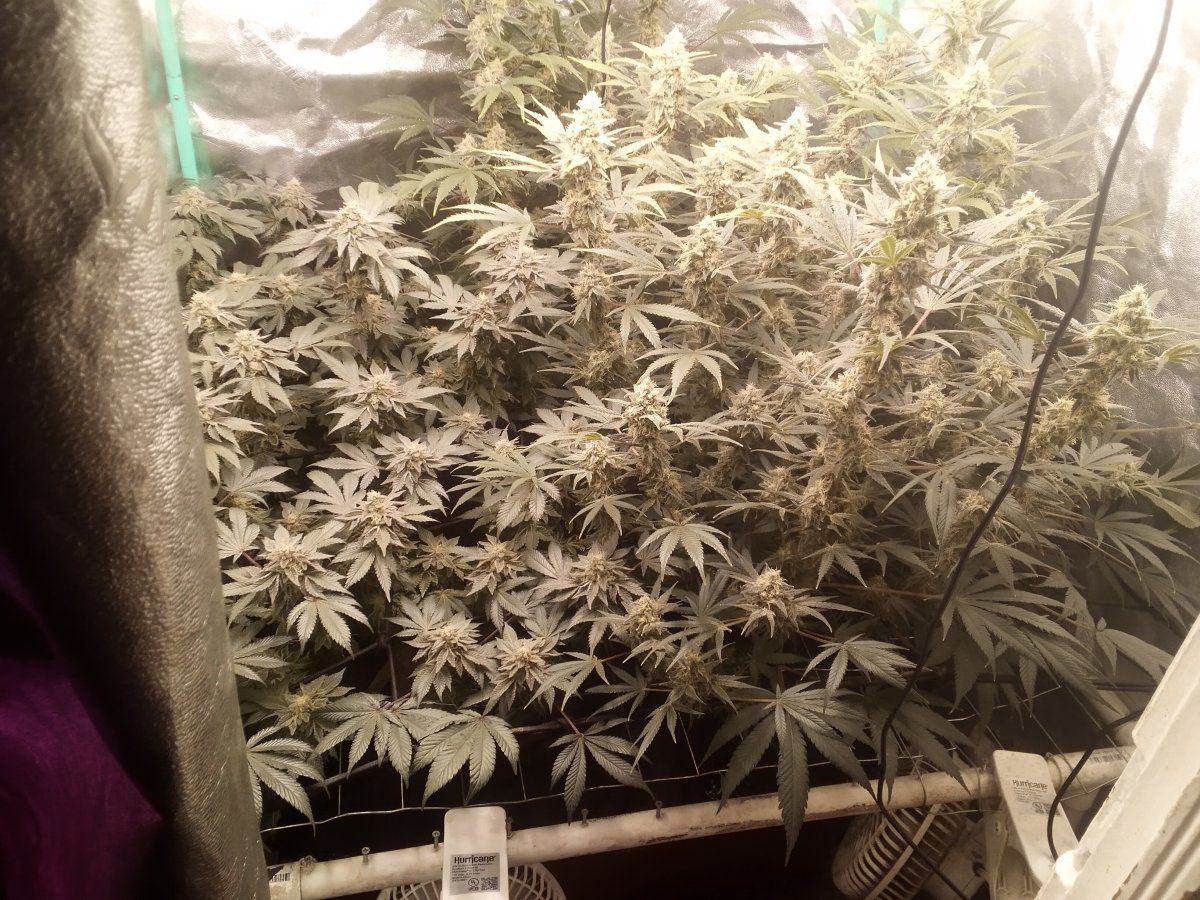
This is my last grow that I completed 2 months ago. This was the 7th grow cycle in this soil.
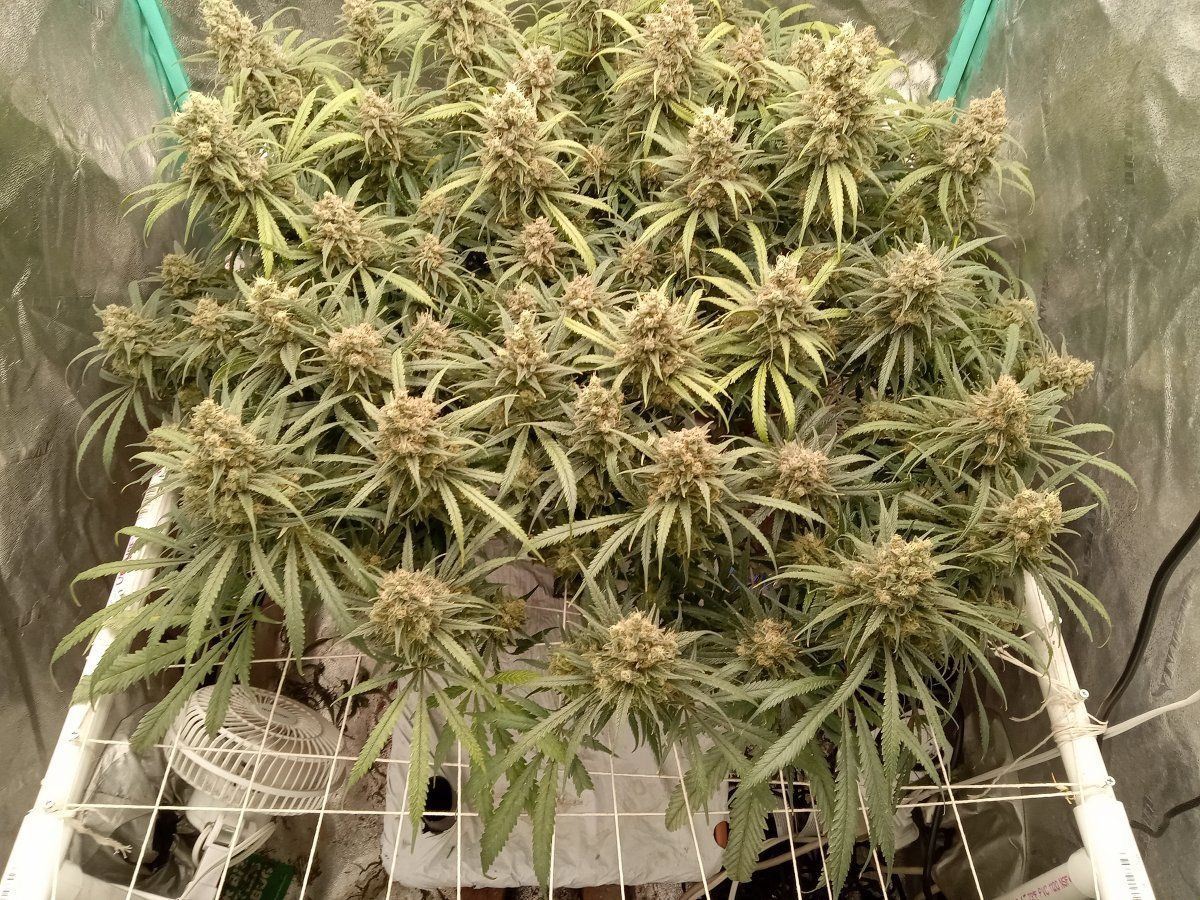
This my very first grow in this mix 3 years ago.
SOIL RECIPE
I use a blend of Subzero's living soil recipe and Clackamus Coot's recipe with a couple extra inputs I have found very useful. Most inputs are sourced locally from a Mennonite-run feed & seed shop—quality ingredients and great folks.
Base soil:
Equal parts peat, worm castings/compost, and aeration. I like to use castings mainly, with a small portion of compost ( I make my own) The castings are slow release NPK 1-1-1 and contain lots of microbial life plus they have chitinase, an enzyme that breaks down chitin, which is in the exoskeletons of insects like fungus gnats. For aeration I use lava rock, pumice, or perlite.
AMENDMENTS & MINERALS
To enrich the base mix, I use a tried-and-true combo that nourishes plants and feeds the soil:
Kelp/Alfalfa meal – 1/2 cup per cubic foot for micronutrients and root vigor
Neem seed mael – 1/2 cup percubic foot for NPK and pest deterrent
Crustacean meal – 1/2 cip per cubic foot adds chitin to stimulate chitinase activity
Langbeinite – 1/4 cup per cubic foot for potassium and magnesium, plus sulphur for a terpene kicker
Basalt/Granite rock dust – 2 cups per cubic foot for remineralization
Gypsum – 1 cup per cubic foot for sulfur and calcium without affecting pH
Oyster shell flour-1 cup per cubic foot. I buy the oyster shell chunks for chickin feed and grind it up in a coffee grinder.
Biochar – about 5% by total soil volume pre-inoculated with worm casting/ compost tea/Recharge
Sprouted (malted) barly-for aminos and enzymes NPK
Sprouted bean seeds/corn seeds - 1/2 cup per cubic foot (only for reamend) NPK
Mustard seed-ground up (so it doesnt start growing) sprinkled on top. Acts as a bio fumigator to kill baddies.
Red Wriggler worms. Yes you will have worms in your house, but I have never found one outside my soil. Worms aerate the soil and help break down the amendments.
With this mix, the soil is water only. Possibley for several grows. You can use any autowatering system with this or hand water. If hand watering, I go by 5-10% of total volume. The minimum size container you want to use is 12 gallons But with a 12 gallon pot you will need to reamend every grow.
This is my last grow that I completed 2 months ago. This was the 7th grow cycle in this soil.
This my very first grow in this mix 3 years ago.

