Log In Register

Under Canopy Lighting — Worth It or Just Extra Cost?

  • Thread starter Thread starter Steve.Shi
  • Start date Start date
  • Tagged users Tagged users None

Under Canopy Lighting — Worth It or Just Extra Cost?

Steve.Shi 6 Replies 1,118 Views
Page 1 of 1 · Replies 1–7 of 7
1
S

Steve.Shi

Posts
2
Reactions
4
Joined
Mar 13, 2026
Points
3
Lately I keep seeing more people running under canopy lighting

so I gotta ask — is it actually worth it?

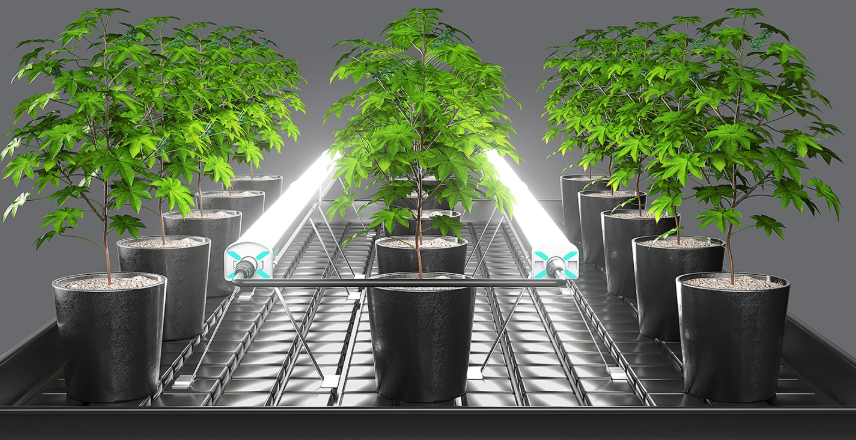
From what I understand, it’s just adding lights under the canopy to hit those lower buds that usually turn into larf anyway. Makes sense, since most grows have weak lowers.

Some growers say it helps:

  • bulk up the bottom buds
  • make the plant more even
  • squeeze out a bit more yield
But I’ve also heard if your room is already dialed, the difference isn’t that big.

Seems like it works best in:
👉 dense canopies / scrog / taller plants blocking light

And most people only run it late flower, not the whole cycle.
So I’m curious —
👉 anyone here actually running under canopy lights?
👉 did it really improve your lowers or just add power cost?

Would you run it again or nah?

Under canopy lighting  worth it or just extra cost
 
It's more light plainly. It will improve your yield but it will also affect your electric bill and it will raise the temperature in your tent or grow space and your plant will be hungrier. You might need CO2 at this point if you're not already running it.

I run mine all through flower and it is 1/3 the intensity of the main light.
 
I tried side lighting one time. For a while I had a single plant under 235 watts of lights.
Yes it had an effect no I would not do it again.
IMG 20250824 164258334 HDR

With a 12 inch top the lowers would not have delivered a good yield.
Best to train stuff like that out but it hit the " great big cola " thing that me as a new grower wanted to do.
 
UCL is an interesting addition to growing cannabis and can be a valuable addition to the toolbox. Like everything else in the grow environment, "it depends".

The best insight into UCL that I've found is in this video by Dr. Josh Hawley who's the head scientist at Fluence.

Hawley's part of the video is about 30 mins and it's well worth the time to understand what Fluence has found. The concept is based on the fact that adding more light to the canopy when the canopy is at very high light levels (1kµmol± in ambient) is well into the area of diminishing returns in terms of efficiency. That's because the leaves the canopy are saturated but there could be value in adding light under the canopy. Fluency did the research and has found that there can be a 25% increase in yield.

One source of increase is that the net photosynthetic output of the plant is increased so there's simply more biomass being created. We also know that flowers receive the photosynthate that's produced close to that flower. That's one of the reasons why flowers that don't receive light don't develop to the size of the flowers that are at the canopy. The idea of removing leaves from the canopy to expose lower bud sites does tend to result in lower synthetic output by the plant so the next logic step is to get light to the areas of the plant in some other manner. And that means putting the light under the plant. This results in an increase in yield from the plant. What he documents is that buds under the canopy can move up one grade so that "B" buds can become "A" buds and "C" buds can become "B" buds.

As Hawley discusses, UCL allows the grower to reduce the PPFD hitting the canopy, where adding PPFD to the grow is at not very efficient, and adding its few hundred µmol under that canopy, where it it more electrically and photosynthetically efficient.

Hawley makes it clear that in the conditions under which they conducted their research, they're recommending UCL. Given that Fluence has demonstrated value in UCL and that they are developing products to support the research and that they will be staking their business reputation on the value of UCL, I'm inclined to believe that there's something to it.

Does that mean it will be of value in all situations? Not a chance. :-)

I use a variety of lights during a grow and, for my current grow, I'm using a pair of Spider Farmer R80's (660nm light, 40 watts each) under the canopy.

The main light is a Growcraft X3 flower light running at 100% (325 watts). The tops of the tallest flowers are just under 1100µmol (I wrap 4" 'wide strips of printer paper around parts of the light bars to control PPFD) so the average PPFd on the flowers is ~900µmol. I can't add more PPFD to the canopy because of height of the main stems. But adding light below the canopy is an option and I've decided to put the R80's under the canopy instead of the top.

Will it be "worth it"? In in terms of increasing yield, I expect so because we know that adding light to a plant when leaves are below the light saturation point will tend to increase net photosynthetis and growth. I also expect that it will improve the quality of the buds below the canopy. Fluence's research demonstrated that behavior when growing cannabis and, since I'm growing cannabis, it's logical to conclude that this plant will exhibit the same behavior.

On the other hand, due to the uneven canopy in my grow and my how my grow is situated, I don't know if the increase in yield will turn out to be worth the extra work needed to manage humidity. Without the R80's, I would have less foliage under the canopy and RH levels would be easier to control. The grow is in an unheated garage in Southern California so managing temperature (to keep flower temps <=78°) and RH (to keep RH in the mid-50's) has been a chore in this grow.

My impression is that most grows don't have to "jump through the hoops of flaming shit", as I've come to call it, to manage temperatures and RH that I'm dealing with in my current grow. Given conditions that are easier to manage, I'd encourage growers to explore UCL as an option.


1775063463273
1775063516743
1775063551724
1775063561727
 
I appreciate the measured responses. Thank you.

RE what light to use?

I used the R80's because I've used them in previous grows as canopy lighting. And, given that I'm wrestling with temperature and RH in my current grow, I might go back to that configuration. The R80's on top of the canopy allow me to reduce the input wattage on my main light (Growcraft flower light bought in 2021 so a 2019 design) which reduces temperature by a fair amount. It's all about flower temps and, so far, I've been able to keep <-78 (per Westmoreland's advice) but, if we get another batch of heat, I might throw in the towel. The R80's are adding 80 watts to the 325 from the Growcraft so that's 400 watts of energy in a 2'x 4' tent. "Challenges and opportunities".

The UCL offerings from the main stream vendors are, generally speaking, pretty low powered and not cheap. I wouldn't use a blue light under there but the R80's or R40's do a good job. GrandMasterLED produces good lights (commercial grade) and they come with a price tag.

One option to consider if you're growing what I refer to as a "hero" plant (so called because I grow one plant that fills the tent) is from Migro. Migro makes a pure UCL and it's got good specs but another light to consider would be the Aray 150 which is the rock star light in the 2' market. Instead of paying, say, $80 (or whatever) for a 30-something watt set of lights from AC Infinity, for example, send Shae $150 for the Aray 150. The key point is that it is "some assembly required" so you can put it underneath the plant and assemble it around the main stem (note to self - bright side up works best). That will give a well dispersed light cast, will give very granular control of PPFD (the choice with my R80's is On and Off), you can locate the driver outside of the tent, and, if you end up deciding not to run UCL, you've got a kickass light for a 2' tent.

UCL seems to be a cost effective way to add yield. I decided to add CO2 for this grow and, it costs more to set up than UCL and doesn't have the residual value like the Aray 150 does but, have no doubt about it—even though I could only use it through the end of stretch (heat management), comparing this grow against the grow I did in the Fall of 2025 (same seed packet, same res, same ferts, etc) the difference in plant size from adding CO2 from early veg to end of stretch was absolutely stunning. In short- previous plant was 36" in diameter, CO2 plant 46. In stretch, the plant was growing about an inch a day and grew 4" in one instance. In a lot of grows, plants stretch because they're in low light and they "have to" grow because the shade reflex kicks in. I can't state this as a "fact" but my impression was that the plant was growing that fast "because it could". Between the 1200µmol from the Growcraft plus the ~250 from the R80's and the "force multiplier" of 1200PPM of CO2, the plant didn't just get taller, frankly, it "expanded". The plant lifted above the reservoir, adding height and width as well as adding a huge amount of foliage within the plant itself. Westmoreland documents CO2 use in his thesis (I'll be happy to upload a copy of it) and I have to agree that the impact of adding CO2 is remarkable.

UCL is cheaper going in but it's not extensible—it's $100-150 for a limited area and it's more $$ for electricity but Hawley did the work and shows that it's cost effective (for a commercial grower).

Adding CO2 is more $$ going in (tank, regulator, and, in my case the AC Infinity Controller and sensor) and for $40 for a tank of CO2 that lasted through the end of stretch at 1200PPM in my 2' x 4' tent. The ongoing cost is pretty good and the increase in growth is really hard to understand until you see it. Westmoreland puts it at 30% and I have no reason to doubt that.

These are good options but I wouldn't advise a new grower to add either of these tools and then stand back and wait for the magic to happen. Both UCL and CO2 change the grow environment to a significant degree so it helps to understand how the grow environment will be impacted and to know how to keep the system in balance.

 
Page 1 of 1 · Replies 1–7 of 7
1
Back
Top Bottom