Log In Register

Show off your frostiest nugs part #2

  • Thread starter Thread starter Frankster
  • Start date Start date
  • Tagged users Tagged users None

Show off your frostiest nugs part #2

Frankster 35 Replies 6,004 Views
Page 1 of 2 · Replies 1–20 of 36
Frankster

Frankster

Supporter
Never trust a doctor who's plants have died.
Posts
5,188
Reactions
16,483
Joined
May 26, 2020
Points
313
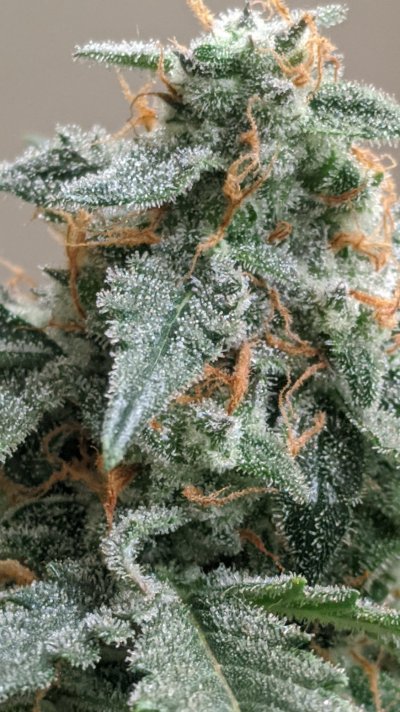
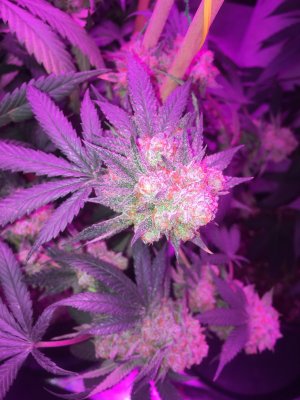
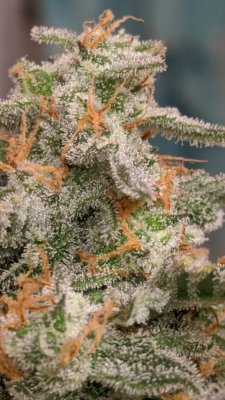
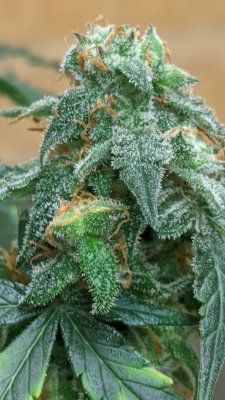
I couldn't find the thread, so maybe I'll post it here. Others can follow if you want.

Here's my latest. I got a new camera for much closer images on the way, I love taking pictures of cannabis.
 

Attachments

  • show-off-your-frostiest-nugs-part-2.jpg
    show-off-your-frostiest-nugs-part-2.jpg
    436.4 KB · Views: 231
  • show-off-your-frostiest-nugs-part-2-2.jpg
    show-off-your-frostiest-nugs-part-2-2.jpg
    406.9 KB · Views: 181
  • show-off-your-frostiest-nugs-part-2-3.jpg
    show-off-your-frostiest-nugs-part-2-3.jpg
    428.7 KB · Views: 205
  • show-off-your-frostiest-nugs-part-2-4.jpg
    show-off-your-frostiest-nugs-part-2-4.jpg
    322 KB · Views: 184
  • show-off-your-frostiest-nugs-part-2-5.jpg
    show-off-your-frostiest-nugs-part-2-5.jpg
    368.1 KB · Views: 176
  • show-off-your-frostiest-nugs-part-2-6.jpg
    show-off-your-frostiest-nugs-part-2-6.jpg
    429.5 KB · Views: 176
  • show-off-your-frostiest-nugs-part-2-7.jpg
    show-off-your-frostiest-nugs-part-2-7.jpg
    419.5 KB · Views: 194
I really like that marbling effect on some strains. I suspect they all have a common ancestor, I wonder if it's the ChemDawg, or maybe there's an earlier example. GSC and lot's of the newer strains have this morphology, it's impressive.


Do you mean the yellowing and purpling on the leaves? i have had quite a few strains do that. Full spectrum lighting like cmh or new samsung diodes bring that out even more. Or the sun would of course.
 
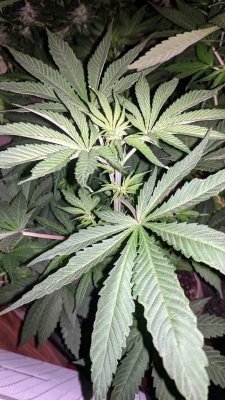
Some updated pic's. Including some of the photoperiod kush that are starting to develop (noctice the seed pods) in the 3rd and 4th pics.
 

Attachments

  • IMG_20200903_180902.jpg
    IMG_20200903_180902.jpg
    368.5 KB · Views: 126
  • IMG_20200903_181054.jpg
    IMG_20200903_181054.jpg
    353.8 KB · Views: 131
  • IMG_20200903_181523(2).jpg
    IMG_20200903_181523(2).jpg
    388.2 KB · Views: 152
  • IMG_20200903_181523.jpg
    IMG_20200903_181523.jpg
    388.2 KB · Views: 175
  • IMG_20200903_180503.jpg
    IMG_20200903_180503.jpg
    504 KB · Views: 135
  • IMG_20200903_180448.jpg
    IMG_20200903_180448.jpg
    402.2 KB · Views: 125
  • IMG_20200903_180614.jpg
    IMG_20200903_180614.jpg
    404.7 KB · Views: 133
  • IMG_20200903_180632(1).jpg
    IMG_20200903_180632(1).jpg
    368.9 KB · Views: 131
  • IMG_20200903_180657.jpg
    IMG_20200903_180657.jpg
    327.3 KB · Views: 126
  • IMG_20200903_180623.jpg
    IMG_20200903_180623.jpg
    411.7 KB · Views: 120
Do you mean the yellowing and purpling on the leaves? i have had quite a few strains do that. Full spectrum lighting like cmh or new samsung diodes bring that out even more. Or the sun would of course.

I'm sure there's a correct name for it, I call it marbling, but that might not be an adequate description. I see it in some strains, not in others. It's especially prevalent in much of the newer hybrids I've seen of late, but I don't know that it's from Chemdog specifically, that's just some of the earliest examples I can think of, that have that have that trait, to a very obvious degree.

It's the way the bud forms around or in between the smaller leafs. All of these types of different characteristics seem to affect the number and length of trichomes, (or at least potential) the patterns, the numbers or density in structure in which they proliferate. I really enjoy seeing different trichome structure, and noting differences in plant development.

I can't wait for this camera I've got coming, so I can see them so much closer. I think there are things to be learned, possibly. It appears many of the larger glandular trichomes have been bred to grow in areas/structures of the plant that once lacked, or had smaller ones in the past. There are a lot of "different" looking types of trichomes in various places.

Some obviously, produce more oils than others. I think "long" trichomes w/large bulbulus heads, have the most potential, personally.
 

Attachments

  • marbliing.jpg
    marbliing.jpg
    362 KB · Views: 163
Last edited:
Hell yea, what's the strain? (frankster suspects kushes are involved here)


Looks like another with Chemdawg lineage to me, the morphology is always interesting to try and guess. What is the strain?


When it was sold to me, I was told it was Zookies, a hybrid of animal crackers and gorilla glue. everyone who tries it seem to really enjoy it, doesn't seem to develop a tolerance, forms really dense easily trimmed nuggets... interestingly enough I shared the cut with a handful of others over last few years, and just tonight my friend just brought some buds from a plant I gave him that was grown 12/12 under HPS that turned a a deep dark color, more black than purple. it shows off that same tendency Frankster circled on a previous image, that unusual secondary budding thing that happens. I said it looks like hops, he said it looked like the leading end of a heliconia flower, at any rate, sharp eye on the similarities to chem.
 
I'm sure there's a correct name for it, I call it marbling, but that might not be an adequate description. I see it in some strains, not in others. It's especially prevalent in much of the newer hybrids I've seen of late, but I don't know that it's from chemdawg specifically, that's just some of the earliest examples I can think of, that have that have that trait, to a very obvious degree.

It's the way the bud forms around or in between the smaller leafs. All of these types of different characteristics seem to affect the number and length of trichomes, (or at least potential) the patterns, the numbers or density in structure in which they proliferate. I really enjoy seeing different trichome structure, and noting differences in plant development.

I can't wait for this camera I've got coming, so I can see them so much closer. I think there are things to be learned, possibly. It appears many of the larger glandular trichomes have been bred to grow in areas/structures of the plant that once lacked, or had smaller ones in the past. There are a lot of "different" looking types of trichomes in various places.

Some obviously, produce more oils than others. I think "long" trichomes w/large bulbulus heads, have the most potential, personally.


I didnt realize but you are talking about flower structure. And i think the “foxtailing” or out growing is the sativa structure showing in an indica leaning flower.

A haze flower would be the extreme of it I think.
 
Not quite done yet, and a runt of a plant. It’s pretty frosty, though. I was told that it is garlic zkittles.
 

Attachments

  • 92064717-F5C6-48A4-B7B4-FFE225513E1D.jpeg
    92064717-F5C6-48A4-B7B4-FFE225513E1D.jpeg
    596.2 KB · Views: 123
I didnt realize but you are talking about flower structure. And i think the “foxtailing” or out growing is the sativa structure showing in an indica leaning flower.

A haze flower would be the extreme of it I think.
Yea, I suppose a small book could be written on this subject alone, replete with various pictures and accepted nomenclature. If there's not several already.

Certainly would be an interesting subject to cover.
 
Still chugging along. Getting there slowly but surely.
 

Attachments

  • IMG_20200904_213554.jpg
    IMG_20200904_213554.jpg
    381.1 KB · Views: 118
  • IMG_20200904_213649 - Copy.jpg
    IMG_20200904_213649 - Copy.jpg
    344.8 KB · Views: 115
  • IMG_20200904_213716 - Copy.jpg
    IMG_20200904_213716 - Copy.jpg
    358.9 KB · Views: 114
  • IMG_20200904_213731 - Copy.jpg
    IMG_20200904_213731 - Copy.jpg
    330.6 KB · Views: 124

Attachments

  • IMG_20200905_050803.jpg
    IMG_20200905_050803.jpg
    443.7 KB · Views: 113
  • IMG_20200905_050825.jpg
    IMG_20200905_050825.jpg
    494.8 KB · Views: 110
Last edited:
I can't wait for these hazes I've got, there just starting to flower, that the the early miss, grape ape, hopefully they'll have some of these features.


No haze in the dinachem. Its a backcrossed chemdog.

What haze do you have?
 
Page 1 of 2 · Replies 1–20 of 36
Back
Top Bottom