Log In Register

Should I worry? Cold weather, or MG?

  • Thread starter Thread starter 2hitPass
  • Start date Start date
  • Tagged users Tagged users None

Should I worry? Cold weather, or MG?

2hitPass 23 Replies 3,190 Views
Page 1 of 2 · Replies 1–20 of 24
2hitPass

2hitPass

Posts
99
Reactions
180
Joined
Apr 24, 2019
Points
33
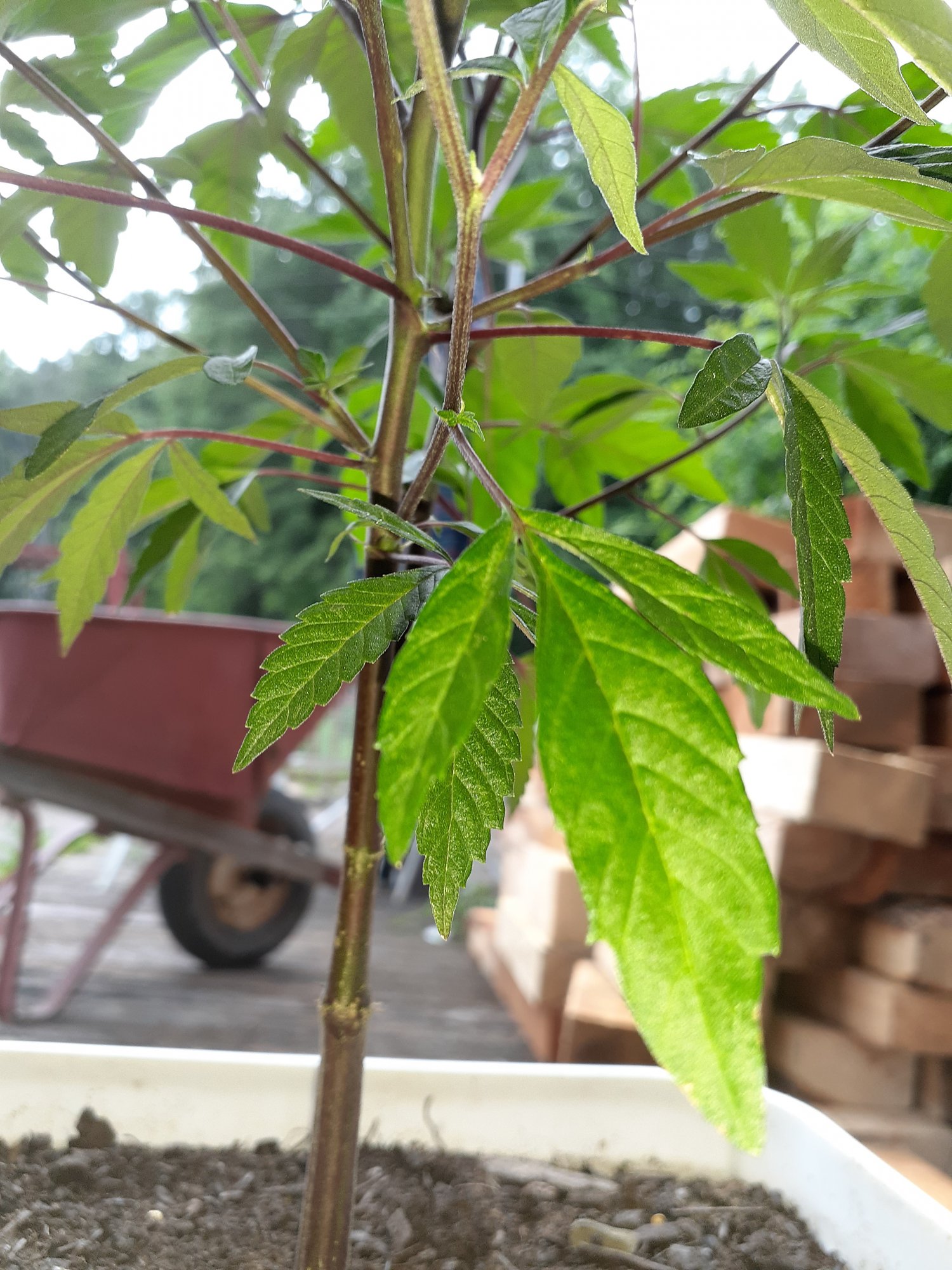
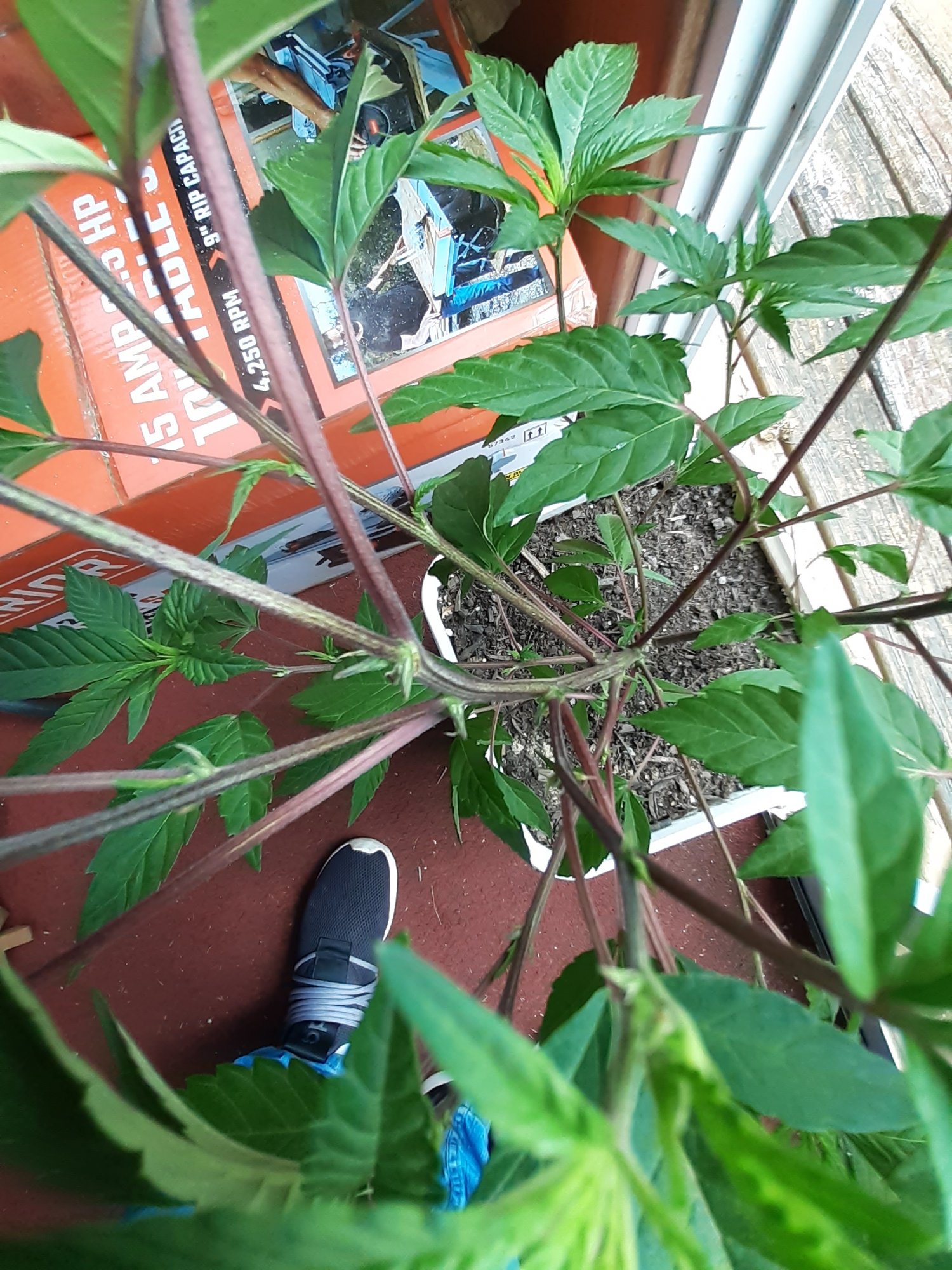
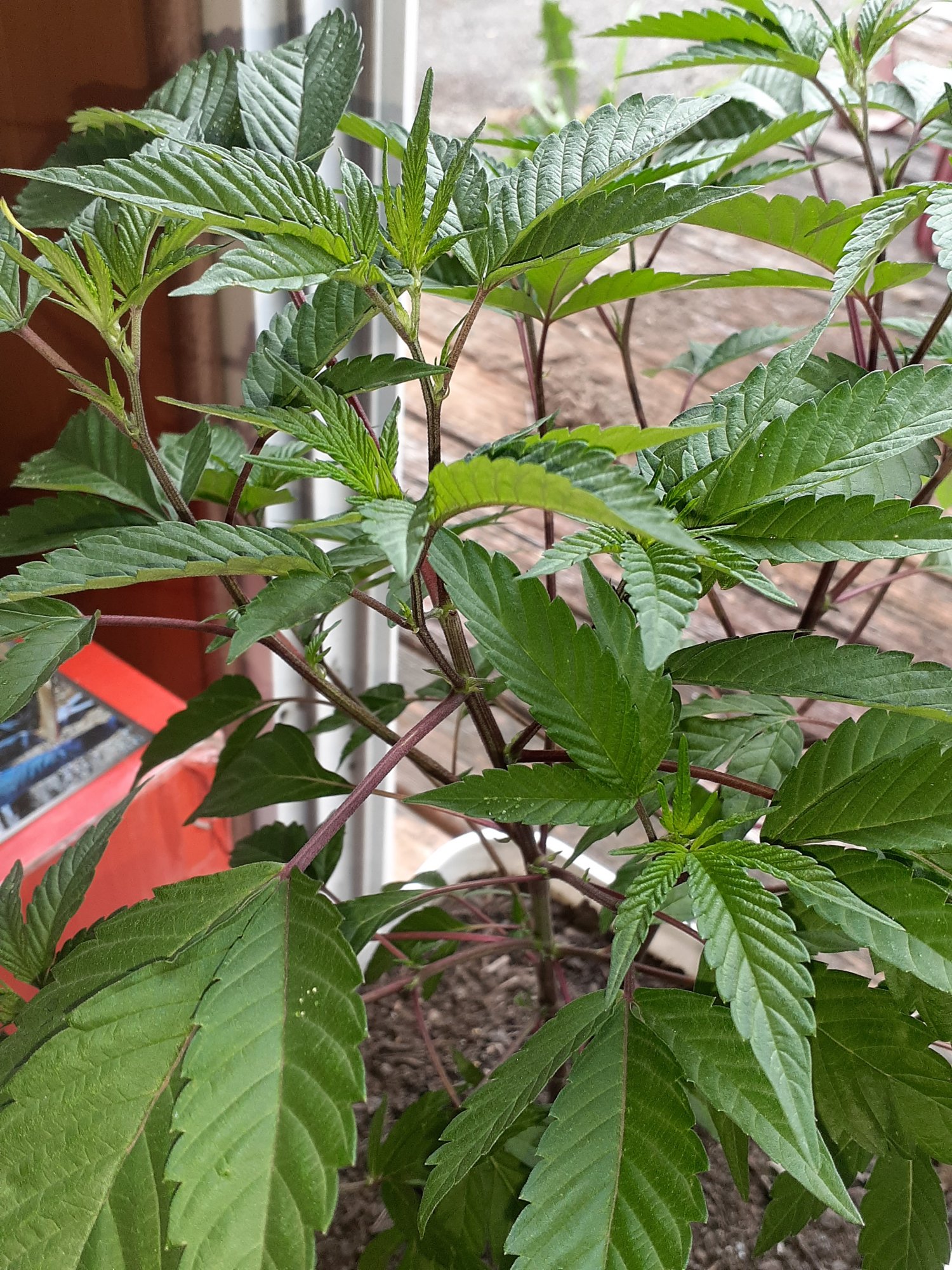
So I've been starting my plants early(end of February) for the past couple of years. This year took us a bit longer to get to ideal night temps along with multiple unexpected temp drops. I'm currently growing two presidential ogs from seed. I put one outside earlier than I should have and it got snowed on for 2 days. I was sure it died but it didn't and ever since it keeps growing purple stems! Should I be worried about a mag deficiency or is this normal for a plant that was shocked by freezing temperatures?
Should i worry cold weather or mg
Should i worry cold weather or mg 3
Should i worry cold weather or mg 4
 

Attachments

  • should-i-worry-cold-weather-or-mg-2.jpg
    should-i-worry-cold-weather-or-mg-2.jpg
    515.2 KB · Views: 140
the ones in the ground will be fine as nature will take over, the other one seems fine just lots of three blades leaves which generally means some sort of stress, 🤔
I never knew that was a sign of stress. Thank you. There are also one blade leaves on her 😔
 
I wouldn't worry too much! that second plant looks gorgeous and the one you are worried about just looks a little behind but outside i'm sure it will flourish! Purple stems and petioles can be genetic so I wouldn't worry too much :)
 
I wouldn't worry too much! that second plant looks gorgeous and the one you are worried about just looks a little behind but outside i'm sure it will flourish! Purple stems and petioles can be genetic so I wouldn't worry too much :)
But also stress and temperature changes can cause it too so i'm sure you're right! just keep it as happy as you can from here on out!
 
I wouldn't worry too much! that second plant looks gorgeous and the one you are worried about just looks a little behind but outside i'm sure it will flourish! Purple stems and petioles can be genetic so I wouldn't worry too much :)
Thanks for the feedback. Should I continue with my normal feed schedule or quarter strength for that one?
 
Thanks for the feedback. Should I continue with my normal feed schedule or quarter strength for that one?
They don't look deficient in my opinion so i would continue feeding at normal strength. Do you feed your other outdoor one the same?
 
They don't look deficient in my opinion so i would continue feeding at normal strength. Do you feed your other outdoor one the same?
Yea they were both started on the same day. There were 3 altogether 2 made it
20210418 125520
 
Gave both some azomite and Epsom salts. Been alot of rain these last couple weeks but they seem to like it. Having trouble with worms though. Every morning I'm picking them off and the organic insecticide I'm using doesn't do much but does work on other bugs. Any ideas?
 
First shot is from a week or so ago. The rest are from yesterday after a heavy defoliation. I know it looks insane but it does work. I'll do a final stripping around week 3ish bloom. Getting ready to add the second cage soon
20210730 105011
20210804 182148
20210804 182135
 
And here she is a week later looking like I never trimmed. I love shwazzing!
20210811 093426
20210811 093458
20210811 093447

@GNick55 should I throw a trellis net on top or will this be enough support?
 
Ok so I went to check for pest and mold and found this on one of the tops. It was the only one thank god but I have no idea what it is. Cut it off immediately. Can someone please tell me what this is?!
Snapchat 1384533853
Snapchat 2025402001
 
Also I've been killing alot of garden spiders trying to make "traps" out of bud sites that are forming. Could this be the problem? Never seen that color on a plant before.
 
Anthocyanins (also anthocyans; from Greek: ἄνθος (anthos) "flower" and κυάνεος/κυανοῦς kyaneos/kyanous "dark blue") are water-soluble vacuolar pigments that, depending on their pH, may appear red, purple, blue, or black. In 1835, the German pharmacist Ludwig Clamor Marquart gave the name Anthokyan to a chemical compound that gives flowers a blue color for the first time in his treatise “Die Farben der Blüthen”. Food plants rich in anthocyanins include the blueberry, raspberry, black rice, and black soybean, among many others that are red, blue, purple, or black. Some of the colors of autumn leaves are derived from anthocyanins.[1][2]

Anthocyanins belong to a parent class of molecules called flavonoids synthesized via the phenylpropanoid pathway. They occur in all tissues of higher plants, including leaves, stems, roots, flowers, and fruits. Anthocyanins are derived from anthocyanidins by adding sugars.[3] They are odorless and moderately astringent.

Although approved to color foods and beverages in the European Union, anthocyanins are not approved for use as a food additive because they have not been verified as safe when used as food or supplement ingredients.[4] There is no conclusive evidence that anthocyanins have any effect on human biology or diseases.[4][5][6]

In cannabis, they are most often triggered by cold temps.

 
Anthocyanins (also anthocyans; from Greek: ἄνθος (anthos) "flower" and κυάνεος/κυανοῦς kyaneos/kyanous "dark blue") are water-soluble vacuolar pigments that, depending on their pH, may appear red, purple, blue, or black. In 1835, the German pharmacist Ludwig Clamor Marquart gave the name Anthokyan to a chemical compound that gives flowers a blue color for the first time in his treatise “Die Farben der Blüthen”. Food plants rich in anthocyanins include the blueberry, raspberry, black rice, and black soybean, among many others that are red, blue, purple, or black. Some of the colors of autumn leaves are derived from anthocyanins.[1][2]

Anthocyanins belong to a parent class of molecules called flavonoids synthesized via the phenylpropanoid pathway. They occur in all tissues of higher plants, including leaves, stems, roots, flowers, and fruits. Anthocyanins are derived from anthocyanidins by adding sugars.[3] They are odorless and moderately astringent.

Although approved to color foods and beverages in the European Union, anthocyanins are not approved for use as a food additive because they have not been verified as safe when used as food or supplement ingredients.[4] There is no conclusive evidence that anthocyanins have any effect on human biology or diseases.[4][5][6]

In cannabis, they are most often triggered by cold temps.
Ok so does this mean I should readjust the ph of my feed or insecticide spray? Or is this nothing to worry about? Sorry if these are dumb questions I've never ran into anything like this before.
 
Page 1 of 2 · Replies 1–20 of 24
Back
Top Bottom