B
Blackandblack
- Posts
- 75
- Reactions
- 145
- Joined
- Mar 5, 2025
- Points
- 33

121,231 growers, practical cultivation threads, real grow diaries, and community advice.
Create account → Already a member? Log inFollow along with the video below to see how to install our site as a web app on your home screen.
Note: This feature may not be available in some browsers.


 www.rxgreentechnologies.com
Not ready. DO NOT CUT OFF FOOD!!!. Flushing, is a MYTH. If anything cut back on fertilizer, when you notice they are using less water, or, an estimated 2 weeks before harvest, one might cut back fert 25% 2 weeks before harvest, and another 25%, week of harvest.
Plant metabolism, chemical production are still going on,, and plants still need basic nutrition, to carry out metabolic function.
Cannabis Flushing Study on Grow Nutrients I Rx Green
Rx Green’s research study on cannabis flushing explores the truth behind this urban myth in growing nutrients.
so every watering now feed them? I always did it alternately, once with clean water and once with food. and in a week reduce it?Not ready. DO NOT CUT OFF FOOD!!!. Flushing, is a MYTH. If anything cut back on fertilizer, when you notice they are using less water, or, an estimated 2 weeks before harvest, one might cut back fert 25% 2 weeks before harvest, and another 25%, week of harvest.
Plant metabolism, chemical production are still going on,, and plants still need basic nutrition, to carry out metabolic function.
Cannabis Flushing Study on Grow Nutrients I Rx Green
Rx Green’s research study on cannabis flushing explores the truth behind this urban myth in growing nutrients.
So I shouldn't worry that the leaves are so yellow?There don’t look quite ready yet soon should be
Looks like you’ll get a nice harvest
Watering every time depends on fert concentration. I generally use less than recommended, and feed, at each watering.so every watering now feed them? I always did it alternately, once with clean water and once with food. and in a week reduce it?

Flushing is not a myth, the application of flushing is just not understood. Off the bat, any flushing study should be conducted with hydro-tek, otherwise it is meaningless. Flushing in both practice and theory in soil is an absurdly complex and dynamic problem, which can vary wildly in metrics from pocket of soil to a different pocket mere inches away. Being as how they did coco, I would immediately think the only thing reproducible from this study would be based off their exact, and unlisted, watering habits. In the study you reference, the only metric where non-flushed flower showed any categorical preference was in the blind taste test...across a single cultivar. How big was their panel? What is good smoke? How did they smoke it? Did they use hemp wick? Did they use papers, rillos, ceramic bowl, glass bowl, silicone? I'm just saying that the entire study is bantha fodder as far as science goes, this is the type of science a sociology major would be doing in this field...not a chemist or cultivator. Even the types of takeaways, they really are dripping of a survey sent out, with some basic pivot tables to have points to even make. Who are these industry experts? Did they know what the topic of the study they were participating in was? What is their opinion on flushing?Not ready. DO NOT CUT OFF FOOD!!!. Flushing, is a MYTH. If anything cut back on fertilizer, when you notice they are using less water, or, an estimated 2 weeks before harvest, one might cut back fert 25% 2 weeks before harvest, and another 25%, week of harvest.
Plant metabolism, chemical production are still going on,, and plants still need basic nutrition, to carry out metabolic function.
Cannabis Flushing Study on Grow Nutrients I Rx Green
Rx Green’s research study on cannabis flushing explores the truth behind this urban myth in growing nutrients.
So I shouldn't worry that the leaves are so yellow?
I don't like smoking chlorophyll
Patience grasshopper, you've got a couple weeks to go.Now cut? What do you Think??
How many commercial crops are flushed? None, that I know of. Chlorophyll breaks down in the curing process, curing is the key, bad cure, bad taste. Can you show any scientific study (not anectdotal broscience) that shows flushing does anything? The only flushing that has any value is when salts from synthetic nutes build up and cause lockouts.Flushing is not a myth, the application of flushing is just not understood. Off the bat, any flushing study should be conducted with hydro-tek, otherwise it is meaningless. Flushing in both practice and theory in soil is an absurdly complex and dynamic problem, which can vary wildly in metrics from pocket of soil to a different pocket mere inches away. Being as how they did coco, I would immediately think the only thing reproducible from this study would be based off their exact, and unlisted, watering habits. In the study you reference, the only metric where non-flushed flower showed any categorical preference was in the blind taste test...across a single cultivar. How big was their panel? What is good smoke? How did they smoke it? Did they use hemp wick? Did they use papers, rillos, ceramic bowl, glass bowl, silicone? I'm just saying that the entire study is bantha fodder as far as science goes, this is the type of science a sociology major would be doing in this field...not a chemist or cultivator. Even the types of takeaways, they really are dripping of a survey sent out, with some basic pivot tables to have points to even make. Who are these industry experts? Did they know what the topic of the study they were participating in was? What is their opinion on flushing?
You take as many qualitative, ambiguous, subjective metrics as you can ("industry expert only panelists", "harshness of smoke", going through smells, and on an on) then you try to back it out to something quantitative and objective at the end...that is not the scientific method.
The study in and of itself is from a whitelabel testing facility. Just keep that in mind. I imagine that having any paper they can point to and say, "no keep using 55 gallon drums of X additive for 3 more weeks, trust us!" is a good thing to be able to say when your offering is getting product X to market and being the science team approving it. Like, did you look at what they do or their other studies?
Just imagine, with all the new knowledge of flavorants....what if this diesel varietal they were growing relied on canna-sulfurs/sulfur volatiles for the iconic diesel taste (as we know factually that they do). Well, the natural extrapolation of how to get that profile to the table past flower, would be low PPM sulfur heavy feedings throughout the end of the lifecycle. Regardless, if that were the case, then putting something with more sulfur relatively speaking on the table....smokers are gonna choose that. So, just based off real chemists doing real research, and a natural extrapolation of the cultivar they were growing....there is an entirely plausible and likely explanation for the single positive effect they describe which is wholly unrelated to flushing. That would be a critical flaw in any seriously designed study by a rigorous team of scientists.
Anyway, I flush to force a fade early. I don't like smoking chlorophyll and every molecule I can rid the flower of before dry and cure is a categorical win in my book. I also get to have spotless systems when swapping hydrotek, rather than needing a full break down a d deep clean.
But there are automatic, it’s 10 weekPatience grasshopper, you've got a couple weeks to go.

Automatic start, not automatic finishBut there are automatic, it’s 10 week

NEVER, go by the breeder estimates, because they are just that, estimates, and they base it on perfect conditions (which no one really has), remember they're trying to sell a product. I don't think I've had more than one or two grows (photo or auto) when the plants were actually done when the breeder said they would be.But there are automatic, it’s 10 week
Ok thank you! Its my first time and I try do everything good.NEVER, go by the breeder estimates, because they are just that, estimates, and they base it on perfect conditions (which no one really has), remember they're trying to sell a product. I don't think I've had more than one or two grows (photo or auto) when the plants were actually done when the breeder said they would be.
so I will be waiting but gorilla looks worst, more pretty are Purple and Epsilon!
You do know yoz can force a fade with just removing nitrogen.clorofil will go away as well but potassium will keep the flower good....Flushing is not a myth, the application of flushing is just not understood. Off the bat, any flushing study should be conducted with hydro-tek, otherwise it is meaningless. Flushing in both practice and theory in soil is an absurdly complex and dynamic problem, which can vary wildly in metrics from pocket of soil to a different pocket mere inches away. Being as how they did coco, I would immediately think the only thing reproducible from this study would be based off their exact, and unlisted, watering habits. In the study you reference, the only metric where non-flushed flower showed any categorical preference was in the blind taste test...across a single cultivar. How big was their panel? What is good smoke? How did they smoke it? Did they use hemp wick? Did they use papers, rillos, ceramic bowl, glass bowl, silicone? I'm just saying that the entire study is bantha fodder as far as science goes, this is the type of science a sociology major would be doing in this field...not a chemist or cultivator. Even the types of takeaways, they really are dripping of a survey sent out, with some basic pivot tables to have points to even make. Who are these industry experts? Did they know what the topic of the study they were participating in was? What is their opinion on flushing?
You take as many qualitative, ambiguous, subjective metrics as you can ("industry expert only panelists", "harshness of smoke", going through smells, and on an on) then you try to back it out to something quantitative and objective at the end...that is not the scientific method.
The study in and of itself is from a whitelabel testing facility. Just keep that in mind. I imagine that having any paper they can point to and say, "no keep using 55 gallon drums of X additive for 3 more weeks, trust us!" is a good thing to be able to say when your offering is getting product X to market and being the science team approving it. Like, did you look at what they do or their other studies?
Just imagine, with all the new knowledge of flavorants....what if this diesel varietal they were growing relied on canna-sulfurs/sulfur volatiles for the iconic diesel taste (as we know factually that they do). Well, the natural extrapolation of how to get that profile to the table past flower, would be low PPM sulfur heavy feedings throughout the end of the lifecycle. Regardless, if that were the case, then putting something with more sulfur relatively speaking on the table....smokers are gonna choose that. So, just based off real chemists doing real research, and a natural extrapolation of the cultivar they were growing....there is an entirely plausible and likely explanation for the single positive effect they describe which is wholly unrelated to flushing. That would be a critical flaw in any seriously designed study by a rigorous team of scientists.
Anyway, I flush to force a fade early. I don't like smoking chlorophyll and every molecule I can rid the flower of before dry and cure is a categorical win in my book. I also get to have spotless systems when swapping hydrotek, rather than needing a full break down a d deep clean.
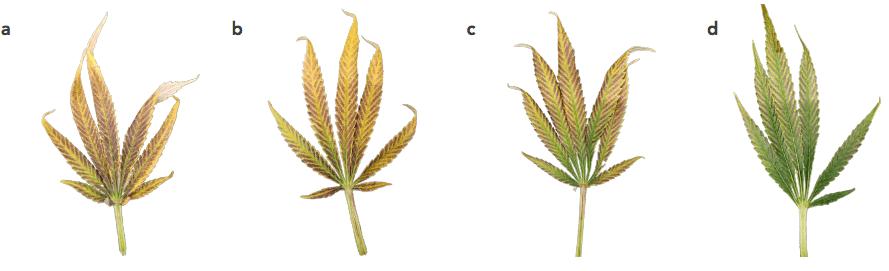
I was thinking that girls grow good and healthy but I see something happend with leaves.. What is too much? Too little?


