AI's opinions on plants storing energy:
"Short version: plants don’t “bank” ATP. They bank
carbon.
Think of it like this:
- ATP = pocket cash. It’s made and spent constantly, seconds to minutes. Plants don’t store ATP long-term—it’s too reactive.
- Savings account = carbs and oils. Extra photosynthesis gets parked as starch, sugars, and sometimes oils (triacylglycerols).
Where it actually goes:
- Starch (most common):
• Day: made in chloroplasts of leaves and stacked like little “pantry” granules.
• Night: withdrawn and burned to keep metabolism running.
• Long-term starch: packed into amyloplasts in storage tissues (e.g., potatoes, roots, some stems).
- Sugars (sucrose mostly):
Shipped in the phloem to “sinks” (growing tips, roots, flowers, fruits/buds). Vacuoles can stockpile soluble sugars and organic acids.
- Oils (“fats”):
Stored as oil bodies (oleosomes), especially in seeds and some fruits (sunflower, canola, olive, avocado). Super energy-dense, great for fueling germination. Leaves can make and use lipids, but they rarely hoard them the way seeds do.
- Protein (less common as a fuel store):
Some seeds stash storage proteins to feed seedlings later.
Nifty side notes for the grow tent crowd:
- Leaves will often be starch-rich late in the light period and starch-poor before lights-on—that’s normal. If nights are too short or plants are stressed, starch can accumulate and mess with sugar signaling.
- Seeds are where you’ll see real “fat.” Cannabis seeds are oily; buds mostly use carbon to build cell walls, terpenes, and cannabinoids (those aren’t energy stores—they’re “chemical bling”).
If you ever want to
see it: pluck two leaf bits—one at end of “day,” one before lights-on—drop in diluted
iodine (Lugol’s). The darker blue/black stain = more
starch. Old-school, dead simple, kind of fun.
Bottom line: Plants don’t store extra ATP; they convert surplus light energy into
starch, sugars, and sometimes oils, then tap those reserves later."
Stuff to ponder... plants don't quite bank fat like a seal.


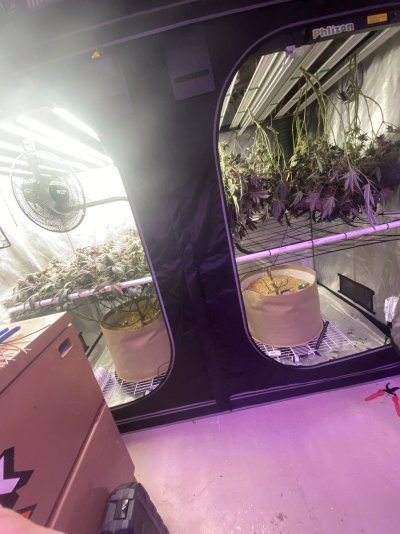


 now I gotta go return this shit at Home Depot, thank god I had back up tools

