For those who are into organics; this is a simple one; thought I would toy around with it during flower. More as a bi weekly flush.
Some of the earliest life on the planet.
Cyanobacteria that live in fresh water, and can fix nitrogen.
Spirulina is a biomass of cyanobacteria that can be consumed by humans and animals. The three species are Arthrospira platensis, A. fusiformis, and A. maxima.
Arthrospira species are free-floating, filamentous cyanobacteria characterized by
cylindrical, multicellular
trichomes in an open left-handed
helix. They occur naturally in tropical and subtropical lakes with high
pH and high concentrations of
carbonate and
bicarbonate.
Spirulina thrives at a pH around 8.5 and above and a temperature around 30 °C (86 °F). They are
autotrophic, meaning that they are able to make their own food, and do not need a living energy or organic carbon source. Like all protein-rich foods, spirulina contains the essential amino acid
phenylalanine (2.6–4.1 g/100 g)
L-Phenylalanine is biologically converted into L-
tyrosine, another one of the DNA-encoded amino acids. L-tyrosine in turn is converted into
L-DOPA, which is further converted into
dopamine,
norepinephrine (noradrenaline), and
epinephrine (adrenaline). The latter three are known as the
catecholamines.
Phenylalanine uses the same active transport channel as
tryptophan to cross the
blood–brain barrier. In excessive quantities, supplementation can interfere with the production of
serotonin and other
aromatic amino acids as well as
nitric oxide due to the overuse (eventually, limited availability) of the associated cofactors,
iron or
tetrahydrobiopterin. The corresponding enzymes in for those compounds are the
aromatic amino acid hydroxylase family and
nitric oxide synthase.
Phenylalanine is the starting compound used in the
synthesis of
flavonoids.
Lignan is derived from phenylalanine and from
tyrosine. Phenylalanine is converted to
cinnamic acid by the enzyme
phenylalanine ammonia-lyase.


 PXL_20220206_001543749.MP - Copy.jpg221.3 KB · Views: 113
 PXL_20220206_001723872.MP - Copy.jpg197 KB · Views: 105
 PXL_20220206_001813491.MP - Copy.jpg152.8 KB · Views: 97
 PXL_20220206_001829034.MP - Copy.jpg181.1 KB · Views: 98
 PXL_20220206_001933399.MP - Copy.jpg205.4 KB · Views: 102
 PXL_20220206_001946296.MP - Copy.jpg185.2 KB · Views: 100


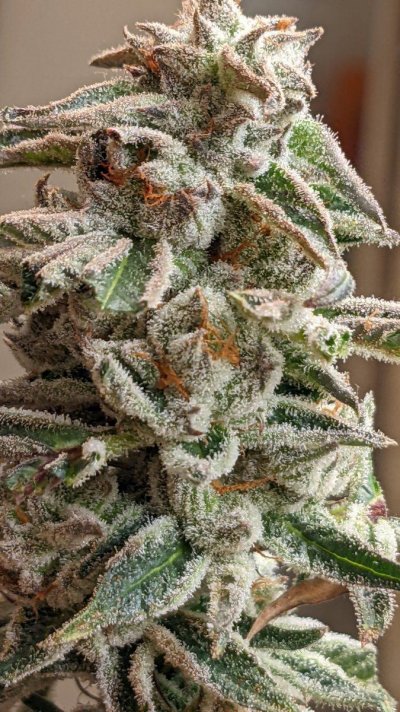


 A little less glamour in this photo; but still pretty neat. Seeds are really cool too. Camera's make it simple these days; I've finally been able to afford a Pixel4a; which cost me nearly $300 I believe.
