Log In Register
  • Thread starter Thread starter Rolens
  • Start date Start date
  • Tagged users Tagged users None

📊Rolens' No-Till Performance Tent (Reproductions, Crosses, & More!)

Rolens 11 Replies 1,948 Views
Page 1 of 1 · Replies 1–12 of 12
1
Rolens

Rolens

Posts
19
Reactions
32
Joined
May 24, 2026
Points
13
📊 Rolens' No-Till Performance Tent (Reproductions, Crosses, & More!)
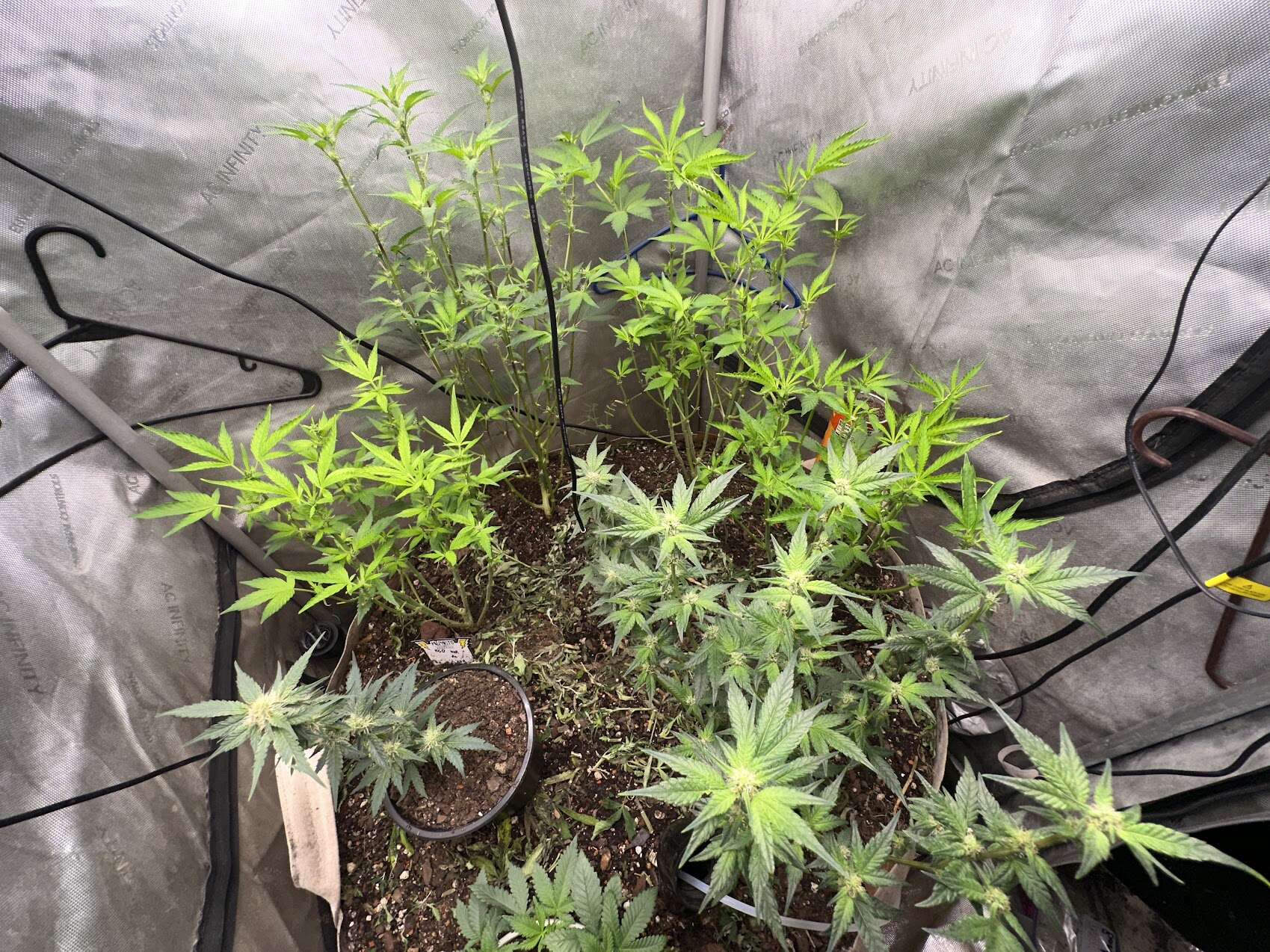
This thread will document my living soil performance testing, keeper hunts, pollen work, reproductions, and future crosses. The goal is to identify plants that thrive under a dialed-in, high-pressure environment and use those standouts for future breeding projects.
IMG 4943 1
IMG 4963IMG 4964
IMG 4877


Current Update: 6/17/26
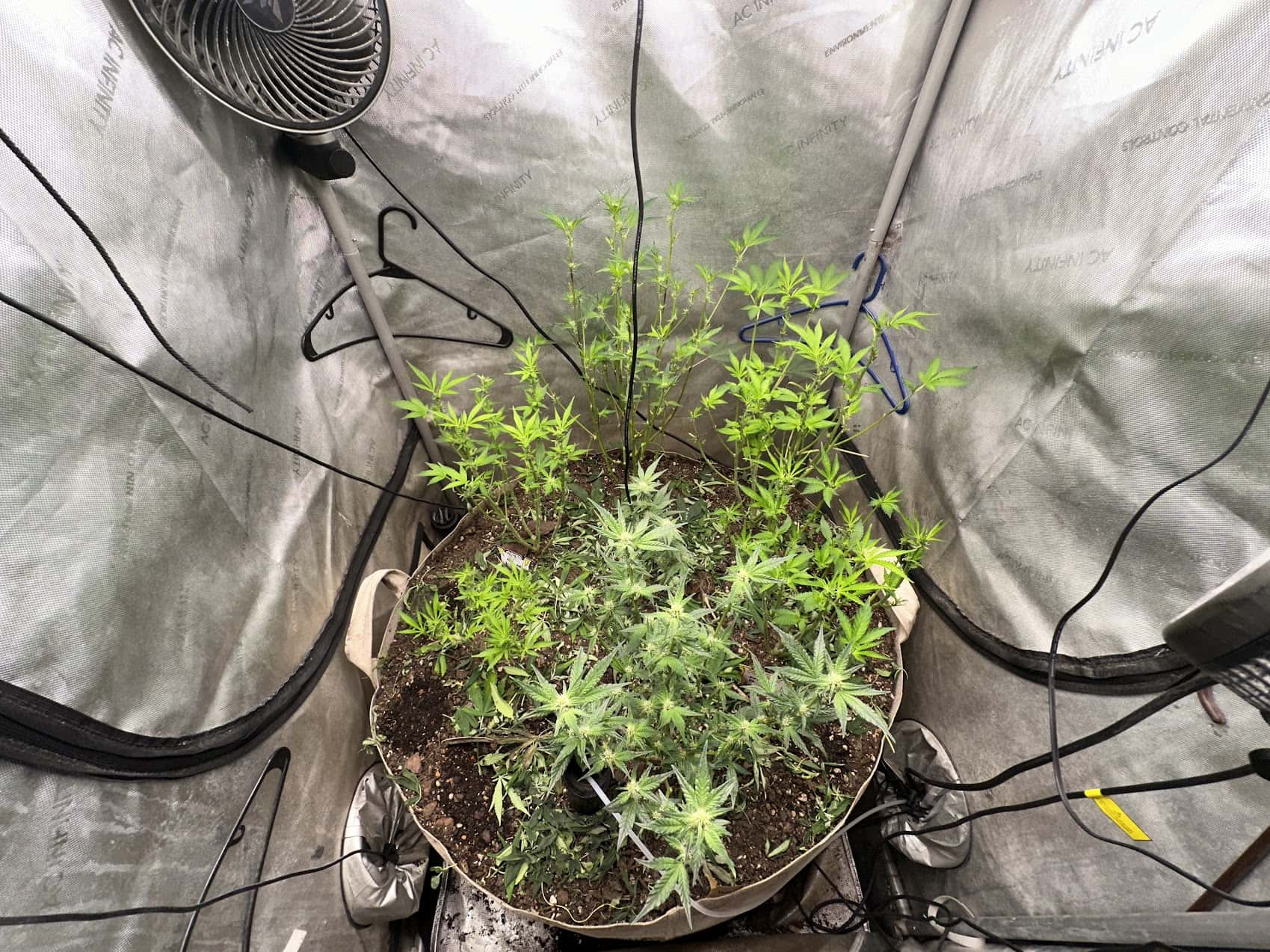
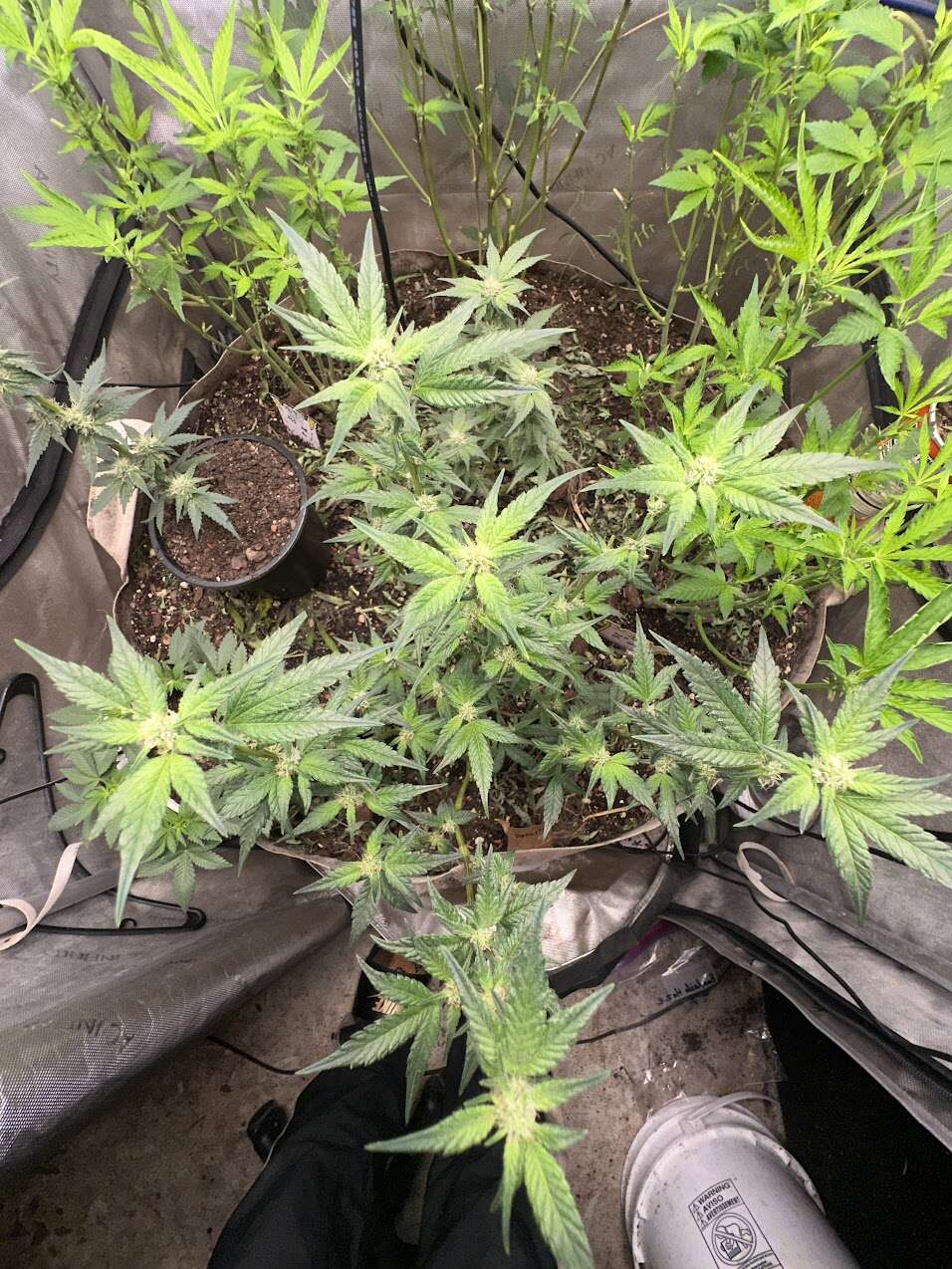
Stage: Pre-Flower / Day 10 of Flower
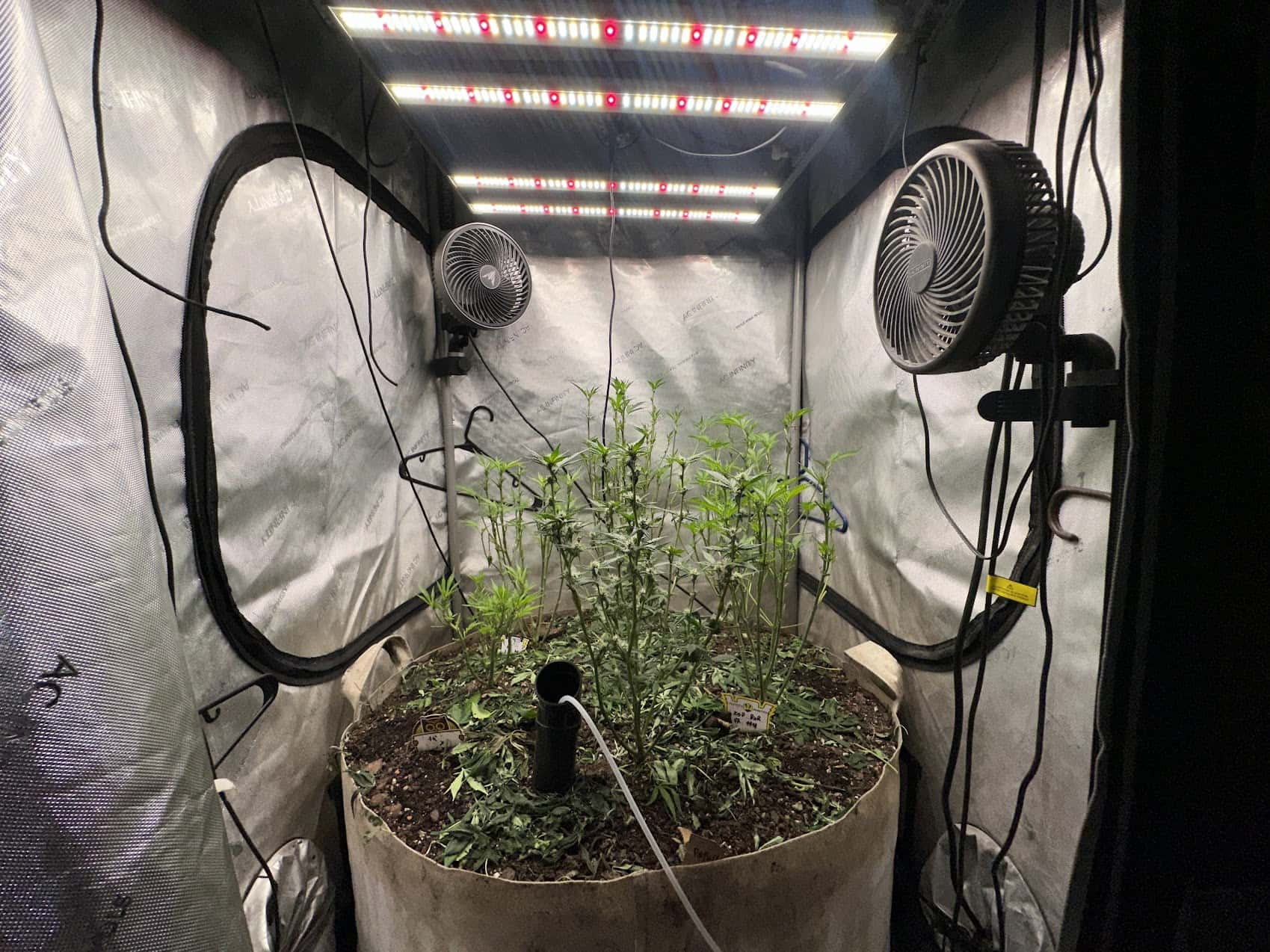
Main Space: 3'x3'x6' AC Infinity Tent
Secondary Space: DIY 1'x2'x3' Cabinet
Main Goal: Stress-test genetics in a dialed-in living soil environment and identify future breeding stock.

Current Environment (Day/Night)
- VPD: 1.2 kPa / 1.1 kPa​
- Air Temp: 86°F / 83°F​
- LST: 83°F / 83°F​
- DLI: 35​

Compact Growth Chart
Legend:
LST: Leaf surface temp, lights on/off. VPD: Lights on/off. DLI: Daily light integral. Dim: Dimmer setting.
StageQuick IDLST (°F)VPD (kPa)DLIDim (%)Light HeightHoursSpectrum
GerminationTaproot visible; no leaves yet——132516"18/6Seedling
Seedling1–2 nodes, cotyledons showing, <3"75/750.6/0.5152916"18/6Seedling
Early Veg3–5 nodes, building structure, 3–8"79/790.8/0.7203716"18/6Veg
Peak VegFast daily growth, drinking hard82/821.0/0.9305616"18/6Veg
Pre-FlowerPistils at nodes, flip happened83/831.1/1358312"12/12Veg
Early FlowerStretching hard; bud sites stacking81/811.2/1.1409612"12/12Flower
Mid-FlowerStretch done; fattening, frosty76/721.3/1.24210012"12/12Flower
Late FlowerDense buds, browning pistils72/681.4/1.3358312"12/12Flower
RipeningFade showing, amber appearing68/641.5/1.6307212"12/12Flower


The Genetics
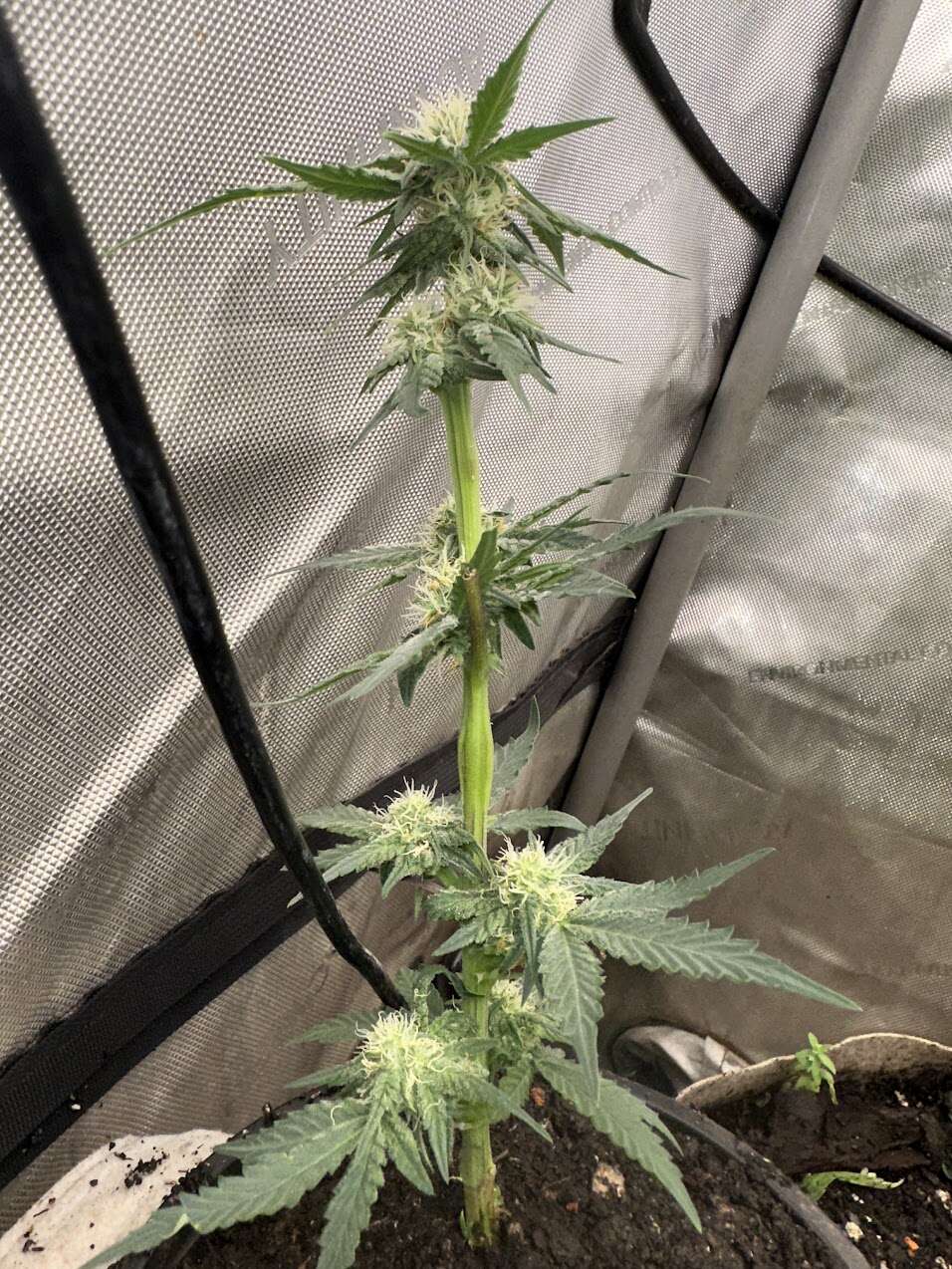
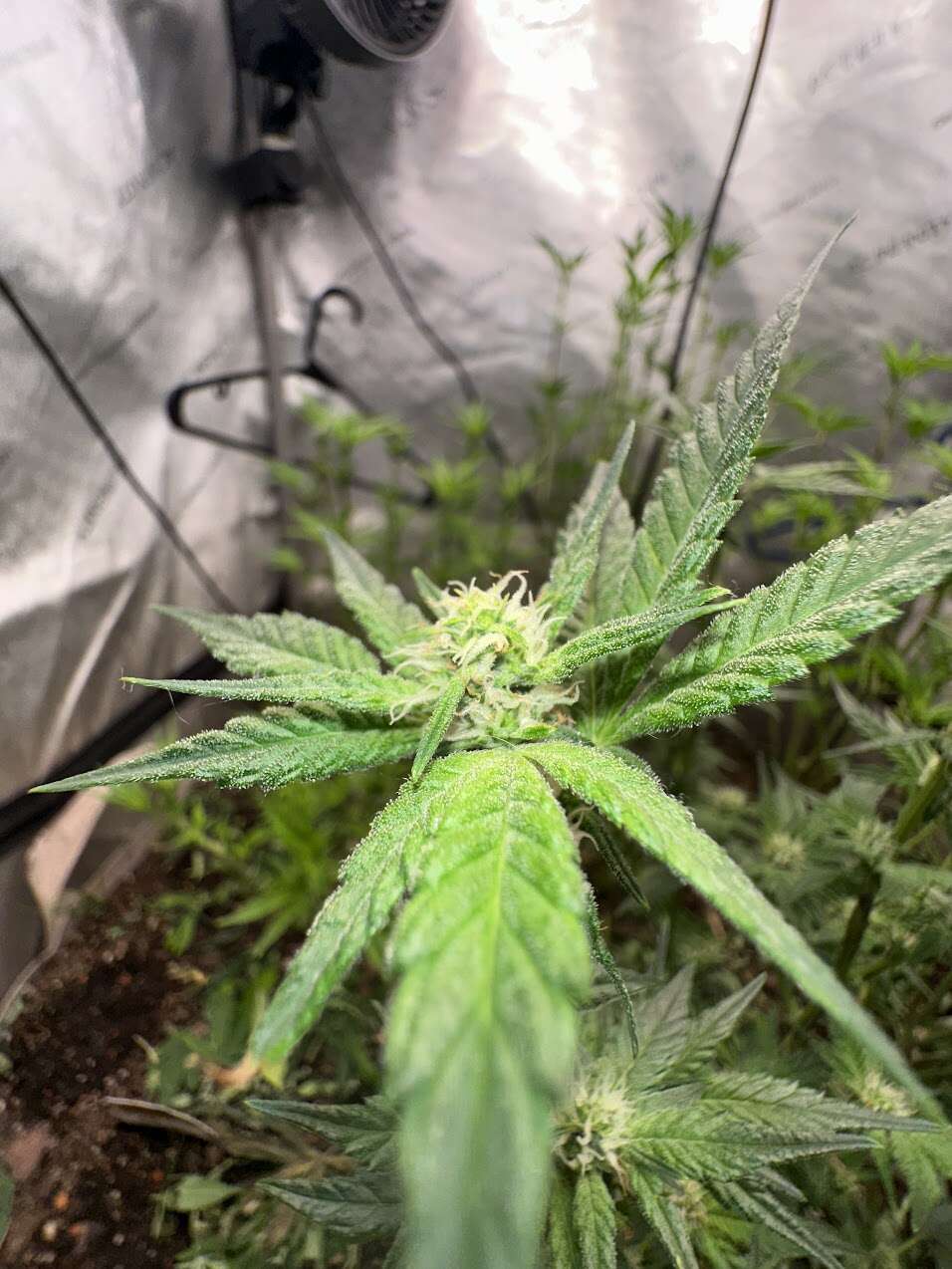
These are the plants currently being evaluated for vigor, structure, stress response, resin, aroma, flower quality, and future breeding potential. I don’t want to just grow plants that survive a dialed-in environment. I want plants that thrive in a living soil system.
IMG 4944 1
3'x3'x6' Tent:
- 5 Karma Sour Diesel BX2 F2 (BigRed)​
- 1 Triangle Kush (HighNRich) x Ghostwalker (Aficionado) ​
- 1 King Louis XIII OG Clone (Boss Hoss genetics)​
- 1 Daywrecker (Diesel #1, Original Diesel) Clone (In The Sticks Gardens)​
- 3 BOG Sour Strawberry Kush x Roadkill Skunk (Pine) ​
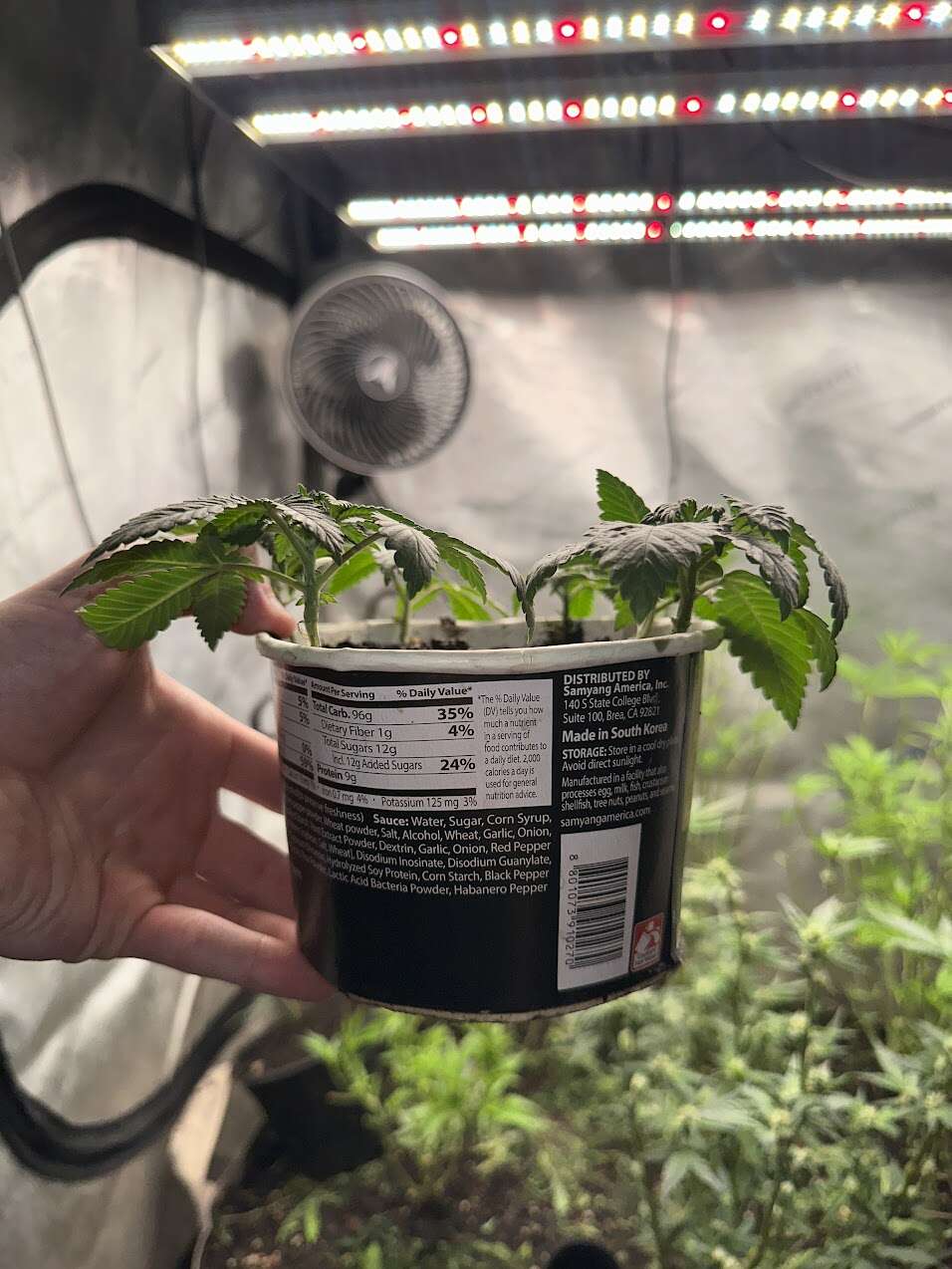
- 6 Shiva Skunk x Forum Cookies S1 (Ramen Cup Challenge) (HashPants)​

1'x2'x3' Cabinet
- 1 Permanent Marker Clone (MI Dispensary)​
- 1 King Louis XIII OG Clone (Boss Hoss Genetics)​
- 1 Daywrecker (Diesel #1, Original Diesel) Clone (In The Sticks Gardens)​
- 3 Lavender S1 (Sugarship/DkWarren)​
​


The System
This is a 65-gallon no-till fabric bed with an EarthBox reservoir hidden inside the bottom. The goal is to combine the buffering power of a large living soil bed with the moisture stability of a SIP/wicking system.
IMG 4358Fabric pot diagram
I am currently growing in a 65-gallon, 33" x 18" round fabric pot. Inside that fabric pot is a 29" x 13.5" EarthBox Original. The EarthBox is not being used like a normal standalone EarthBox, it is sitting inside the larger fabric pot and acting more like an internal reservoir and wicking base for the whole bed. The bottom of the fabric pot is lined with a wicking mat that connects the EarthBox reservoir area to the rest of the floor of the bed. When the EarthBox reservoir is filled, water can wick outward across the bottom of the pot and then move upward through the soil. Around the wicking zone, I used a slightly wetter soil mix so moisture can move more evenly through the bottom of the bed. The rest of the pot is filled as a no-till living soil bed, giving me the larger soil volume, buffering capacity, biology, worms, mulch layer, and long-term stability that I want from a living soil system.

The EarthBox reservoir will also be oxygenated with small airstones. If roots eventually grow down into the reservoir, the goal is for that lower zone to stay oxygenated instead of becoming stagnant. So in theory, the bottom of the bed becomes almost like a mild DWC-style zone, while the rest of the root system still lives in a no-till soil environment.

I will not be filling the reservoir right away. I only plan to start filling the reservoir once the plants have had enough time to root through the bed and reach that lower zone. After the plants have grown into the bed, I will only refill the reservoir once it is empty. This should help prevent the bottom of the bed from staying too wet while still giving the plants access to extra water once they start drinking heavily.

The easiest way to picture the setup is this: It is a 65-gallon no-till fabric pot with an EarthBox reservoir hidden inside the bottom. So it is part no-till bed, part SIP, part wicking bed, and the Earthbox acts kind of like a giant super-powered olla.

The whole idea is to combine the buffering power and biology of a large no-till living soil bed with the moisture stability and convenience of a SIP system. The larger fabric pot gives me more soil volume, which means more biological activity, more nutrient buffering, more root space, and a more stable environment overall. The EarthBox reservoir gives the plants a bottom-fed water source they can tap into once they are big enough to use it.

The goal is to create a moisture gradient throughout the bed:

- Moister near the bottom​
- Balanced through the middle​
- Drier and more aerobic toward the top​

That way the plants can choose where they want to root based on what they need.

This setup should also make watering more forgiving. I have a tendency to overwater in SIPs when I’m adding all the extra goodies for the “super-powered plants,” so having a reservoir underneath the bed should be more forgiving and make me less prone to overwatering. Instead of constantly trying to decide if the whole pot needs water, the reservoir can supply moisture from below while the top of the bed stays more breathable.

One thing I may improve later is drilling holes throughout the sides of the EarthBox. That would let roots enter from the sides more easily and may also help water wick sideways into the rest of the bed more evenly. I’m not sure if I’ll do that yet, but it’s something I’m considering. For now, I’m excited to finally have the setup together. The goal is simple: more soil, more biology, better moisture stability, less overwatering, and a reservoir the plants can tap into once they are big enough to really use it.
​


The Journey!
If ya made it this far, welcome!

My name is Rolens, and I'm an organic gardener working indoors with living soil in a 3'x3'x6' AC Infinity tent and a DIY 1'x2'x3' cabinet I created. I figured I’d take this time to start a journal to properly document all of my planned, and unplanned breeding projects and to stay true to my preferred style of growing. My previous journal was my first one here, but wasn’t properly updated and the same journal on a different forum honestly became an incoherent mess full of random lists, thoughts, details, and pictures that didn’t tell a story or emphasize how I actually grow, or what I wanted to accomplish. The community there was also not too keen on the science behind Cannabis cultivation, living soil, or KNF/JADAM style growing with ferments and LABS. So, I'm hoping by moving over here, I meet and engage with some more interested individuals. After all, who better to share seeds with?
A15f7b501acd6d91a1f0e7cacf71042d

Let’s get started with what this space is all about!


The Philosophy
I really enjoy the scientific side of growing. Researching and studying these variables is how I believe we will truly push Cannabis and its genetics forward, using data to optimize and grow our amazing green herb as efficiently and effectively as possible. In this journal, I’ll be sharing scientific studies, research papers, theories, and methodologies, providing sources when I feel like it or when asked. It’s perfectly okay if you don’t agree with everything that happens here. Not everyone believes the Earth is round, right?
A9dN4e1 460s


Seriously though, we will be operating on the most up-to-date and accurate information available, pushing both the plants and the research to their limits. With that comes some uncertainty, but also a lot of fun!

We'll take what works for us, and leave the rest.


The Living Soil
While I’m very data-driven with the environment, a huge part of how I grow is also rooted in living soil, microbial processes, and soil biology. A lot of this side of my approach has been influenced by Luna Whitcomb’s work and the way she frames cultivation: not as blindly following recipes, but as understanding what the soil, biology, and plant are asking for. That distinction is important. I’m not trying to grow by dumping random “potions” into the soil and hoping for magic. The goal is to build and maintain a functional soil food web, then use inputs like compost teas, microbial brews, top-dresses, foliar sprays, ferments, amino acids, fulvic acids, castings, frass, minerals, and plant extracts as tools, not as bottled nutrient replacements.

In other words, the soil has to be alive and functional first. If the biology isn’t there, the fancy inputs are mostly eye candy. But when the soil food web is active, balanced, and properly hydrated, those same inputs can help steer nutrient cycling, plant health, vigor, resin expression, and overall quality.

I also don’t view any recipe as universal. What works in one bed, one soil mix, one watering style, or one microbial environment may not be what another setup needs. So when I reference teas, top-dresses, foliar sprays, ferments, or biological inputs in this journal, understand that I’m using them based on my soil, my observations, and the direction I’m trying to push the plants, not because I think every grower should copy the exact same thing.

The main practices I will be implementing are:
- Keeping the soil biologically active through moisture management, mulch, worms, roots, castings, organic matter, and microbial diversity.​
- Using topdresses strategically by stage, instead of constantly throwing amendments at the bed.​
- Using teas and microbial brews when I want to support biology, nutrient cycling, soil penetration, or recovery.​
- Using foliars carefully as a targeted support tool, especially when trying to front-load certain elements or support plant function.​
- Using ferments and plant-based inputs as part of a biological system, not as a shortcut.​
- Paying attention to how the plant, soil, and environment interact instead of treating them as separate systems.​

TL;DR: The environment is controlled with data, but the soil is managed as a living system.


The Metrics
To push the plants to their limits and maximize efficiency, we will be dialing in the following:
- DLI: Daily Light Integral​
- VPD: Vapor Pressure Deficit​
- LST: Leaf Surface Temperature​
- Air Temperature​
- RH: Relative Humidity​

By strictly monitoring these metrics, I believe we will easily identify the standout plants, as well as the ones that are just genuinely weak performers. My only hardware limitation is DLI, because I run a 300W light, the maximum DLI I can safely reach during flower is around 42. Also, because LED lights do not emit IR radiation like HID lights do, they don’t heat up the leaves or the surface of the buds in the same way. Therefore, leaf temps will usually run cooler than ambient temps due to evaporation and transpiration. We will be leveraging Leaf Surface Temperatures and VPD to drive photosynthesis, plant growth, and overall health.

This is where the science side and the living soil side overlap. I’m not just chasing a number on a controller. I’m trying to create the conditions where the plant can photosynthesize, transpire, feed the soil, cycle nutrients, and express itself at the highest level possible.


The Methodology
Without getting too bogged down in the basics, here is an example of the parameters I use during the Pre-Flower stage, and why:

Target Parameters: (Day / Night)
- DLI: 35​
- VPD: 1.1 / 1 kPa​
- LST: 83°F / 83°F​
- Air Temp: Calculated via LST offset.​
Example: If my LST goal is 83°F and my leaf temp offset is -7°F, meaning the leaves are 7 degrees cooler than the air, I need an ambient Air Temp of 90°F to hit my leaf surface target.​
- RH: Set dynamically based on the leaf temp offset, VPD goal, and ambient air temperature.​

The goal of each stage is to maximize specific hormonal and production responses. In Pre-Flower, we want to build the largest and most abundant bud sites possible to prepare for the early flower stretch. For C3-type plants like Cannabis, photosynthesis is maximized around a leaf surface temperature of approximately 83°F, resulting in faster, bigger, and better growth. However, once LST gets too high, especially around 86°F and above, we begin to see negative side effects. All of this, of course, must be locked in with the correct VPD. This is also where we will continue running a more vegetative-leaning light spectrum. The goal here is to keep the plants compact and efficient by helping reduce unnecessary stretch, tightening internodal spacing, and encouraging strong, vigorous growth before the full transition into flower. By holding this spectrum through pre-flower, we can push the plants to build as many healthy, well-positioned bud sites as possible before shifting more heavily into flower production.

As we transition into Early Flower, I lower the LST targets. At this stage, we aren’t looking for maximum photosynthesis at all costs, but rather a balance of bud building and maximum cannabinoid/secondary metabolite production, which thrives closer to an 81°F LST. This is also where we switch over to the flowering light spectrum. At this point, the goal shifts away from holding compact vegetative structure and toward supporting flower development, bud density, resin production, and overall cannabinoid and terpene expression. By moving into the flower spectrum during Early Flower, we’re giving the plants the light quality they need to transition fully into reproductive growth while setting the foundation for higher-quality finished flower.

By Mid-Flower, we shift away from vegetative expansion and bud-site production, and begin leaning heavily into cannabinoid, terpene, and resin development. At this stage, the goal is no longer maximum stretch or rapid structural growth, but controlled flower bulking, density, frost, aroma, and overall quality. This is why leaf surface temperature is brought down to 76F. Instead of pushing the higher LST targets used earlier for aggressive photosynthesis, we start prioritizing a cooler flower environment to help protect volatile aromatic compounds and reduce unnecessary heat stress during resin production. Mid-Flower is also where we hit what is considered the beneficial ceiling for growth-focused VPD at around 1.3 kPa. From here, VPD only moves higher in Late Flower and Ripening, around 1.4 and 1.5 kPa respectively, not because we are trying to force more growth, but because we are trying to keep the flower environment drier and less favorable for botrytis as the buds become denser. This is also when we finally begin widening the day/night temperature differential, or DIF. Earlier in the grow, keeping day and night leaf surface temperatures the same or very similar helps reduce stretch, increase average daily temperature, and maximize growth and bud-site formation. Once stretch is over and the plant has shifted into flower development, we can begin dropping nighttime temperatures more aggressively while maintaining a warmer lights-on period, allowing the plant to finish in a cooler, drier, more quality-focused environment.

This environmental strategy also informs how I approach the soil. If I’m pushing high transpiration, strong photosynthesis, and aggressive growth, then the soil biology needs to be able to keep up. That means I need a living, cycling soil, not an inert medium waiting for bottled inputs.


The Biology
Bacteria meme


On the soil side, I’ll be focusing on observation first and inputs second. If the soil is active, evenly hydrated, and cycling well, I’m not going to hammer it just because a schedule says it’s “time” to feed. If the mulch layer, worms, roots, and biology are doing their jobs, sometimes the best move is simply water and patience.

When I do intervene, the goal will usually fall into one of a few categories:
- Biology support: teas, castings, frass, microbial foods, and short-window brews intended to keep microbial activity strong.​
- Nutrient cycling: topdresses and watered-in inputs designed to feed the soil food web and let biology make nutrients available.​
- Plant support: foliars or mild inputs aimed at helping the plant through a specific stage, stress, or developmental push.​
- Expression work: late-flower strategies focused on carbon diversity, hormonal signaling, resin, aroma, and final quality.​

So instead of looking at this like a strict feed chart, think of it more like steering a living system. The environment pushes the plant. The plant feeds the soil. The soil feeds the plant. My job is to keep that loop moving in the right direction.


The Goal
I say all this to provide a clear picture of what we’re working with. By pushing these parameters, we will undoubtedly see some plants get stunted, yellow, die, or just generally have problems. But on the flip side, we will find the Michael Jordans, LeBron Jameses, and David Gogginses of their gene pools. That is what we are after: plants that can run the sprint their entire life.

I don’t know many growers who would aim for 90°F ambient temps in their tent during pre-flower, but if that’s what the plant needs to hit optimal LST, that’s what we give it. At the same time, I don’t want to just grow plants that survive a dialed-in environment. I want plants that thrive in a living soil system, respond well to biological inputs, push hard through flower, and still finish with strong resin, aroma, structure, and overall quality.

TL;DR: The goal is to manipulate the environment and feeding inputs to push the plants to their genetic maximum, in order to find truly strong genetics to breed with, and then create some, hopefully, amazing crosses to share with the community!


The Extras
IMG 4960IMG 4961

Soil Mix:
- 50%: Fox Farm Ocean Forest, Purple Cow Indicanja, Coast of Maine Stonington Blend​
- 25%: Homemade Finished Compost (Contains: Decaying Browns, Healthy Greens, Fruit, Vegetables, Manure, Castings) , Homemade Vermicompost (Contains: Vermicomposted Dry Amendments, Bio-Char, Aeration, Coco-Coir, and Sphagnum Peat Moss)​
- 25%: Pumice, Akadama, Lava Rock, Pine Bark Coir (1/4"-1/2"), Pine Bark Fines (1/2"-3/4")​

Equipment:
- AC Infinity 3'x3'x6' Tent​
- AC Infinity Controller AI+​
- 1'x2'x3' DIY Cabinet​
- AC Infinity T7 Humidifier​
- AC Infinity T3 Heater​
- AC Infinity T6 6" Exhaust​
- MarsHydro FC-3000 EVO; 300-Watt Full Spectrum LED​
- Govee 50L Dehumidifier​
- AC Infinity S6 6" Osc. Fan​
- AC Infinity S4 4" Osc. Fan​
​
Dry Amendments:
- BuildASoil Craft Blend​
- Gaia Green Power Bloom​
- Bokashi Bran​
- Tru Organic All Purpose​
- Briess 6-Row Brewers Malt​
- Gaia Green Insect Frass​
- Durham's Bee Pollen​

Liquids:
- General Hydro Cali-Magic (Foliar/Emergency Only)​
- TPS Nutrients Silica Gold (Foliar Only)​
- Homemade Lactic Acid Bacteria Serum aka LABS​
- Homemade 'Bee Bread' Ferment by Me (KNF/JADAM)​
- Fish Hydrolysate​
- BTI​

Powders:
- Real Growers Recharge​
- Stash Blend​
- Unfortified Nutritional Yeast​
- Soluble Kelp Powder​
- 200x Aloe Vera Flakes​
- Nature's Brix
​


Photo Shoot
IMG 4943 1
IMG 4944 1
IMG 4946
IMG 4947
IMG 4948
IMG 4949
IMG 4928 1
IMG 4934


​
 
The Vote

And now for something special I wanted to do to celebrate the opening of my official breeding journal I'd like to get some input from you guys.

What female(s) would you like to see grown out and crossed with 707 SFV OG BX3 F4(Courtesy of Budderton) males?
Below is the list.

Please cast your vote by commenting ONE(1) strain you choose and why. Excited to see what everyone picks!

- RealSeedCo Bokeo: This Bokeo was a previous drop from RealSeedCo, that was then open pollinated to their newer drop of Bokeo #2.
- RealSeedCo Malawi Gold F2
- Kona Gold(Source 1):
F10 at this point. Straight from an old grower in Hawaii (SodaPop); "These have been in state and survived through Green Harvest, they’ve been growing out in Waianae from the “F5-F8” generation and I’ll be making an F9 of this selection from the original line. I guess it’s more like Waianae Gold now days."
- FBSC Kona Gold(Source 2): From good member @corey827. I don't know too much else besides that except that @corey827 doesn't play around!
- Cryptic Labs Oaxacan Gold F2: 13-20 week pheno dependent.
- Mountain Organics Acapulco Gold
- Guadalajara, Jalisco 3rd Gen:
12-15 week pheno dependent. Dank, incense, grapefruit.
- Green Mountain Seeds Purple Satellite F2: 1979 Oaxacan Gold Purple IBL x Nepalese Sativa.
- FBSC 1960 Jamaican Lambsbread
- Santa Maria Columbian Gold (SMCG)
- Bodhi Pleiadean Love Nest F3:
Vietnamese x Kashmir Azad
- Indian Landrace Exchange Maruf Black (Source 1): "These were more of a fuel smell not much rotten flesh stank."
- Kropduster Maruf Black BX (Source 2): (Pishin Black x Maruf Black) x 5 Maruf Black males. "You get putrid dumpster phenos, peanut butter pheno , i got one that smelled like toasted garlic and onion and another that smelled like mango chutney."
- Kandahar Black BX: (Black Lebanon × USC Kandahar Black) F3 × (Bodhi Kandahar Black × USC Kandahar Black).
 
Thanks man, never tried any of these! Still a little under a year growing and I'm younger so I grew up with 2014+ strains lmao. This is everything I've been able to collect from the ever so nice people I've had the pleasure of coming in contact with, including yourself! The first step for every single one of these is a seed run first to preserve the genetics and then depending on how the vote turns out, like if I've finished a seed run, that's what we'll do!

Glad to have ya here @corey827 and I'll count that as +1 for JLB! 🤘🖤
 
That setup is already showing you which plants actually want to live in that kind of system. The ones that stay happy with warm leaf temps, high transpiration, mulch, worms, and that bottom-fed moisture gradient are probably worth more than the ones that just look pretty for a week.

My vote would be Green Mountain Purple Satellite F2.

Reason being, the 707 SFV OG side should already bring plenty of OG structure/fuel/resin pressure, so I’d rather see it paired with something that brings outdoor toughness, sativa lift, weird color/aroma potential, and some real ecological resilience. That Oaxacan/Nepalese background sounds like it could add vigor and stress tolerance without going full 16 week tropical madness. Could be a nice bridge between old-world expression and something people can actually run.

Also curious to see how that line behaves in your no-till/SIP bed. Some of those older leaning plants seem to really show their character when the rhizosphere is stable and they’re not being pushed with bottled salts every other day.
 

🕊️ How I Grow: Organic Performance, Living Soil, SIP Bed, and Data-Driven Chaos 🕊️​

I figured it was time to make one post that explains how I grow, what I use, and why I do things the way I do them, so I can just link back to this instead of re-explaining the whole owl nest every few pages lol.
This is not meant to be “the only way” to grow. It is just my way.
The simplest way to explain it is:
I grow organic/no-till style, but I run the environment like a performance room.
Living soil is the engine.
The SIP bed is the fuel tank.
The environment is the throttle.
The plant gets the final vote.

The Philosophy: Organic Performance​

My goal is not just to keep plants alive and green.
The goal is to create a living organic system that can support high-performance growth, then push the environment hard enough to see which plants can actually perform. I want to find the plants that stay healthy, loud, vigorous, and expressive when the room is asking more from them.
That means I care a lot about:
  • VPD
  • DLI
  • leaf surface temperature
  • air temperature
  • relative humidity
  • day/night differential
  • light spectrum
  • soil moisture
  • soil biology
  • root health
  • aroma expression
  • stress tolerance
  • how quickly plants recover
I do not look at the charts as gospel. They are just tools. The plants still decide if I’m right or wrong.
The whole point is to make the environment consistent enough that the genetic differences show themselves clearly. Some plants look great when everything is easy. I’m hunting for the ones that look great when everything is dialed and demanding.

The Space​

Current main flower space:
  • 3’x3’x6’ AC Infinity tent
  • 300W LED
  • 65-gallon fabric no-till SIP bed
  • EarthBox Original inside the bed
  • Living soil
  • Mulch layer
  • Cover crop
  • Hand watering + bottom reservoir
  • Organic inputs, ferments, teas, top-dresses, and foliars
  • Environment tracked by temp / RH / VPD / DLI / leaf surface temp
The tent is small, so plant count, canopy management, timing, and training all matter a lot. This is why a lot of my runs end up looking like a compact hunt / mini-SOG / chaos bed situation.

The Bed: DIY Fabric No-Till SIP Bed​

The bed is my favorite part of my setup.
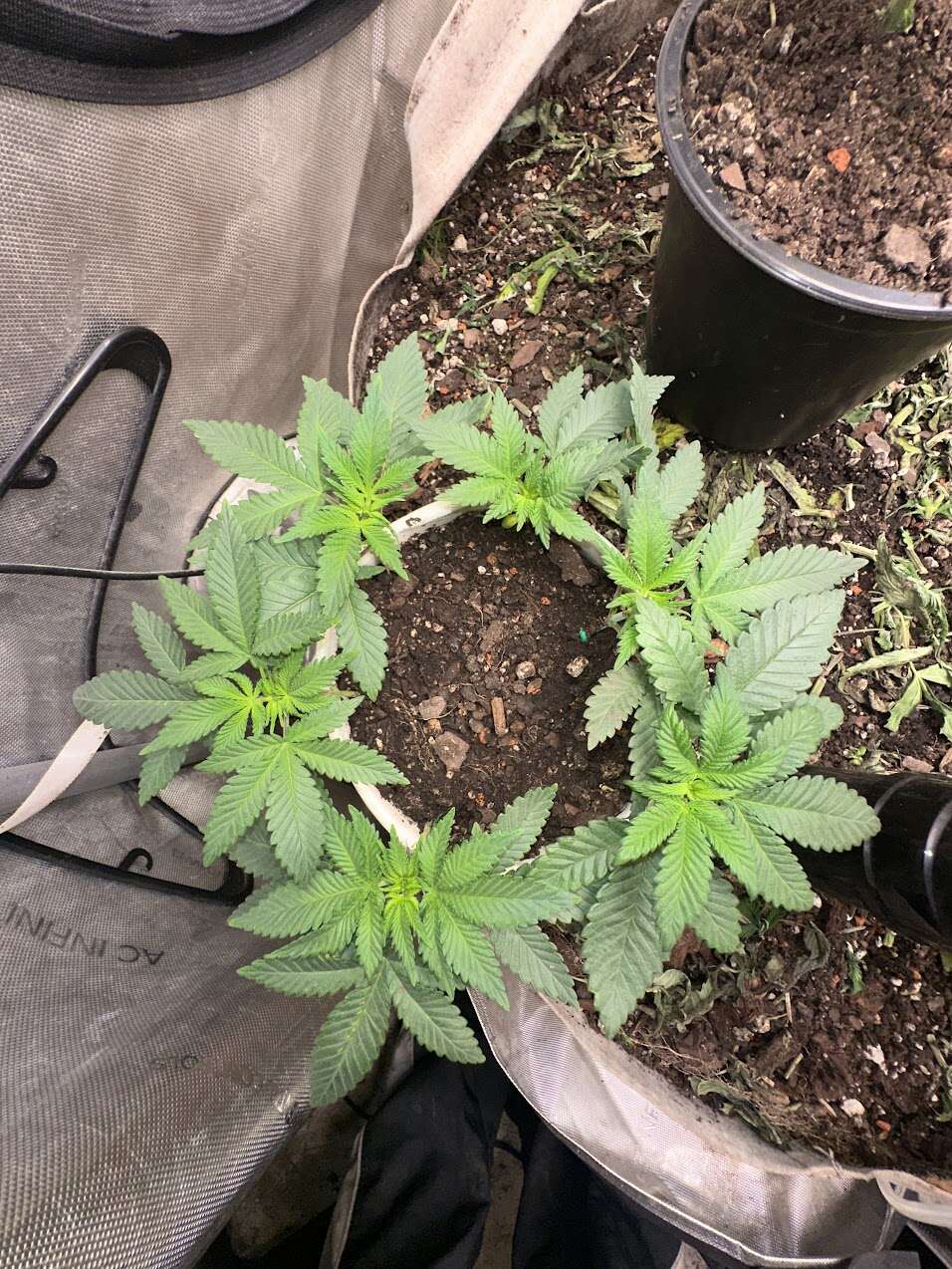
It is a 33” x 18” 65-gallon fabric pot with a full EarthBox Original hidden inside the bottom.
A wicking mat lines the inside of the EarthBox and also runs along the bottom of the fabric pot. The idea is to let the EarthBox reservoir wick moisture into more of the bottom of the bed, instead of only straight up through the normal EarthBox wicking zones.
So the bed has a few different moisture zones:
  • the EarthBox reservoir at the bottom
  • a wetter/heavier wicking zone inside the EarthBox
  • a consistently moist middle layer
  • a slightly drier living top layer
  • mulch/cover crop/chop-and-drop on the surface
The EarthBox reservoir is also aerated with a small aquarium pump/airstone setup. If roots grow down into the reservoir, I want that water oxygenated instead of stagnant.
The reservoir is not filled immediately. I wait until the plants are rooted into the bed, then start using the reservoir. Once it is in use, I only refill it when it is empty.
The goal is to get the benefits of a SIP without losing the benefits of a living bed. I still top-water because I like adding goodies, ferments, aloe, kelp, LABS, teas, etc., and I want the mulch/mycelium/top layer to stay alive.
Basic concept source for the SIP side: EarthBox How the EarthBox Works

Soil Mix​

The EarthBox section has a heavier, wetter mix to improve wicking.
The rest of the bed is my modified living-soil style mix:

Base Soil 50%​

A blend of:
Humus / Biology 30%
  • Worm castings / Homemade vermicompost
  • Homemade finished compost

Aeration / Structure 20%​

  • Pumice
  • Akadama
  • Lava rock
  • Pine bark fines, around 1/4”–1/2”
  • Pine bark bits, around 1/2”–3/4”
This gives me water retention, drainage, air space, biological activity, and structure. I want the bed to hold moisture, but I do not want it to turn into a sealed swamp.
Useful worm casting source: LSU AgCenter Worm Castings

Mulch, Cover Crop, and Surface Biology​

The bed is mulched with pine bark mulch and maintained as a living surface.
I like pine bark because I’m trying to encourage a fungal-leaning soil food web, especially going into flower. I also like seeing the top layer act alive: mycelium, decomposition, worms, cover crop, chop-and-drop, and all the ugly stuff that means the bed is working.
Because wood/bark mulch can temporarily tie up nitrogen during decomposition, I like to pre-soak the mulch in compost-style teas or biological inputs before using it heavily. I also run clover in the cover crop mix to help offset that nitrogen demand and keep the top layer active.
Useful mulch source: Colorado State Extension Mulching
Useful cover crop source: NC State Extension Nitrogen Fixation

Watering Style​

This is a hybrid system.
I do not run it as pure “water-only.”
I also do not run it like bottled salt hydro.
I use:
  • bottom watering through the EarthBox reservoir
  • top watering when I want to feed biology
  • small/medium drenches instead of huge flood events
  • plain water when/if the plant needs it
  • organic inputs when I want to push a certain phase
  • foliars when appropriate
  • restraint when the plants say to back off
The SIP reservoir keeps the bed from drying out too hard and maintains a consistent moisture gradient, while top watering keeps the mulch layer and biological stomach active.
In a 65-gallon bed, I have a lot more buffer than I would in small pots. That is part of why I like this setup. I can add a gallon or two from the top and not instantly panic about overwatering, especially with the SIP/moisture gradient and fabric bed involved.

Environmental Targets​

This is the “performance” side.
I track:
  • DLI Daily Light Integral
  • VPD Vapor Pressure Deficit
  • LST Leaf Surface Temperature
  • Air Temp
  • RH
  • Light Height
  • Light Spectrum
  • pH
  • Flower quality rather than plant growth in flowering
  • Flower health rather than optimal VPD and LST for plant growth but instead cannabinoid/terpene synthesis and fight any risk of budrot.
I care about leaf surface temperature because LED rooms do not behave exactly like HID rooms. Under LEDs, the air temperature can be higher than old-school growers expect, while the actual leaf temperature may still be in range because the light is not heating the leaf/bud surface the same way.
Useful light/DLI source: Apogee Instruments Daily Light Integral
Useful VPD source: GLASE Impact of VPD on Crop Development
Useful leaf-temp source: Nelson & Bugbee Leaf Temperature Under LED vs HPS
Cannabis photosynthesis temp source: Chandra et al. Cannabis Photosynthesis Response

My Current Growth Chart​

This changes as I learn, but this is the basic framework I have been using.
GerminationTaproot visible; no leaves yet16"18/6Seedling
Seedling1–2 nodes, cotyledons showing, <3"16"18/6Seedling
Early Veg3–5 nodes, building structure, 3–8"16"18/6Veg
Peak VegFast daily growth, drinking hard16"18/6Veg
Pre-FlowerPistils at nodes, flip happened12"12/12Veg
Early FlowerStretching hard; bud sites stacking12"12/12Flower
Mid-FlowerStretch done; fattening, frosty12"12/12Flower
Late FlowerDense buds; final swell, browning pistils12"12/12Flower
RipeningFinal 7–14 days; cloudy/amber check, terpene preservation12"12/12Flower
[th]
Stage​
[/th][th]
Quick ID​
[/th]​
[th]
Controller air temp °F Day/Night​
[/th][th]
Surface offset °F Day/Night​
[/th][th]
Target surface temp °F Day/Night​
[/th][th]
RH % Day/Night​
[/th][th]
VPD kPa Day/Night​
[/th][th]
DLI​
[/th][th]
Dim %​
[/th]​
[th]
Light Height​
[/th][th]
Hours​
[/th][th]
Spectrum​
[/th]​
[td]
—​
[/td][td]
0 / 0​
[/td][td]
—​
[/td][td]
—​
[/td][td]
—​
[/td][td]
13​
[/td][td]
25​
[/td]​
[td]
79 / 78​
[/td][td]
-1 / 0​
[/td][td]
78 / 78​
[/td][td]
79 / 85​
[/td][td]
0.6 / 0.5​
[/td][td]
15​
[/td][td]
29​
[/td]​
[td]
82 / 80​
[/td][td]
-2 / 0​
[/td][td]
80 / 80​
[/td][td]
72 / 80​
[/td][td]
0.8 / 0.7​
[/td][td]
20​
[/td][td]
37​
[/td]​
[td]
85 / 83​
[/td][td]
-3 / -1​
[/td][td]
82 / 82​
[/td][td]
66 / 73​
[/td][td]
1.0 / 0.9​
[/td][td]
30​
[/td][td]
56​
[/td]​
[td]
85 / 81​
[/td][td]
-3 / -1​
[/td][td]
82 / 80​
[/td][td]
64 / 69​
[/td][td]
1.1 / 1.0​
[/td][td]
35​
[/td][td]
83​
[/td]​
[td]
83 / 76​
[/td][td]
-3 / 0​
[/td][td]
80 / 76​
[/td][td]
60 / 64​
[/td][td]
1.2 / 1.1​
[/td][td]
40​
[/td][td]
96​
[/td]​
[td]
78 / 72​
[/td][td]
-2 / 0​
[/td][td]
76 / 72​
[/td][td]
54 / 55​
[/td][td]
1.3 / 1.2​
[/td][td]
42​
[/td][td]
100​
[/td]​
[td]
75 / 68​
[/td][td]
-1 / 0​
[/td][td]
74 / 68​
[/td][td]
49 / 44​
[/td][td]
1.4 / 1.3​
[/td][td]
35​
[/td][td]
83​
[/td]​
[td]
73 / 66​
[/td][td]
-1 / 0​
[/td][td]
72 / 66​
[/td][td]
43 / 36​
[/td][td]
1.5 / 1.4​
[/td][td]
30​
[/td][td]
71​
[/td]​
These are not universal numbers. They are my working targets.
I adjust by plant response. If they are praying, drinking, stacking, and not showing stress, I keep moving. If they start telling me the room is too much, I listen. The goal is to find the outliers that enjoy their perfect environment, and don't.

Training and Canopy Management​

Because this is a small tent and a crowded bed, I train pretty aggressively.
I use:
  • topping
  • bending
  • tying down
  • supercropping
  • lower cleanup
  • selective defoliation
  • airflow cleanup
  • height management
  • moving plants around before they are fully locked in
  • cloning/sexing when needed
The goal is an even canopy and good airflow. I do not need a giant plant in a small tent. I need efficient tops, healthy lowers where I want them, and enough space for air and light to move.
I also use the training as part of selection. Some plants bounce right back. Some sulk. That matters.

Inputs I Use​

This is the part people usually ask about.
I do not use all of these every time. A lot of them are used lightly, at partial doses, or only when the plant/stage/bed calls for it.
My general philosophy is diversity at lower doses, multiple products with overlapping as well as different benefits, while not hammering one product over and over. Ex: 1/4 tsp of Recharge and Stash Blend then 1/2 tsp of one or the other.

Top-Dress Inputs​

Things I have used or currently use for top-dressing:
  • homemade vermicompost
  • worm castings
  • finished compost
  • BuildASoil Craft Blend
  • Gaia Green Power Bloom
  • Gaia Green Superfly Insect Frass
  • unfortified nutritional yeast
  • bokashi bran
  • Nature’s Brix
  • chop-and-drop plant material
  • cover crop material
  • mulch/top-layer organic matter
I usually cover top-dresses with vermicompost/castings and water them in gently.

Water-In / Drench Inputs​

Things I have used in watering or drenches:
  • plain water
  • JSP Q20AG
  • soluble kelp powder
  • 200x aloe vera flakes
  • Recharge
  • Stash Blend
  • Nature’s Brix
  • fish hydrolysate
  • silica
  • Sensizym
  • LABS
  • BTI
  • nutritional yeast
  • ferments
  • compost/vermicompost style teas
LABS source: University of Hawaii CTAHR Natural Farming: Lactic Acid Bacteria
BTI source: UC IPM Fungus Gnats and Bti

Foliar Inputs​

I do use foliars, especially earlier in the cycle.
Things I have sprayed include:
  • Cal-Mag
  • silica
  • Stash Blend
  • Q20AG
  • BTI
  • aloe
  • soluble kelp
  • light biological/mineral mixes depending on stage
I’m more cautious with foliars once flowers start forming. Early on, I like foliars for fast plant response and stress support. Later in flower, I’m more selective.

Ferments / Biology​

I like ferments because I’m not just trying to feed NPK. I’m trying to feed and signal biology.
Things like LABS, plant ferments, bee-bread-style ferments, aloe, kelp, yeast, compost extracts, and similar inputs are not just “food” to me. I look at them as biology support, enzymes, growth signals, micronutrients, cofactors, and precursor material.
That does not mean more is always better. Ferments can go sideways if abused. I usually prefer low-dose, occasional use.

Pest / IPM Style​

I try to keep IPM mostly biological and preventative.
Main ideas:
  • healthy soil biology
  • good airflow
  • not letting the top layer stay nasty-wet
  • BTI when needed for fungus gnat pressure
  • frass/chitin-type inputs
  • observation
  • sticky traps if needed
  • not panicking at the first bug
In a living bed, I expect life. The goal is balance, not sterility.

Germination Style​

I have been experimenting here too.
I used to lean more toward aloe/paper towel style germination, but after testing worm-casting trays, I’m leaning more toward germinating directly in a biologically active, gentle medium.
The worm-casting tray method gave me better results in my side-by-side test and involved less handling. That matters, especially with older, rarer, or more sensitive seed lots.
Current preferred direction:
  • gentle moisture
  • worm castings / light medium
  • warmth
  • patience
  • less handling
  • do not keep messing with them every five minutes even though I absolutely want to lol

How I Judge Plants​

This is one of the biggest parts of the grow.
I am not only judging final bag appeal.
I’m watching:
  • vigor
  • root-in speed
  • ability to handle transplant/flip/training
  • reaction to higher DLI
  • reaction to VPD targets
  • leaf posture
  • stress recovery
  • structure
  • flower timing
  • bud-site formation
  • aroma intensity
  • unusual terpene expression
  • frost/resin
  • flower density
  • pest/disease tolerance
  • whether the plant makes me keep checking on it
A plant does not have to be perfect to be interesting. Sometimes the weird one is the one worth keeping.
But for my “organic performance” idea, the winners are the ones that keep moving, keep stacking, keep smelling, and keep praying while the room is pushing them.

What This Style Is Not​

This is not:
  • strict water-only
  • bottled-salt hydro
  • “set it and forget it”
  • sterile growing
  • no-input living soil
  • a universal recipe
  • me saying everyone else is wrong
This is a hybrid approach.
It is organic/living soil at the root zone, SIP/wicking at the moisture level, and controlled-environment agriculture at the canopy level.
I want the soil to feel natural, but I want the environment measured.

What I’m Still Learning​

A lot.
I’m still dialing in:
  • how long to veg in the bed before using the reservoir heavily
  • how much top-watering is ideal with the SIP base
  • how far I can push DLI without CO2
  • how different cultivars respond to the same VPD/LST targets
  • how much input diversity is helpful before it becomes noise
  • how to keep the top layer alive without overdoing moisture
  • when to push and when to coast
  • which genetics actually like this style
This is why I journal so much. I’m trying to build a system and learn from the plants in real time.

Useful Sources / Rabbit Holes​

These are not all “cannabis-specific,” but they explain a lot of the ideas behind how I grow.

Soil / Mulch / Biology​

Ferments / LABS / Biological Inputs​

Fungus Gnats / BTI​

Colorado State Extension Fungus Gnats as Houseplant and Indoor Pests​

Why I Use These Sources Even If They Are Not “Weed Smokers”
One thing I want to clarify about the sources I link:
I am not using every source as a judge of smoke quality.
A university paper, extension article, sensor company, or greenhouse crop source may not know what I personally consider elite cannabis. They may not know what “roadkill,” “church,” “chem,” “sour,” “OG,” “burns clean,” or “proper head” means in the same way growers and smokers talk about it.
That is fine.
That is not why I am using them.
I use those sources for the parts of growing that are not cannabis-culture opinions. Things like:
  • how plants use light
  • how PPFD becomes DLI
  • how VPD affects transpiration
  • how leaf temperature changes under LED vs HPS
  • how mulch affects soil moisture
  • how worm castings affect soil biology
  • how sub-irrigated planters wick water
  • how roots respond to moisture and oxygen
  • how microbes, ferments, and organic matter interact with the rhizosphere
Those are plant-science questions before they are cannabis questions.
A person does not have to smoke cannabis to understand photosynthesis. They do not have to love Sour Diesel to understand vapor pressure deficit. They do not have to chase skunk terps to understand that light intensity, temperature, humidity, roots, and water movement affect plant metabolism.
That is why I separate the two things:
Science sources help explain the machine.
Grower experience helps judge the final flower.

I do not expect Apogee to tell me which plant has the best high. I use Apogee because DLI is a measurement of the total photosynthetic light a plant receives per day. That matters because cannabis, like other plants, is powered by light.
I do not expect greenhouse VPD articles to tell me what “top shelf” smells like. I use VPD research because VPD affects transpiration, stomata, water movement, nutrient flow, stress, and photosynthesis. Those things absolutely affect how a plant performs.
I do not expect leaf-temperature studies to rank cultivars. I use them because LED rooms and HPS rooms heat leaves differently, and that changes how I interpret air temperature, leaf surface temperature, and stress.
I do not expect worm-casting or mulch extension articles to know my preferred terp profile. I use them because castings, compost, mulch, and organic matter affect the living soil that grows the plant.
So when I link sources, I am not saying, “These people know the best weed.”
I am saying:
These sources explain the biological and environmental tools I am using to grow the weed.
The final quality call still comes from the plant, the grower, the nose, the jar, the dry, the cure, the burn, and the effect.
That is where cannabis-specific grower experience matters.
To me, the best approach is not science versus grower experience. It is both.
Use science to understand the levers.
Use experience to decide when to pull them.
Use the finished flower to judge whether any of it actually worked.
That is the whole point of this thread.
I am trying to combine living-soil grower intuition with controlled-environment plant science, then let the plants show me who is worth keeping.

Final Thought​

If I had to summarize my grow style in one sentence:
I’m trying to combine living-soil patience with controlled-environment precision, then use that pressure to find the plants that actually deserve to be kept, reproduced, or crossed.
That’s the whole owl philosophy right now. 🦉🕊️
 

Pre-Flower/Early Flower Update: Day 26F​

IMG_5302

IMG_5313

IMG_5314


Quick Status​

ItemCurrent (Day/Night)
StageDay 26 of 12/12
PhasePreflower/Early Flower
Main runKarma Sour Diesel BX2 F2, Daywrecker(Original Diesel, Diesel #1), King Louis XIII OG, BOG Sour Strawberry Kush X Roadkill Skunk, Forum Cookies x Shiva Skunk S1, Slaughtering Betsy x Black Domina
BedDIY Fabric No-Till SIP Bed
DLI42
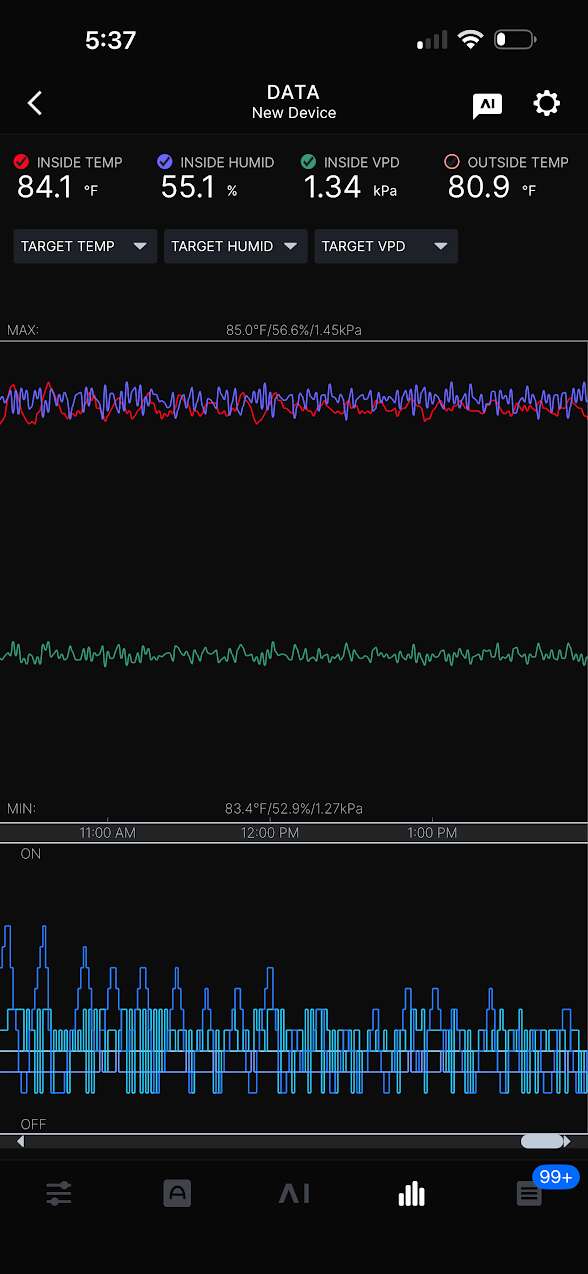
Average Temp78°F / 72°F
Average Leaf Surface Temp76°F / 72°F
Average RH54% / 55%
Average VPD1.3kPa / 1.2 kPa
Today’s workWatering
OtherGuadalajara, Jalisco 3rdd Generation Reproduction

Today’s Notes​

Watered with 2 gallons of
  • Q20ag
  • Recharge
  • Stash Blend
  • Unfortified Nutritional Yeast
  • LABS
  • Sensizym
  • BTI
  • Natures Brix
and 2 gallons of plain water.
Still under 10% rule.
Also filled reservoir of Earthbox as it was completely empty. I know the bed has been on the drier side in preparation for this watering so we should be all good.
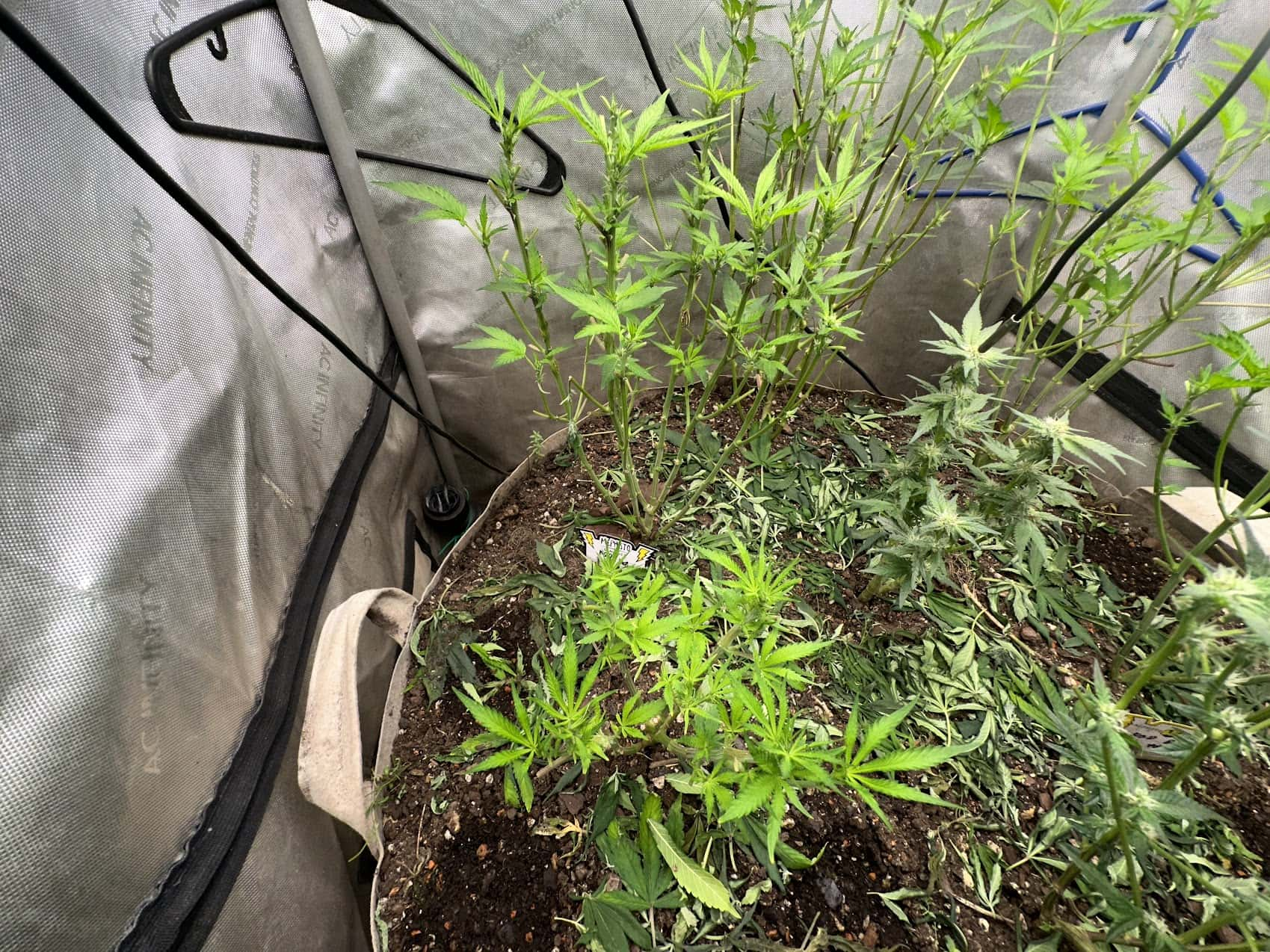
Don't make fun of my defoliation please, I think I overdid it while super high a few days ago lmfao but they're loving life right now and have gotten used to the light and the King Louis has came out of it's funk so we should be straight sailing.

Environment
:thermometer:

IMG_5328.PNG

IMG_5329

The graph looks more dramatic than the room actually is. Since the environment is stable, the app auto-scales the chart tightly, so small changes like ±1°F or a few percent RH look like big swings. The averages are the numbers I’m paying attention to most.
The chart below is target ranges by growth stage. Don’t try to hit every number perfectly, focus on the weakest link and fix that first. These are guidelines, not rules. (The numbers below are tuned for fast-growing annuals like cannabis in my tent under my lights with my inputs and soil.)

My Current Growth Chart​

This changes as I learn, but this is the basic framework I have been using.
GerminationTaproot visible; no leaves yet16"18/6Seedling
Seedling1–2 nodes, cotyledons showing, <3"16"18/6Seedling
Early Veg3–5 nodes, building structure, 3–8"16"18/6Veg
Peak VegFast daily growth, drinking hard16"18/6Veg
Pre-FlowerPistils at nodes, flip happened12"12/12Veg
Early FlowerStretching hard; bud sites stacking12"12/12Flower
Mid-FlowerStretch done; fattening, frosty12"12/12Flower
Late FlowerDense buds; final swell, browning pistils12"12/12Flower
RipeningFinal 7–14 days; cloudy/amber check, terpene preservation12"12/12Flower
[th]
Stage​
[/th][th]
Quick ID​
[/th]​
[th]
Controller air temp °F Day/Night​
[/th][th]
Surface offset °F Day/Night​
[/th][th]
Target surface temp °F Day/Night​
[/th][th]
RH % Day/Night​
[/th][th]
VPD kPa Day/Night​
[/th][th]
DLI​
[/th][th]
Dim %​
[/th]​
[th]
Light Height​
[/th][th]
Hours​
[/th][th]
Spectrum​
[/th]​
[td]
—​
[/td][td]
0 / 0​
[/td][td]
—​
[/td][td]
—​
[/td][td]
—​
[/td][td]
13​
[/td][td]
25​
[/td]​
[td]
79 / 78​
[/td][td]
-1 / 0​
[/td][td]
78 / 78​
[/td][td]
79 / 85​
[/td][td]
0.6 / 0.5​
[/td][td]
15​
[/td][td]
29​
[/td]​
[td]
82 / 80​
[/td][td]
-2 / 0​
[/td][td]
80 / 80​
[/td][td]
72 / 80​
[/td][td]
0.8 / 0.7​
[/td][td]
20​
[/td][td]
37​
[/td]​
[td]
85 / 83​
[/td][td]
-3 / -1​
[/td][td]
82 / 82​
[/td][td]
66 / 73​
[/td][td]
1.0 / 0.9​
[/td][td]
30​
[/td][td]
56​
[/td]​
[td]
85 / 81​
[/td][td]
-3 / -1​
[/td][td]
82 / 80​
[/td][td]
64 / 69​
[/td][td]
1.1 / 1.0​
[/td][td]
35​
[/td][td]
83​
[/td]​
[td]
83 / 76​
[/td][td]
-3 / 0​
[/td][td]
80 / 76​
[/td][td]
60 / 64​
[/td][td]
1.2 / 1.1​
[/td][td]
40​
[/td][td]
96​
[/td]​
[td]
78 / 72​
[/td][td]
-2 / 0​
[/td][td]
76 / 72​
[/td][td]
54 / 55​
[/td][td]
1.3 / 1.2​
[/td][td]
42​
[/td][td]
100​
[/td]​
[td]
75 / 68​
[/td][td]
-1 / 0​
[/td][td]
74 / 68​
[/td][td]
49 / 44​
[/td][td]
1.4 / 1.3​
[/td][td]
35​
[/td][td]
83​
[/td]​
[td]
73 / 66​
[/td][td]
-1 / 0​
[/td][td]
72 / 66​
[/td][td]
43 / 36​
[/td][td]
1.5 / 1.4​
[/td][td]
30​
[/td][td]
71​
[/td]​


The Photos​


IMG_5312


IMG_5317

IMG_5316

IMG_5315

IMG_5320

IMG_5319

IMG_5318


IMG_5321

IMG_5324

IMG_5322
 

📊 Rolens' Hunt for Organic Performance (Repros, Crosses, and More!)​

I think once I'm decide on what source I wanna use I'm going to begin my mulch experiment since this already worked so well.

This is my plan for the next run and I'll see how it goes:

  • Harvest everything currently in the tent.
  • Lay down cover crop and pine bark mulch
  • Let cover crop grow through, chop, then lay down top dressing/worm casting mix, with straw.
  • Lay down Organic Blue Oyster Mushroom Sawdust Spawn, then cover with more mulch.
  • Every top dressing etc, water in then cover with more straw.
As for the Jalisco in this equation I think I'm going to transplant them to 1 gallon fabric pots when the time comes, and leave them on top of the bed. This will be to restrict their root mass a bit in order to keep them a bit under control. Afraid to just let em rip in the bed and one dominate too much and outgrow the tent lol. This is how the NoTill Kings in SoCal grow so I think it should work well enough for a repro and just letting the pollen fly. Let's me be able to cull the hermies and stuff too and not have leftover canopy space.

Guadalajara, Jalisco 3rd Generation
:mexico:
:fuelpump:
:tangerine:

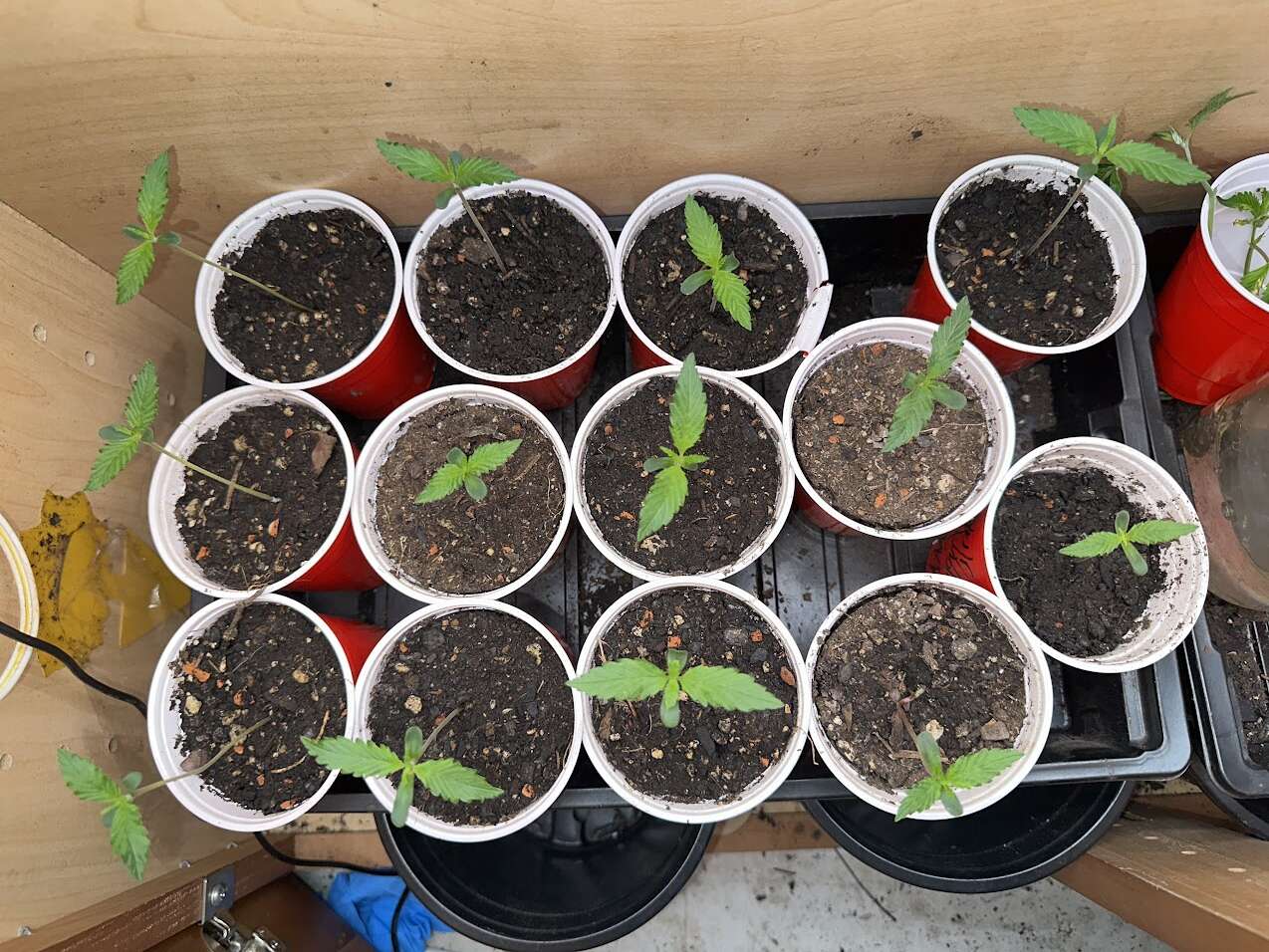
They're lookin' good. I bottom watered em all about a quarter gallon yesterday. It let the ones that needed it soak up some water and the ones that didn't only moisten the lower 1/8th or so of the cup.

IMG_5354


IMG_5355

The Bandaid Haze #7 and Notso Sour from @BenDayHoe are also doing well in my mini aeroponic cloner
:metal:


IMG_5356
 
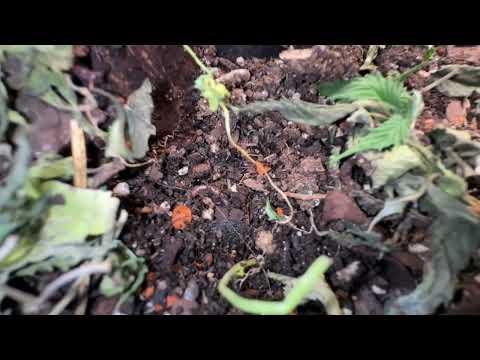
Life in My Soil 7/4/26
hqdefault.jpg

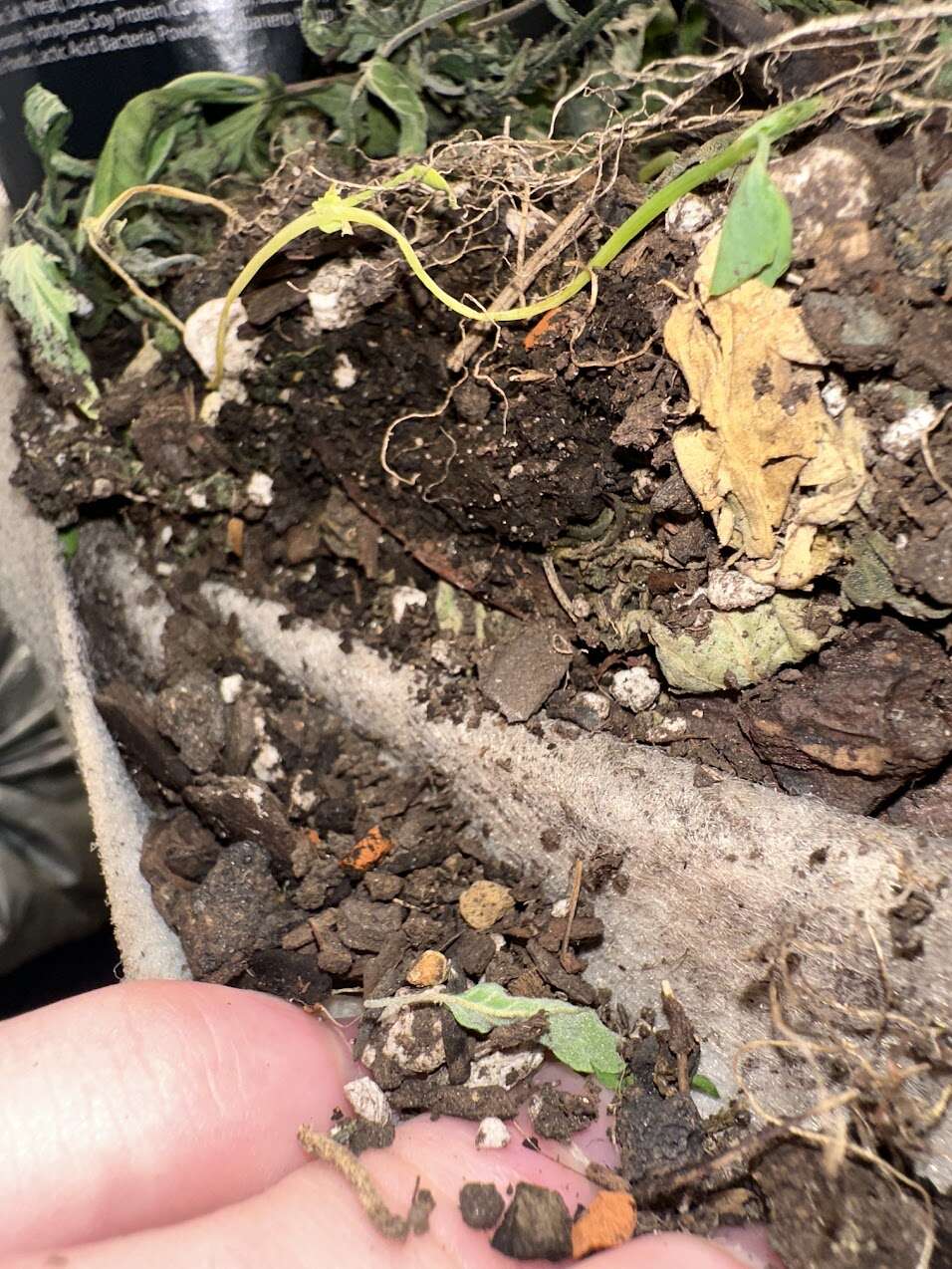
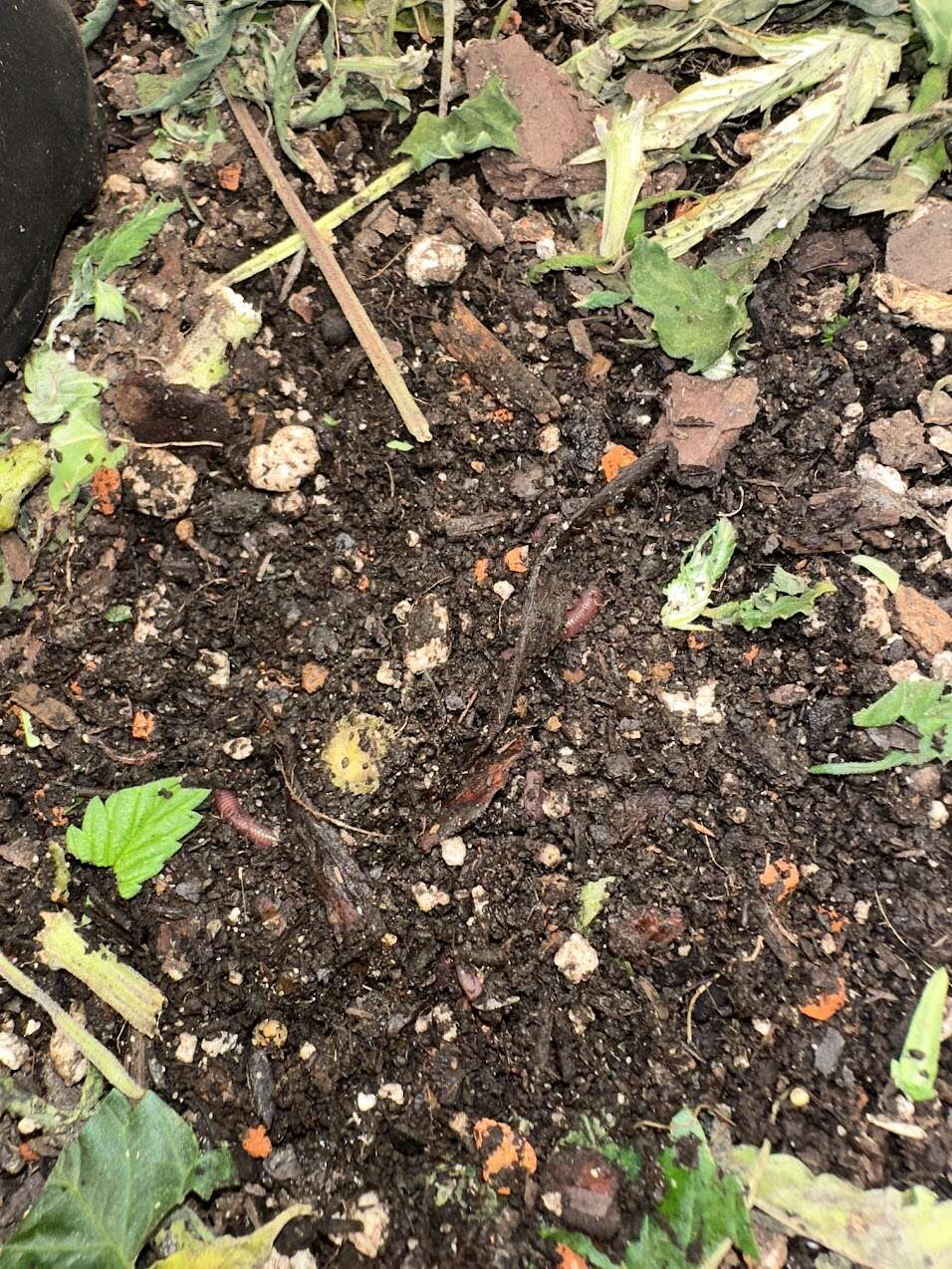
Wish my camera quality was a bit better so you could see every single creature running around, but they're easy to see with the plain eye when you're here. You can see all worms and bugs right below the first 1/2 inch that's getting dry. I won't water today though to start inviting a bit of drought stress to start pushing trichome production.
Pics Included
This entire inch or so has completely myceliated. It's hard to tell on the dry outer edges of the fabric pot but that's exactly what we want. That mycelium acts as a super stomach to break down everything amazingly fast, with the help of the bugs and worms and all of their benefits too!
Fungal Pine Bark Layer/Worm Castings/Top Dressings
IMG_5338

IMG_5339

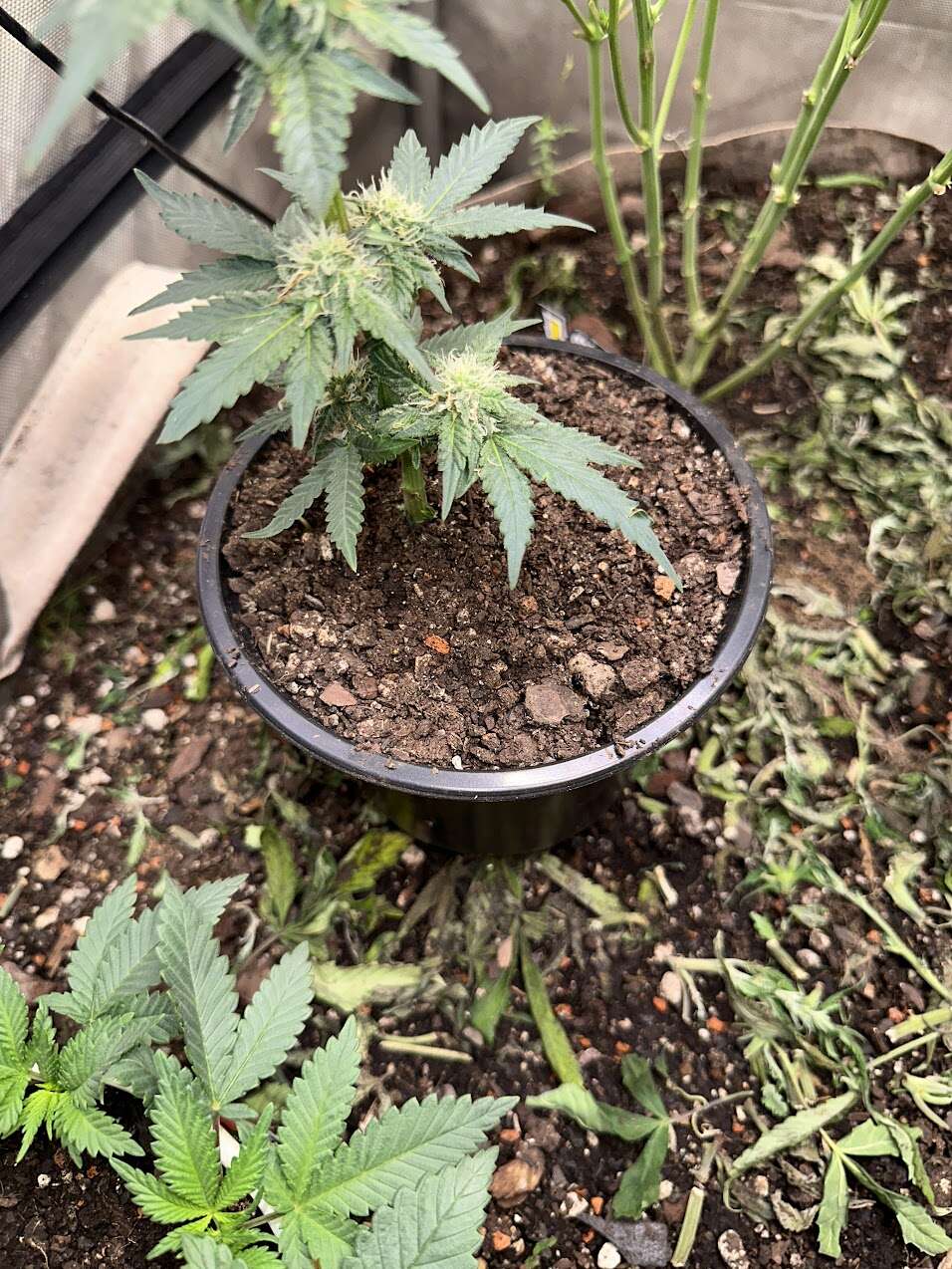
Underneath the pot on top
IMG_5351

IMG_5352

IMG_5353

I'd also like to address what problems we currently have for transparency.
First, we over defoliated. Yeah, lmao, it happens, but won't again...hopefully lmfao.
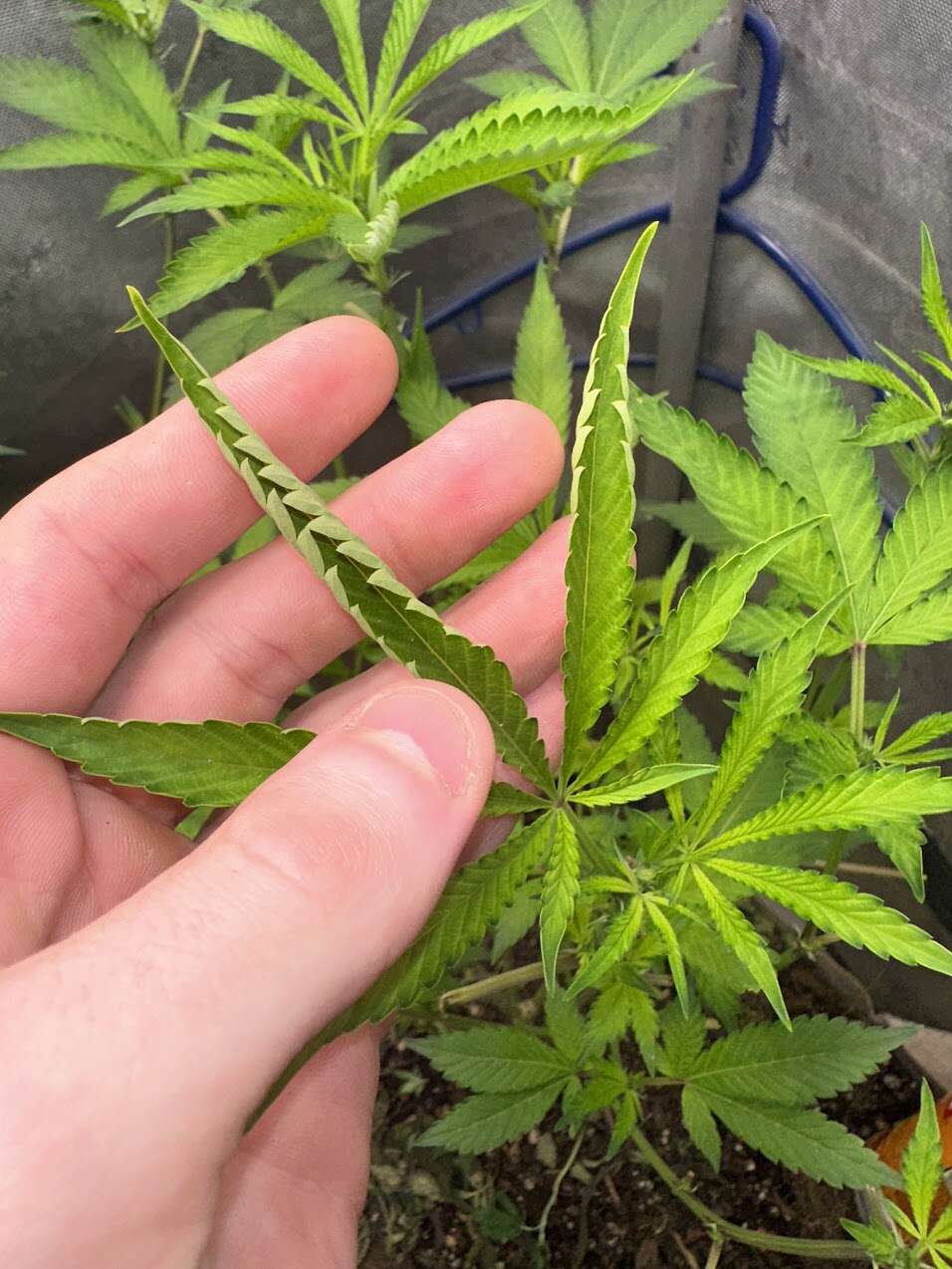
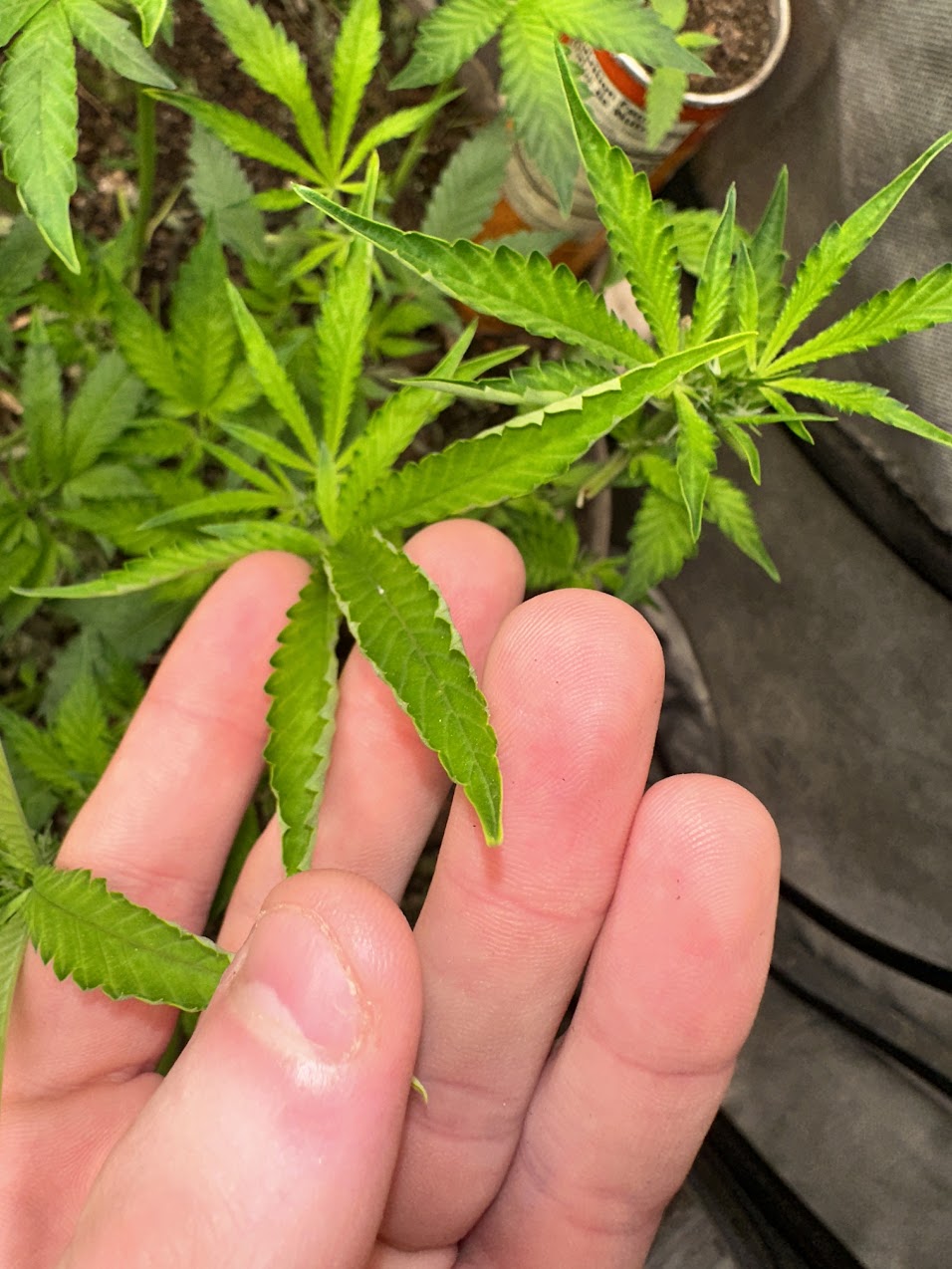
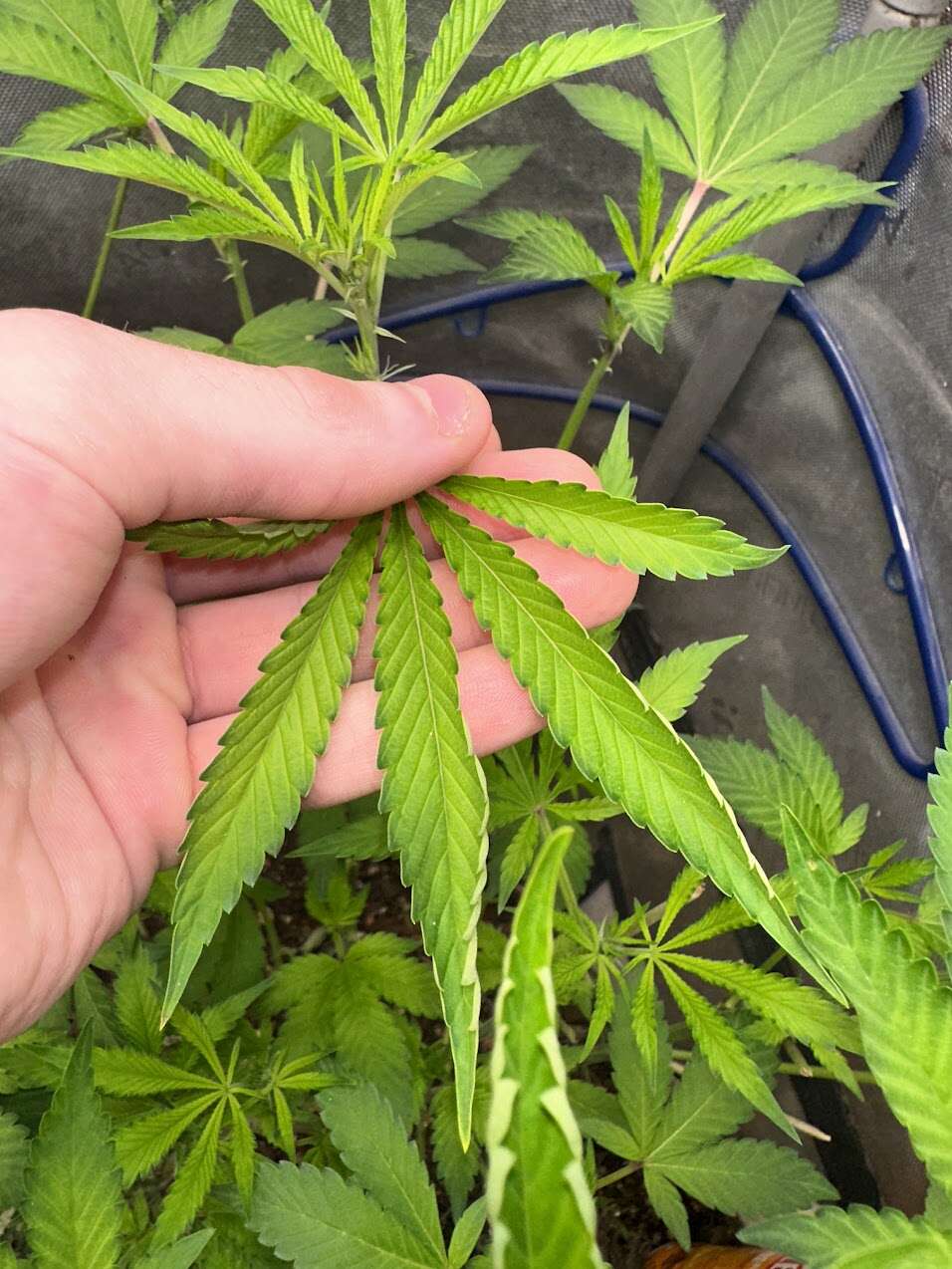
Second, the Karma Sour D are still showing signs of too much light(Too high DLI). But, it's only 2 of the 3. That's fine while we're in flower honestly, and I'd bring it down a bit if this wasn't an experimental run in the first place. We WANT to see the plants that don't perform, just as much as we WANT to see the plants that do. If I was hunting these then I'd really be keeping KSD #3, while still examining the flower, etc of the other 2, and if needed, I'd now know in the future that those 2 need less light, if I was to pass out clones, or breed with it, which is the other eventual goal of all of this.
2 KSD showing signs of too much light.
IMG_5342

IMG_5340

IMG_5341

IMG_5343

1 KSD(KSD #3*), also the smelliest, NOT showing signs of too much light(high DLI).*
IMG_5346

Also, none of the other plants in the tent are showing signs of too high DLI(too much light), except for the seedlings for the contest which are keeping undesirable, SUPER stacked nodes because of the no need to stretch, even under 12/12. Whether that's really undesirable is up to the grower though.
IMG_5347

IMG_5350

IMG_5345

IMG_5348

IMG_5349

One thing at a time. Yeah, I'm a beginner, but I do know what I'm talking about a little bit lol. Now that I know the bed and soil is aligned next run is probably me trying to dial in the performance chart so more enjoy it while we stay have the outliers
:100:

A lot of this all comes from the old school growers of Clackamas Coot etc.
 
Right?! I just tried looking up more from In The Sticks's Bandaid and couldn't find anymore info so I figured why not ask him lol.

Pretty cool it's a short trail back to Doc supposedly. I wou'd've thought clones like this would've been passed through a lot more hands but I obviously don't know the clone game very well lol.

Couldn't thank you enough again man!

Speaking of which, the Daywrecker(Original Diesel, Diesel #1) clone ya sent me is officially seeded by the Limon Verde Oaxacan pollen from @corey827
:metal:
:heart_on_fire:


Might actually be able to get some seeds out before November! Probably not a lot though, I kinda butchered all these ladies with their last haircut lmfao. Note to self, don't defoliate stoned as f^ck!
:laughing:


IMG_5333
 
Looking good brother! Lots of great information! Your going to have some 🔥 crosses
 
The Vote

And now for something special I wanted to do to celebrate the opening of my official breeding journal I'd like to get some input from you guys.

What female(s) would you like to see grown out and crossed with 707 SFV OG BX3 F4(Courtesy of Budderton) males?
Below is the list.

Please cast your vote by commenting ONE(1) strain you choose and why. Excited to see what everyone picks!

- RealSeedCo Bokeo: This Bokeo was a previous drop from RealSeedCo, that was then open pollinated to their newer drop of Bokeo #2.
- RealSeedCo Malawi Gold F2
- Kona Gold(Source 1):
F10 at this point. Straight from an old grower in Hawaii (SodaPop); "These have been in state and survived through Green Harvest, they’ve been growing out in Waianae from the “F5-F8” generation and I’ll be making an F9 of this selection from the original line. I guess it’s more like Waianae Gold now days."
- FBSC Kona Gold(Source 2): From good member @corey827. I don't know too much else besides that except that @corey827 doesn't play around!
- Cryptic Labs Oaxacan Gold F2: 13-20 week pheno dependent.
- Mountain Organics Acapulco Gold
- Guadalajara, Jalisco 3rd Gen:
12-15 week pheno dependent. Dank, incense, grapefruit.
- Green Mountain Seeds Purple Satellite F2: 1979 Oaxacan Gold Purple IBL x Nepalese Sativa.
- FBSC 1960 Jamaican Lambsbread
- Santa Maria Columbian Gold (SMCG)
- Bodhi Pleiadean Love Nest F3:
Vietnamese x Kashmir Azad
- Indian Landrace Exchange Maruf Black (Source 1): "These were more of a fuel smell not much rotten flesh stank."
- Kropduster Maruf Black BX (Source 2): (Pishin Black x Maruf Black) x 5 Maruf Black males. "You get putrid dumpster phenos, peanut butter pheno , i got one that smelled like toasted garlic and onion and another that smelled like mango chutney."
- Kandahar Black BX: (Black Lebanon × USC Kandahar Black) F3 × (Bodhi Kandahar Black × USC Kandahar Black).
Holy spreadsheets, Batman! That's a detailed grow. I'm burning my 1st post here to vote for Malawi Gold. The world needs more sativas.

I'm also going to follow this thread to compare your grow(s) to my own "K.I.S.S." method, which bypasses all the new-school data and measurements in favor of a larger room (for easier humidity/vpd control), and a simple, soilless mix/organic nute regimen. I'm far too lazy, and I don't sell or caretake, so I only need my buds to please one person. :)

Good luck, and amazing effort! I'm sure you'll nail the breeding.

-- '89
 
Page 1 of 1 · Replies 1–12 of 12
1
Back
Top Bottom