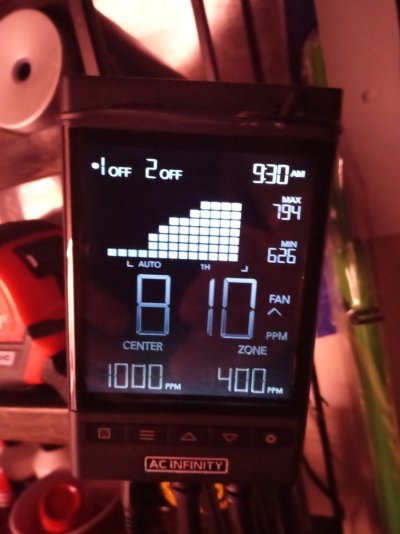
C'mon now L.G.I., I respect you and most of the advise you
give people; but don't scare the girl. Plants respire very little
Co2 & nowhere near enough to be dangerous to pets or
humans, especially w/ only 3 plants in a well ventilated
room. You can safely work in a
sealed grow room
cranking 1500ppm of Co2 with no problem; at the very
worst, maybe a little light headedness.
From the web: (*highlights are mine)
do they release enough co2 to be dangerous to pets or humans?
Dangerous CO₂ levels start at 5,000 ppm, and serious effects occur at 40,000+ ppm.
*Even in a completely sealed room with hundreds of plants, CO₂ levels from respiration alone would not reach dangerous levels.
Humans exhale much more CO₂ than plants at night—around 20,000 mL per hour compared to a plant’s 50-200 mL.
Cannabis plants do not release enough CO₂ during the dark period to be dangerous to humans or pets.
How Much CO₂ Do Cannabis Plants Release at Night?
A mature cannabis plant may release 50-200 mL of CO₂ per hour through respiration.
A dense canopy (1 m²) might increase CO₂ levels by 50-200 ppm overnight *
in a sealed grow room.
In a ventilated space, this CO₂ is quickly diluted and does not pose any risk.
Is This Dangerous?
Dangerous CO₂ levels start at 5,000 ppm, and serious effects occur at 40,000+ ppm.
Even in a completely sealed room with hundreds of plants, CO₂ levels from respiration alone would not reach dangerous levels.
Humans exhale much more CO₂ than plants at night—around 20,000 mL per hour compared to a plant’s 50-200 mL.
The O₂ uptake is relatively low, much less than what a human or pet breathes.
A dense canopy of cannabis plants in a sealed room could slightly reduce oxygen levels, but not enough to cause concern in a ventilated space.
Key Takeaways:

Cannabis plants DO take in oxygen at night.
They release CO₂ as a byproduct of respiration.
In a well-ventilated grow room, this is not a problem.
If a grow is completely sealed, oxygen levels could drop slightly, but not dangerously.


 a quick google search would be a good idea. it is the tent / fan noise thats a problem when sleeping, i have my extractor turned off when sleeping in the room if that helps.


 she just mixed up the purpose of a carbon filter lol