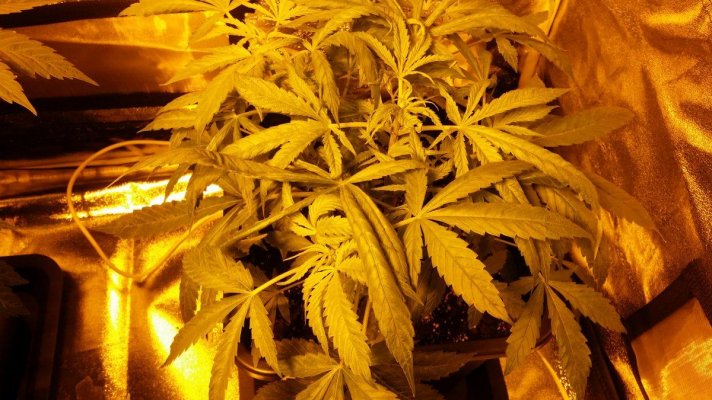
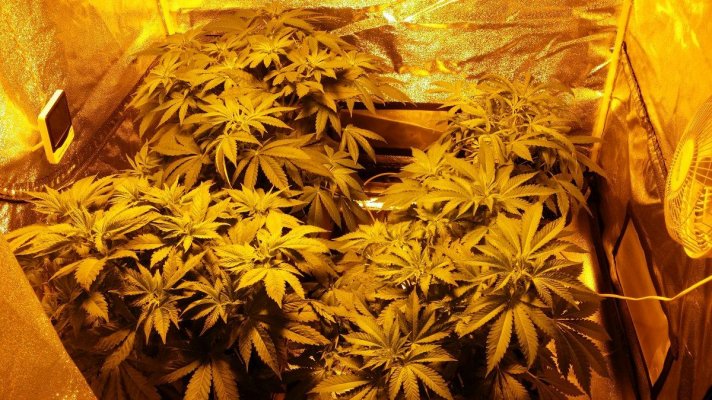
This of course is for over fertilization if you determine that temps arent your issue.
Sight and Touch: Sensory Tips on Discovering Over-Fertilization Far Earlier!
Don't wait for tip-burn before easing off the nutrients! Your plants will give you a whole host of sensory hints that you may be over-cooking things slightly. Learn to observe your plants differently, using a combination of sight and touch, to spot the signs of over-fertilization earlier before any longterm or irrevocable damage is done!
Over-fertilization occurs when we mix up a nutrient solution that is too concentrated for our plants to use efficiently and safely. The classic sign is a burnt appearance to leaf tips and margins. But when you see this you're already a fair way down over-fertilization street and the remedial process will take time and patience.
An excess of salts in the root zone causes your plants untold stress and it can take days or even weeks of flushing to try and restore the balance-lost time, momentum and vigor.
The trick is not just to
look out for signs of over-fertilization, but to use your other senses too-namely
touch. Also, it's important to look at different parts of the plant, as we will see below:
MID-GROWTH LEAVES
HEALTHY - Here's a photo showing a regular fed "Money Maker" tomato plant growing in coco coir substrate with three-part hydroponic nutrient at EC 2.4 (ideal). Leaves on the middle of the plant show a healthy green color.
5 DAYS OF OVER-FERTILIZATION - The same leaves have turned a darker green color. Look out for foliage feeling thicker and tougher to the touch.
10 DAYS OF OVER-FERTILIZATION - The leaves are now very dark bluish/green color. This is a classic sign that you've overdone the nutrient strength or that excess salts are collecting in the growing media. Feel the leaves too. At this stage they felt very thick and almost leathery.
UPPER LEAVES / NEWER GROWTH
HEALTHY - This is how new growth should appear with regular feeding.
5 DAYS OF OVER-FERTILIZATION - New growth leaves appears dull or somewhat matt. This is a classic reaction to a sudden jump in nutrient strength, and can be an indicator that the nutrient strength of the solution or growing media is worth investigating.
10 DAYS OF OVER-FERTILIZATION - Now the leaves are turning bluish/green.
What Happens When Things Get Really Bad?
If you fail to respond to these signs, you're soon do very serious damage to your plants. Here's what happens when you keep on using an overly concentrated nutrient solution:
Most of the upper leaves will feel quite limp and are clearly water deprived despite moist growing media and mild environmental conditions. Very high nutrient concentration around the roots has a negative impact on water uptake - hence the wilting.
And Finally … Discoloration and
TIP BURN! Yikes!!
After fifteen days of over-fertilization the edges of the middle/upper leaves were starting to show some nutrient toxicity symptoms (Picture 7). It's evident in the slight discoloration around the edges of the leaves.
Two days after this, much of the discoloration turned to tip burn (Picture 8). These burnt edges were dry, crisp, and easily broke away from the leaves.
Conclusion
Don't wait for the obvious signs of over-fertilization: leaf curl and tip burn. Instead, look out for primary symptoms such as darkening in leaf color, a matt or dull appearance, paying particular attention to the green shade of the middle and upper leaves.
The sooner you act, the easier any damage will be to repair!
Here are some guidelines to leaching excess salts/nutes fro various sizes of pots.
Pots Or Containers
- 6" of water applied will reduce salts by 1/2
- 12" of water will reduce salts by 4/5
- 24" of water will reduce salts by 9/10
Benches
- Apply 1/2 to 1 gal water per sq. ft. Wait 1 hr. and repeat.
- If salts are excessive because slow release fertilizer was used improperly, repot the plants or scrape some of the slow release from the medium surface.
- If salts are excessive because of a combination of slow release fertilizer and soluble fertilizer, repot the plants.