Log In Register

Use of UVA and UVB light!

  • Thread starter Thread starter DeepCreekFarms
  • Start date Start date
  • Tagged users Tagged users None

Use of UVA and UVB light!

DeepCreekFarms 41 Replies 21,144 Views
Page 2 of 3 · Replies 21–40 of 42
Not true. I've seen a growreport where a single 310nm diode bleached a full canopy (small tent) all top leaves got stripes
Problem with UVB via LED is it's not diffuse enough
I'd like to see that. What I have read and heard from industry insiders is that UVA is no problem for LED, UVB the LEDs burn out too fast to make them viable with current tech. I use Florescent for UVB.
 
try a chemotype I (pure sativa) plant, as not all cannabis genotypes respond positively actually to UVB (see Lydon on that)
anyway, very nice to see some side-by-sides on 730nm - that'll be very interesting to watch. Very well, nice you're dedicated. Just don't go overboard (or your plants will look like mine hehe)
How would you estimate the R:FR (660:730nm) ratio?
This is not my first, I'm familiar with the results from those spectrums.

For the ratio, I have a PPFD + Far Red meter from Dr. Bugbee.

 
I'd like to see that. What I have read and heard from industry insiders is that UVA is no problem for LED, UVB the LEDs burn out too fast to make them viable with current tech. I use Florescent for UVB.
He had 5 from Cutter. These are without lense so the spread must be awful. In the second grow under stripes all the leaves are toast, the first sported only 1 UVB diode.
 
He had 5 from Cutter. These are without lense so the spread must be awful. In the second grow under stripes all the leaves are toast, the first sported only 1 UVB diode.
I'm really interested in fleshing this out. We might want to create a new thread.

At 1 watt each, you are probably going to want 30 - 40 for a 4x4 space. Lets say 40. I actually run 2 40W Fluorescents in a 4x4.

At that number, they are $18.28 each. Just for the star board. so $731.20 not including shipping, driver, assembly, lenses, etc etc.

Unlike most LED manufacturers, there is no expected life listed for these. Normally I would expect 10,000 hours or something similar.

So I am seeing $1000+ and a lot of work to get this in a tent. Then there is the learning curve and plant damage while you are tuning a DIY project.


Here is $200 for a complete kit of (2) 4' florescent tubes and fixtures plus some added goodies:


These fixtures will last years and years. The bulbs 2 - 3 grows. Replacement bulbs are cheap


I see the grower that did this DIY ran 5 LEDs. That does not compute for me with the experience I have using UVB.


I'm not a Solacure fanboy and would love to switch to LED - but I just don't think they are ready yet. I'd much rather spend $200 for a known quantity than $1000 plus a ton of work to find out these LEDs burn out after 2 grows, which is what I am told is the reality with UVB LED today. Thoughts?
 
I'm really interested in fleshing this out. We might want to create a new thread.

At 1 watt each, you are probably going to want 30 - 40 for a 4x4 space. Lets say 40. I actually run 2 40W Fluorescents in a 4x4.

At that number, they are $18.28 each. Just for the star board. so $731.20 not including shipping, driver, assembly, lenses, etc etc.

Unlike most LED manufacturers, there is no expected life listed for these. Normally I would expect 10,000 hours or something similar.

So I am seeing $1000+ and a lot of work to get this in a tent. Then there is the learning curve and plant damage while you are tuning a DIY project.


Here is $200 for a complete kit of (2) 4' florescent tubes and fixtures plus some added goodies:


These fixtures will last years and years. The bulbs 2 - 3 grows. Replacement bulbs are cheap


I see the grower that did this DIY ran 5 LEDs. That does not compute for me with the experience I have using UVB.

I'm not a Solacure fanboy and would love to switch to LED - but I just don't think they are ready yet. I'd much rather spend $200 for a known quantity than $1000 plus a ton of work to find out these LEDs burn out after 2 grows, which is what I am told is the reality with UVB LED today. Thoughts?
Sir, I think you are spot on. Sorry for the late reply, I'm having issues with the notifications here, when I get too many it cuts off the first sent.

To address your post - Yes, I agree
the fluorescent tubes have many advantages over the LED, though I think LED will put out more UVB in radiant flux because it's a monochromatic light as opposed to a minor UVB + UVA + blue & green in which many fluoros have spikes in their SPD.

Some of UVB diodes peak at 285nm where the UVR8 monomer has its absorbance max, so that would make these very efficient.

But, that's so much simplified now on my behalf... - the response plants have towards UVB is actually multifold, some arising from DNA damage, or presence of oxidizing radicals. Plus, the benefits of UVA mediated photorepair.
So the pure UVB diode isnt even a full UV setup. Actually an UVA fluores complemented by UVB diodes could do it.

I never did any cost calculations of hardware as a hobbyist, esp. since these things are in a flux, but I would grossly estimate one would need only a fraction of input power of diode UVB vs the fluoros one - when just comparing the area under the curve of the (UVB) 280-310nm region.

As for the guy doing the 2 grows - he started out with 1 diode but couldn't make out any visible difference and began to doubt the radiative output of the diodes. So he increased diode count and on time to almost full daily light duration and fried all the leaves in direct exposure to these diodes.
It was not really finetuned but at least he arrived at his selfimposed goal/proof. He was also confident on the increases resin both the gentle or the overkill treatment created.

I still have a new medicinal UVB diode here, it has a very low output and peaks at 310nm (a wavelength where DNA damage is still low) and if I manage to find a driver for it will mount it to one of my selfbuild whitelight boosterracks, currently sporting 365, 385, 400, 660 & 730nm diodes. IIRC a study on bean suggested when UVB is sensed the stomatas open wide like in an emergency situation.
However, going overboard with UVB can actually result in an adverse effect, destroying chlorophyll, reducing photosynthesis.
I'll simply have to try that out at some and I actually love to experiment with light colours. If you want create a thread and we could get deeper into the science sharing thoughts and opinions.

Best regards

 
Sir, I think you are spot on. Sorry for the late reply, I'm having issues with the notifications here, when I get too many it cuts off the first sent.

To address your post - Yes, I agree
the fluorescent tubes have many advantages over the LED, though I think LED will put out more UVB in radiant flux because it's a monochromatic light as opposed to a minor UVB + UVA + blue & green in which many fluoros have spikes in their SPD.

Some of UVB diodes peak at 285nm where the UVR8 monomer has its absorbance max, so that would make these very efficient.

But, that's so much simplified now on my behalf... - the response plants have towards UVB is actually multifold, some arising from DNA damage, or presence of oxidizing radicals. Plus, the benefits of UVA mediated photorepair.
So the pure UVB diode isnt even a full UV setup. Actually an UVA fluores complemented by UVB diodes could do it.

I never did any cost calculations of hardware as a hobbyist, esp. since these things are in a flux, but I would grossly estimate one would need only a fraction of input power of diode UVB vs the fluoros one - when just comparing the area under the curve of the (UVB) 280-310nm region.

As for the guy doing the 2 grows - he started out with 1 diode but couldn't make out any visible difference and began to doubt the radiative output of the diodes. So he increased diode count and on time to almost full daily light duration and fried all the leaves in direct exposure to these diodes.
It was not really finetuned but at least he arrived at his selfimposed goal/proof. He was also confident on the increases resin both the gentle or the overkill treatment created.

I still have a new medicinal UVB diode here, it has a very low output and peaks at 310nm (a wavelength where DNA damage is still low) and if I manage to find a driver for it will mount it to one of my selfbuild whitelight boosterracks, currently sporting 365, 385, 400, 660 & 730nm diodes. IIRC a study on bean suggested when UVB is sensed the stomatas open wide like in an emergency situation.
However, going overboard with UVB can actually result in an adverse effect, destroying chlorophyll, reducing photosynthesis.
I'll simply have to try that out at some and I actually love to experiment with light colours. If you want create a thread and we could get deeper into the science sharing thoughts and opinions.

Best regards

I'll go back and read that whole thread to get caught up with you and come back. I've done some similar stuff, interesting to see how it compares.

Once I am read up and my current UVA/Far Red test is beyond the boring stage (early veg clones from same mom only difference is lighting) I'll start a new thread and tag you in. I appreciate your comments, I think I can learn a lot from you.
 
I was going to add UVB but seen a video on YouTube saying it was pointless.
I use uvb lighting for late stage flowering for only about 1 hour a day. It definitely affects the plant positively. Besides the colors and beauty it adds it is also supposed to increase potency by stimulating more resin production to protect from the uv radiation. I cannot attest to the increased potency without lab testing, but I will never not use uvb. For me, the benefits are as clear as day.

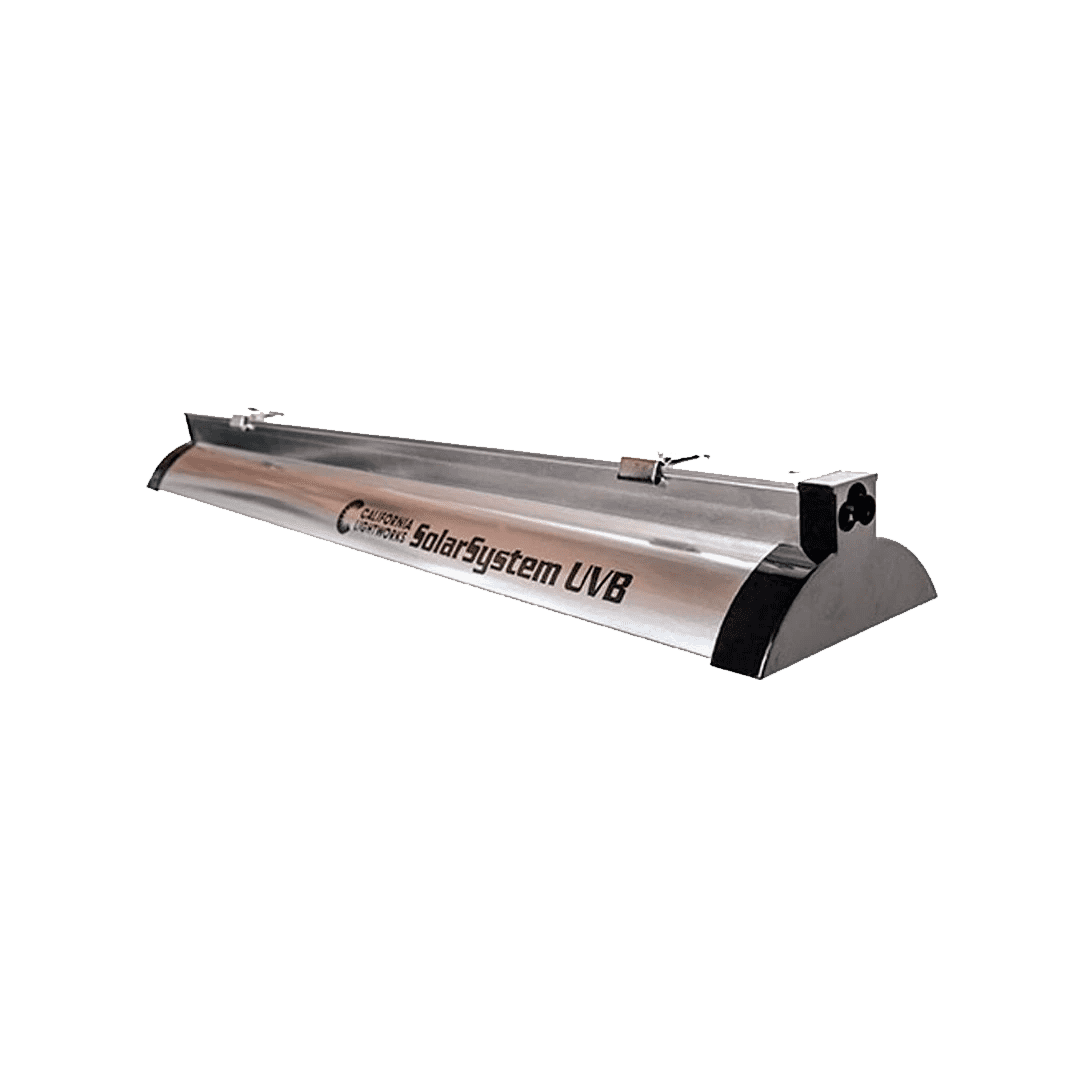
Californialightworks makes a nice uvb tube.....
 

Attachments

  • Screenshot_20220912-174703_Samsung Internet.jpg
    Screenshot_20220912-174703_Samsung Internet.jpg
    57.6 KB · Views: 22
Last edited:
I use uvb lighting for late stage flowering for only about 1 hour a day. It definitely affects the plant positively. Besides the colors and beauty it adds it is also supposed to increase potency by stimulating more resin production to protect from the uv radiation. I cannot attest to the increased potency without lab testing, but I will never not use uvb. For me, the benefits are as clear as day.

Californialightworks makes a nice uvb tube.....
@ritoMox fyi, which you may know already, but I cannot follow you cuz you set your profile to private? Unless I have an issue on my end. A lot of profiles seem to be blocked for me rn...
 
I use uvb lighting for late stage flowering for only about 1 hour a day. It definitely affects the plant positively. Besides the colors and beauty it adds it is also supposed to increase potency by stimulating more resin production to protect from the uv radiation. I cannot attest to the increased potency without lab testing, but I will never not use uvb. For me, the benefits are as clear as day.

Californialightworks makes a nice uvb tube.....
Looking forward to trying mineāœŒļø

UVB
UVB2
 
@ritoMox fyi, which you may know already, but I cannot follow you cuz you set your profile to private? Unless I have an issue on my end. A lot of profiles seem to be blocked for me rn...
A lot of members here do that. I don't know why. Given that I'm more of a follower, I followed🤣 I'm just a noisy lurker, so nothing to follow. But if you like, follow awayāœŒļø
 
The reason I need UVB is to fight Powdery Mildew. I heard the magic nm was around 280-285 which is on the threshold of UVC. I saw no damage to my plants with Solacure UVA/UVB running 2 hours per day at 18 inches for the last 5 weeks of Flowering. It was clearly the best most resinous Batch I have grown of the particular strain as confirmed by a couple of patients... UV during the dark cycle can fight Powdery Mildew because the PM defense mechanism is somehow evolved to work with Daylight spectrum!!! I also own a pair of Lightworks t5 style UVB. I am going to mount that to the middle of my Scorpion diablo. And if that wasn't enough I am going to add a third Solacure UVA/UVB from the side, a little lower into the canopy and see how PM does then oh-yeah..... PM take that....
 
Tried the Gavita UVR led’s. Ran them full time during veg and flower and no difference. 2 lights one with UV one without.

Now I did not get it tested, but everything looked the same. I believe the light is too weak of a spectrum to do anything. UVC would probably be better?

Please let me know if you get different results.
 
Ok I want to get thoughts on the use of uva and uvb lights. It’s my understanding that finishing off under uvb is quite beneficial but I’ve also read that using light doses throughout flower can also be beneficial. I’m making the switch from gavita double ended to the 1700e leds and gavita makes a uva led that can just fit in the 1700 fixture. My scheme is to put one or two of the uva strips into each fixture and then have separate uvb lights in between each fixture so I can just kick on uvb lights for 2 to 3 hours each day towards then end knowing that uvb is actually not good if used too much. This being the case will it be ok to be running the uva lights in sequence of the regular light cycle because they’ll be installed into the fixtures? Is uva nanometer (nm) output ok to use throughout all of flower knowing that uvb (nm) may not be beneficial if used too much? I hope I worded this ok… hit me with your thoughts and knowledge, thanks!
I don't think UV LED is legit. From what I understand LED can't achieve UV spectrum and what you get is "close".
UV florescents are legit spectrum.

The use case of UV during flower is to trigger secondary metabolites as a defense mechanism. For example: resin production.

Equatorial sativas grown at high elevations get the most UV in nature, they express certain traits like THCv, and effects that are predictable like a long lasting, souring high, euphoria ..etc.
 
Tried the Gavita UVR led’s. Ran them full time during veg and flower and no difference. 2 lights one with UV one without.

Now I did not get it tested, but everything looked the same. I believe the light is too weak of a spectrum to do anything. UVC would probably be better?

Please let me know if you get different results.
I don't think LED can achieve UV. It's a scam.
 
I actually just opened up my mammoth. Have no idea if uva/uvb is broscience or not, but i’ll take a swing at it for science.

I fired it up in my kitchen and omg, i will have to tread lightly with it, Mammoth dont play, their lights are truly on a whole different level bright.

IMG 9389
 
I actually just opened up my mammoth. Have no idea if uva/uvb is broscience or not, but i’ll take a swing at it for science.

I fired it up in my kitchen and omg, i will have to tread lightly with it, Mammoth dont play, their lights are truly on a whole different level bright.

View attachment 2188523
UV is not bro science but LED do not achieve UV.
 
Page 2 of 3 · Replies 21–40 of 42
Back
Top Bottom