Log In Register

Anyone Using Alaska Fish Fertilizer?

  • Thread starter Thread starter Kingkuts
  • Start date Start date
  • Tagged users Tagged users None

Anyone Using Alaska Fish Fertilizer?

Kingkuts 45 Replies 57,091 Views
Page 1 of 3 · Replies 1–20 of 46
Yeah if you are doing organics it makes a great supplement to your dry feeds or additive for teas. Smells horrible. I currently have the gs plant food liquid fish and kelp and I am into it. Used neptunes harvest before and it was very similar.
 
I drench with Liquid Fish blend and foliar spray with Liquid Seaweed for much improved zero defects grows.
The difference in so many grow parameters has been surprising..
 

Attachments

  • Medina Liquid Fish Blend.jpg
    Medina Liquid Fish Blend.jpg
    84.7 KB · Views: 2,597
  • IMG_20201128_152003346.jpg
    IMG_20201128_152003346.jpg
    388.3 KB · Views: 2,311
You want to look into Hydrolized Fish, the one that stinks.....its gold for the soil life and also for plants...GOLD
Its packed with minerals, calcium and phosphorus and you can even make it yourself...is the best way to guarantee its freshness and have it without additives and preservatives.....

How to make your own fish fertilizer:


  1. Buy a fish.

TIP: Any kind of fish will work. In fact, you might as well use trash fish, or fish discards like fish heads, guts, etc. I like to use whole fishes though as I think that makes for a better product.

  1. Now, ideally you would throw the fish into a blender to mash it up into little pieces. I cut my fish into 8ths or so and then chuck it into my kitchen blender but I’m a bit of a caveman. If you’re squeamish, buy a separate blender for this, just make sure it is powerful enough, mine is 500W and works fine for small-medium size fishes. Remember, the finer the fish bits, the more effective the fermentation.
  2. Add water. You can use a simple guide of 3:1 – 3 parts water to 1 part ferment material. 1 roughly 8in tilapia comes to about 500mL when ground up, so I add about 1500mL water.

TIP: ALWAYS USE NON-CHLORINATED WATER. Chlorine kills microbes. Simply let your chlorinated tap water sit for several hours, allowing the chlorine to dissipate. I let it sit overnight generally.

  1. If you are using a blender, blend up the mixture. The water helps keep it loose so it blends much better after you add the water.
  2. Add lacto bacilli to blended fish mixture. I use 2tbsp per L. You can use more or less if you want. 2tbsp/L is plenty though.
  3. Add 1/3 parts sugar. This should be 1/3 the amount of fish you’ve added. Sugar will be either molasses or normal cane sugar.

TIP: Try not to use cane sugar since it is chemically bleached. Raw(unrefined) sugar like muscovado is best. In the Philippines we use molasses because it is cheap, but any glucose source works – syrup, honey, etc. Just use whatever is cheap. Glucose gives microbes energy. Whatever you have access to cheaply, go for it.

  1. If using sugar, the equivalency is about 1KG sugar = 1L solution. So if you have 500mL like my tilapia, you want 1/3 of that in sugar. You’d use about 167g sugar, or roughly ¾ cup.
  2. I blend the whole mixture up a bit. It’s good to have it as fine as possible.
  3. Up to you how much you blend it, I blend until I don’t hear so many bones crunching in the blades of the blender.
  4. Now you have liquefied fish, sugar, and lacto. Pour this mixture into a container. Loosely cover the container. No need to seal, because the container will explode as CO2 is released by fermentation. You just want to make sure other things don’t get into it. I use a container with a lid and loosely screw the cap on top (just make sure you don’t seal it because it WILL explode).
  5. The process takes anywhere from 3 weeks to over a month. How do you know its finished? By the smell.
  6. You know when it’s done when there is no smell anymore. During fermentation there is a nasty smell, but once completed, there will be almost no odor. You can open it, and put your nose right up to it. Take a whiff. Nothing but a faint vinegar smell. Now you know its done. Congratulations! You’ve made your own Fish Hydrolysate!
  7. Now, usually I transfer it to a smaller container, usually just a smaller water bottle, just for convenience. At this time, I use a strainer and a funnel to strain the bones and scales out of the hydrolysate. But don’t expect a lot. From a whole 8-10in tilapia, you will only get a little tiny pile of bones/scales. They will feel kind of rubbery, not brittle. Throw these in the compost pile or garden, they are excellent fertilizer and microbe food, already inoculated with microbes!
  8. Leave the cap on the strained concoction loose until you see no more little bubbles forming. Then cap it and store it for use as your own natural fertilizer.


How to use this fish fertilizer:


Mix 2tbsp/gal for applications.


Plants


  • Use as a soil drench as opposed to foliar spray.
  • Inoculate compost to boost fungal population. This is huge – major growth booster of fungus.
  • Use in compost teas to boost fungal growth, add Nitrogen. Use at ¼ strength for this application(1/2 tbsp per gal).
  • Mix in water when watering plants, as a natural fish fertilizer and to enhance populations of micro-organisms in the soil

Animals


  • Mix with water for an effective protein/lacto boost for your animals. Some will really love the added flavor. Others will hate it.

This article was copied from http://gilcarandang.com/recipes/fish-fertilizer/
 
You want to look into Hydrolized Fish, the one that stinks.....its gold for the soil life and also for plants...GOLD
Its packed with minerals, calcium and phosphorus and you can even make it yourself...is the best way to guarantee its freshness and have it without additives and preservatives.....

How to make your own fish fertilizer:


  1. Buy a fish.


  1. Now, ideally you would throw the fish into a blender to mash it up into little pieces. I cut my fish into 8ths or so and then chuck it into my kitchen blender but I’m a bit of a caveman. If you’re squeamish, buy a separate blender for this, just make sure it is powerful enough, mine is 500W and works fine for small-medium size fishes. Remember, the finer the fish bits, the more effective the fermentation.
  2. Add water. You can use a simple guide of 3:1 – 3 parts water to 1 part ferment material. 1 roughly 8in tilapia comes to about 500mL when ground up, so I add about 1500mL water.


  1. If you are using a blender, blend up the mixture. The water helps keep it loose so it blends much better after you add the water.
  2. Add lacto bacilli to blended fish mixture. I use 2tbsp per L. You can use more or less if you want. 2tbsp/L is plenty though.
  3. Add 1/3 parts sugar. This should be 1/3 the amount of fish you’ve added. Sugar will be either molasses or normal cane sugar.


  1. If using sugar, the equivalency is about 1KG sugar = 1L solution. So if you have 500mL like my tilapia, you want 1/3 of that in sugar. You’d use about 167g sugar, or roughly ¾ cup.
  2. I blend the whole mixture up a bit. It’s good to have it as fine as possible.
  3. Up to you how much you blend it, I blend until I don’t hear so many bones crunching in the blades of the blender.
  4. Now you have liquefied fish, sugar, and lacto. Pour this mixture into a container. Loosely cover the container. No need to seal, because the container will explode as CO2 is released by fermentation. You just want to make sure other things don’t get into it. I use a container with a lid and loosely screw the cap on top (just make sure you don’t seal it because it WILL explode).
  5. The process takes anywhere from 3 weeks to over a month. How do you know its finished? By the smell.
  6. You know when it’s done when there is no smell anymore. During fermentation there is a nasty smell, but once completed, there will be almost no odor. You can open it, and put your nose right up to it. Take a whiff. Nothing but a faint vinegar smell. Now you know its done. Congratulations! You’ve made your own Fish Hydrolysate!
  7. Now, usually I transfer it to a smaller container, usually just a smaller water bottle, just for convenience. At this time, I use a strainer and a funnel to strain the bones and scales out of the hydrolysate. But don’t expect a lot. From a whole 8-10in tilapia, you will only get a little tiny pile of bones/scales. They will feel kind of rubbery, not brittle. Throw these in the compost pile or garden, they are excellent fertilizer and microbe food, already inoculated with microbes!
  8. Leave the cap on the strained concoction loose until you see no more little bubbles forming. Then cap it and store it for use as your own natural fertilizer.


How to use this fish fertilizer:


Mix 2tbsp/gal for applications.


Plants


  • Use as a soil drench as opposed to foliar spray.
  • Inoculate compost to boost fungal population. This is huge – major growth booster of fungus.
  • Use in compost teas to boost fungal growth, add Nitrogen. Use at ¼ strength for this application(1/2 tbsp per gal).
  • Mix in water when watering plants, as a natural fish fertilizer and to enhance populations of micro-organisms in the soil

Animals


  • Mix with water for an effective protein/lacto boost for your animals. Some will really love the added flavor. Others will hate it.

This article was copied from http://gilcarandang.com/recipes/fish-fertilizer/
Wow Appretiate the detailed info ! Thank you
 
Wow Appretiate the detailed info ! Thank you
Here's something to keep in mind: Fish emulsion is just one more way to get the required nutrients our babies like. It's not magic, just one more tool. There are ways around using fish if you don't like the smell, but plants do like it. And it's cheap.
RR1
 
Cold pressed fish hydrolysate!!! its very different from fish emulsion, read up. That being said fish is a excellent source of N i use it for 90% of my N needs and it rocks!
 
Has anyone ever used this and only this fertilizer straight through until flower? Is it possible? I'd like to use this but I'm not sure if the P&K content is high enough for the plants nutritional needs in veg through until flower. Someone let me know please!

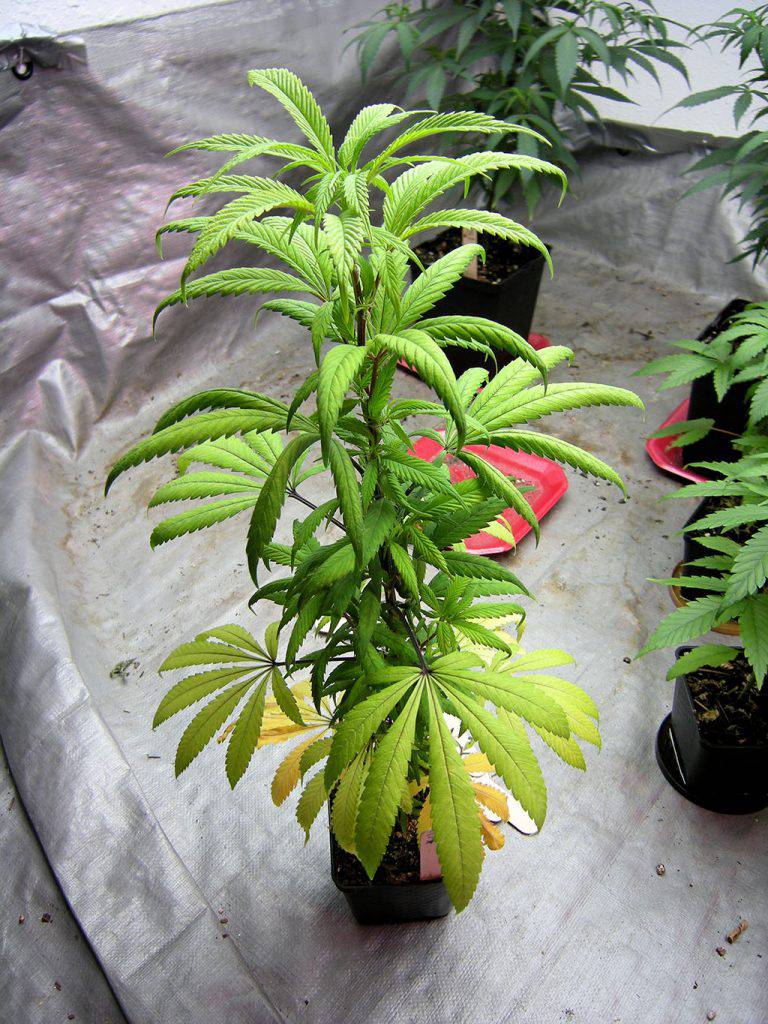
Anyone Using Alaska Fish Fertilizer for cannabis?
 
Last edited by a moderator:
Last edited:
The Rev talks about using Alaska liquid fish fertilizer in his Skunk articles✌️
Thank you for sharing, I just checked those out and unfortunately he uses the Alaska in tandem with Fox Farm fertilizers. I would like to use the Alaska fertilizer by itself, just unti lI get to flower where I have other plans for feeding.
 
What i learned so far it wont be enough unless your soil has some additional NPK in it.
mid(10-5-7) and late veg(7-7-7) is what you need
got that knowledge from here:

i am using the BioBizz Fish Mix(NPK 5-1-4) in veg atm but i mixed my soil with plagron bat guano which has 3-15-4
So my plan is i feed them with 5-1-4 and they can take the rest from the soil if needed.

see my plants here
 
I think if you are using a super soil or living soil, you should be able to do that straight until flower. I am 8+ weeks in and am only using terp teas. I have used that same alaska bottle you posted, holy shit that stuff smells, don’t get it on ya.
 
I think if you are using a super soil or living soil, you should be able to do that straight until flower. I am 8+ weeks in and am only using terp teas. I have used that same alaska bottle you posted, holy shit that stuff smells, don’t get it on ya.
And whatever you do, DO NOT OPEN a bottle of that stuff around CATS. Unless you want to get attacked. Lmao my cats go NUTS when I use that shit!
 
Has anyone ever used this and only this fertilizer straight through until flower? Is it possible? I'd like to use this but I'm not sure if the P&K content is high enough for the plants nutritional needs in veg through until flower. Someone let me know please!

View attachment 1290557
I have used the Alaska fish fertilizer on 2 outdoor grows and it worked damn good. Had my whole backyard stinking like a skunk too. However the dog got ahold of it before I got to harvest. Dick head didn't leave me 1 bud so it must have been pretty good 🤣 this year I am using it too along with worm castings and bat guano. I will be switching to the Alaska more bloom for when it goes into flower.
 
I have used the Alaska fish fertilizer on 2 outdoor grows and it worked damn good. Had my whole backyard stinking like a skunk too. However the dog got ahold of it before I got to harvest. Dick head didn't leave me 1 bud so it must have been pretty good 🤣 this year I am using it too along with worm castings and bat guano. I will be switching to the Alaska more bloom for when it goes into flower.
Hahahahaha holy shit that's funny
 
I exclusively use Alaska fish fertilizer and morbloom along with a cal mag from drip hydro to round it out. It’s Defenitely possible to use just these three to grow with. I’m still working out a good feeding schedule though because I’ve encountered phosphorous deficiencies before from under feeding.
 
I bury a lot of fish carcasses around each of my plants, some are still whole ( small undesirable to eat ).

Been doing this in my garden for 26 years now, along with peat moss, composted cow n horse manure, leaves, grass trimmings, kitchen scraps, ect.

I used a small amount of FF Tiger bloom for shits n giggles during flowering.

2025 was the first time growing the God plant in this soil/garden. Happy with the results. 8 & 10' tall, respectively
IMG 20250821 072003

Total dry yield for both plants was about 2 1/2 lbs
But I think I can do better with some more added amendments thru the grow, for this year. We'll see.

My neighbor uses the fish emulsion. He buried a piece of PVC pipe near the root zone, that he poured it into. That keeps the critters away. My fish were buried deep, about a week after transplanting, so there is no stink to worry about. Fish can supply everything a growing plant needs... for it's life cycle, in my opinion.

 
Page 1 of 3 · Replies 1–20 of 46
Back
Top Bottom