Log In Register

THE TRAINWRECK. Brought to you by thcfarrmer…..

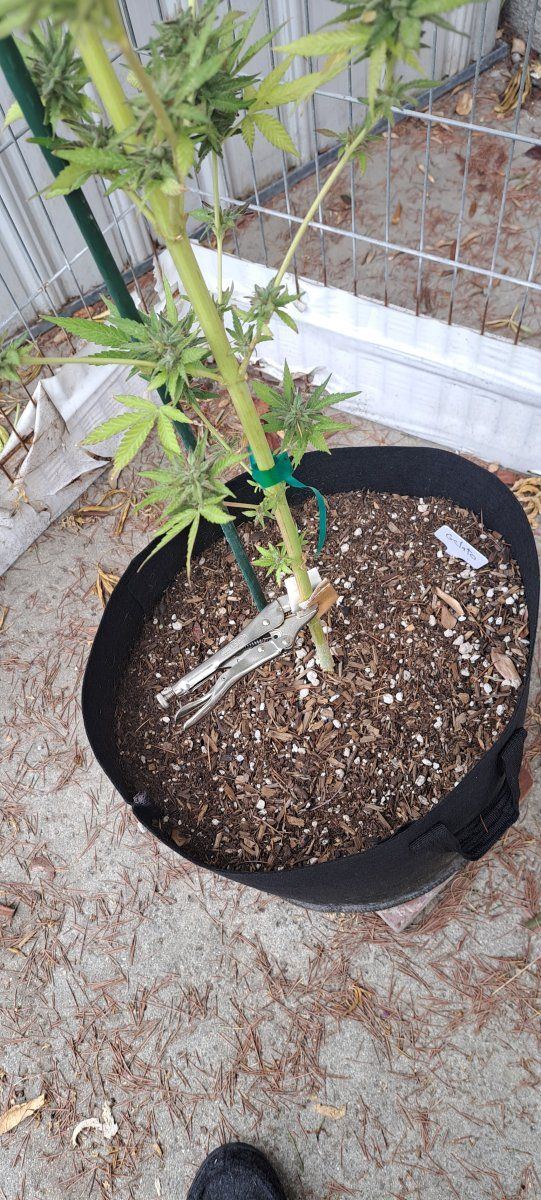
Planning for a Saturday chop if this Gelato so I did my Jed Clampett move as planned. I spiked an Ice Cream Cake last week and when I was looking at the hollow inside of the stem after I chopped, it got me thinking the splitting method is introducing air...
Home Forums Medical Cannabis Cultivation Grow Diaries THE TRAINWRECK. Brought to you by thcfarrmer…..
Grow diary eligible · Medical Cannabis Cultivation

THE TRAINWRECK. Brought to you by thcfarrmer…..

by Captspaulding · Started
1d
Running
0
Updates
95,543
Replies
5
Images
Discussion below · 95,543 replies
Page 4197 of 4778 · Replies 83,921–83,940 of 95,544
Status
Not open for further replies.
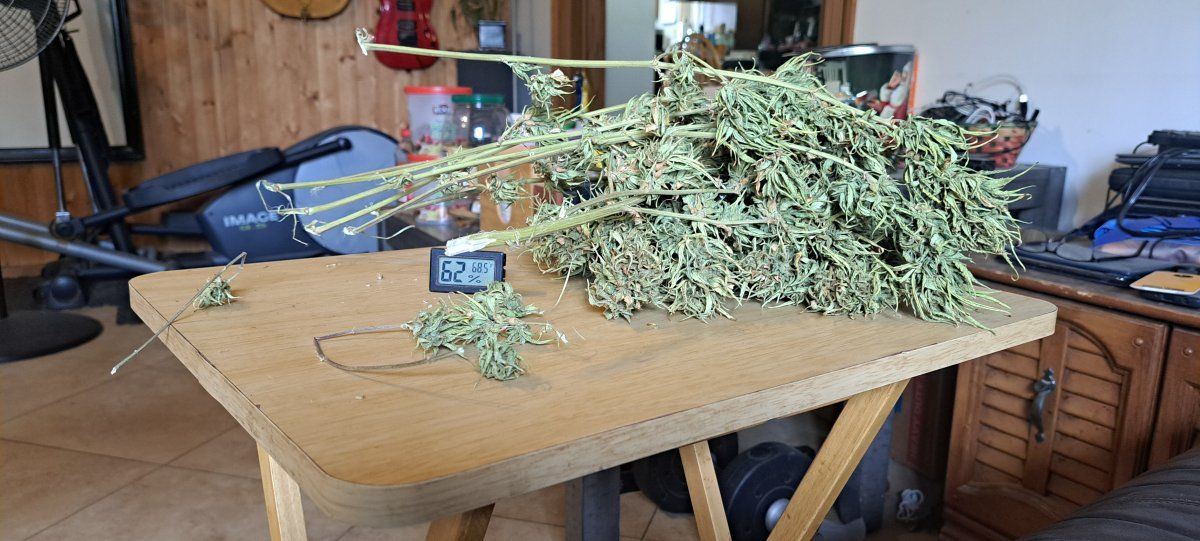
Planning for a Saturday chop if this Gelato so I did my Jed Clampett move as planned. I spiked an Ice Cream Cake last week and when I was looking at the hollow inside of the stem after I chopped, it got me thinking the splitting method is introducing air in there... it's not just restricting the flow. So I decided to clamp one to find out if there's any difference between restricting flow and opening it up as far as getting a resin boost, or if it's a waste of time. I'm inclined to think that what it's actually doing is starting the drying process while the plant is still alive and that what you really get is the same amount of resin but with less water. But for now I'm just following the results as opposed to drawing any conclusions.

20251008 091540

20251008 093244
20251008 092531
20251008 093125


The Ice Cream Cake seems like it dried up pretty quickly, about 5 days despite the cardboard curing box.

Guess what I'm doing today? 🤣
20251008 100820
 
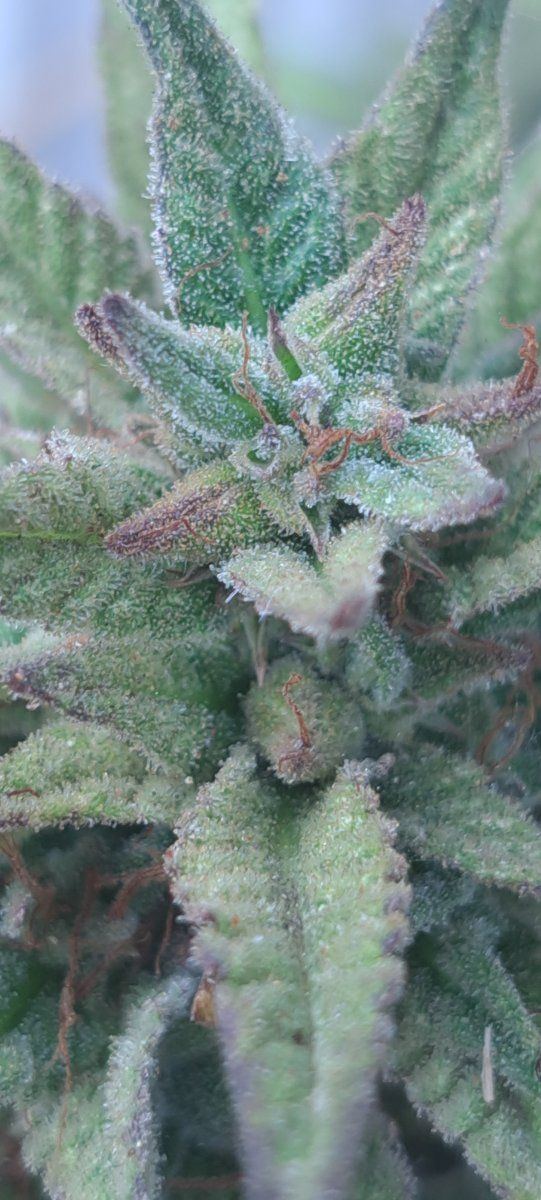
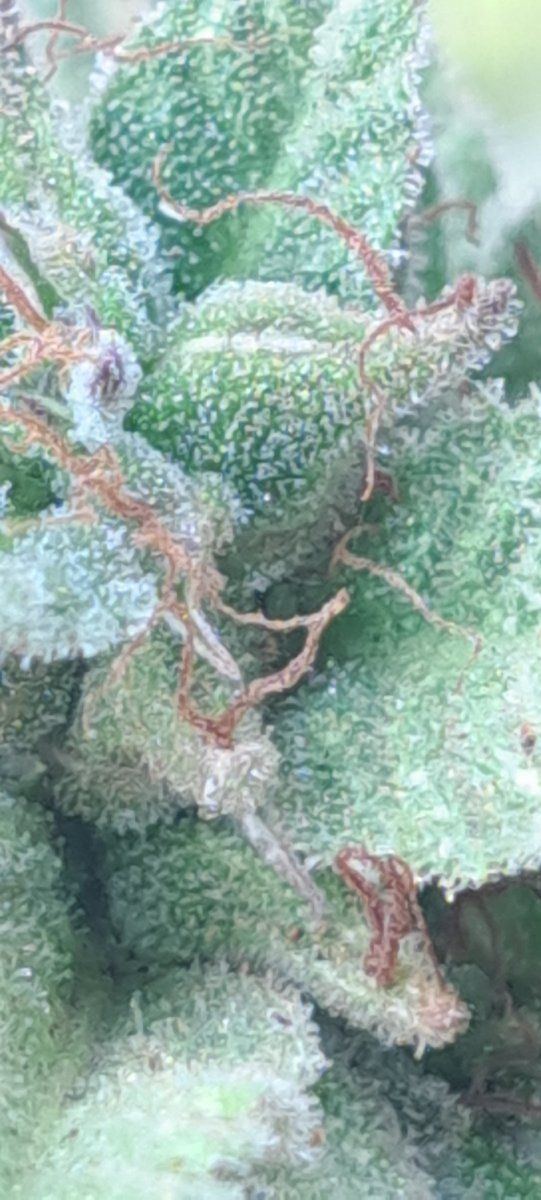
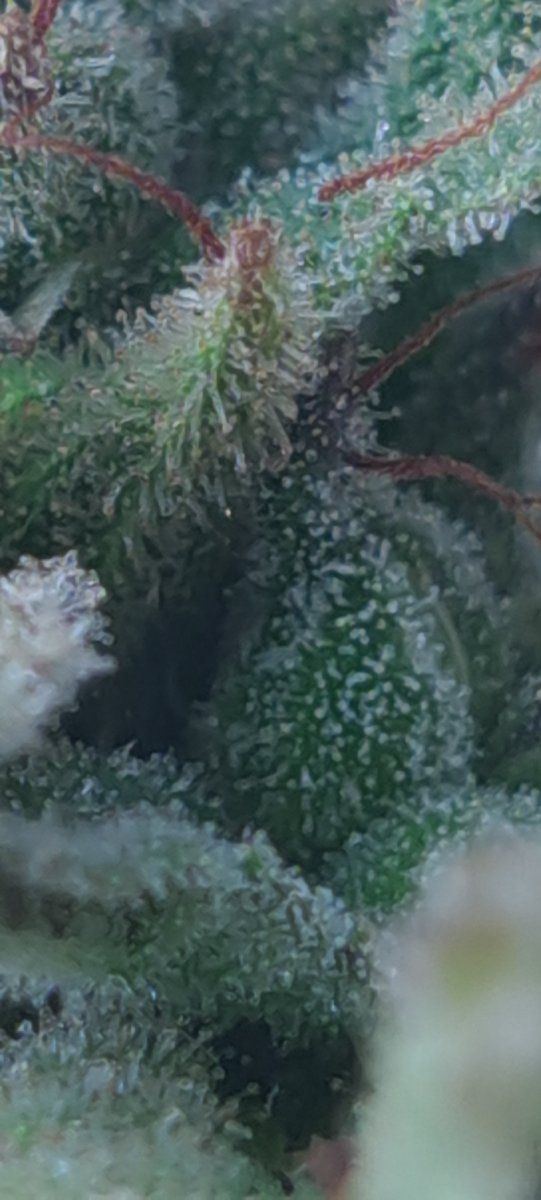
Check out this little freak. Took a Grape Pie monster clone around mid July and while it popped back into veg it didn't stop trichome procuction. Look at them fat calyxes. Reminds me of "Audrey II," lol. Feed me, Seymour! 🤣
 

Attachments

  • 20251008_100130.jpg
    20251008_100130.jpg
    94.6 KB · Views: 3
  • 20251008_095817.jpg
    20251008_095817.jpg
    92.7 KB · Views: 3
  • 20251008_095557.jpg
    20251008_095557.jpg
    193.5 KB · Views: 2
  • 20251008_095456.jpg
    20251008_095456.jpg
    95.2 KB · Views: 3
Bout fifteen minutes later and I smoked half a doink lol
2 days ago I took some small lowers off a GDP I harvested 12 days ago. Weighted it at 17+ gms. I've got 4 buds left🤣 Half oz in probably 3 days. I'm out of the 1 1/4 papers and using 100mm and smoking the same amount of joints, and staying really fked up😍 Not getting shit done that I need to do. That's some good smoke🤣 Papers are scheduled to arrive today but I'm really liking these big bad boys😋
 
I've done more reasearches:
Thread Title: [INNOVATION] Underwater Drying Chamber: The Future of Terpene Preservation and Hydrophobic Curing™


Alright boys and girls, hold onto your hydrometers, because I’m about to drop the kind of innovation that makes vacuum drying look like rubbing your buds on a radiator. For years, the cannabis community has been fixated on relative humidity, airflow, and temperature — but not one of you has had the courage to ask the question that’s been bubbling beneath the surface:


Why not dry your buds underwater?

Yes. Underwater.


Now before you spit out your bong water and start typing angry rebuttals about “mold” or “oxygen deprivation,” allow me to explain the hydrothermodynamic logic behind this. You see, air drying is primitive. It’s caveman stuff. You’re exposing delicate trichomes to oxygen, UV light, and all manner of invisible goblins that snatch away your terpenes like pickpockets at a Dead show.


But underwater — ah, underwater, gentlemen — we have control.


The Science™​


When cannabis is submerged in temperature-stabilized water, a process known to hydrodynamicists (which I just became five minutes ago) as reverse vapor diffusion occurs. In this state, the chlorophyll molecules surrender their soluble components to the water while the hydrophobic terpene oils form what experts refer to as a nano-emulsion field.


In simpler terms: the stink stays in.


By maintaining a low, steady current of water — say, 0.2 liters per minute through a carbon-filtered, UV-sterilized, magnetically-vortexed system moisture is “gently coerced” out of the buds via osmotic humility. You are not dominating your plant. You are partnering with it.


The Method​


Step 1: Harvest your plants and trim to your liking. Cry a little bit; it’s a spiritual act.
Step 2: Place the buds in a drying chamber, which is a fish tank with a lid and maybe some tubing.
Step 3: Fill with filtered water — ideally glacier melt or reverse-osmosis water , try adding pennies and stuff.
Step 4: Add two teaspoons of Himalayan salt per gallon. Not for flavor, but to “align the ionic field.” (It also keeps the fish away.)
Step 5: Maintain water temperature between 68–70°F. Cold water will shock the trichomes; hot water will cook your dreams.
Step 6: After 5–7 days, drain slowly, allowing the buds to “acclimate to air” like astronauts re-entering the atmosphere.

NOW flash dry in a 750 degree oven for 3 hours.
You’ll know it’s done when the buds are polyunsaturated.

The Results​


What you’re left with is what I call Hydro-Cured Cannabis™: perfectly hydrated, oxygen-free, and absurdly fresh. The smoke is smoother than a jazz bassist’s intro.


Lab tests (conducted by me, on myself) revealed a 300% increase in terpene spiritual retention and a “mouthfeel” comparable to licking an expensive river stone.


And before you doubt me, remember: the Romans used aqueducts. The Egyptians used the Nile. NASA uses water-cooled suits. You think you’re better than NASA?


Optional Upgrades​


  • Add a sous-vide heater for temperature control (set it to “Steak Medium Rare”).
  • Circulate the water through a UV sterilizer.
  • For maximum efficiency — play whale sounds during the process. Sound waves break up surface tension.

Final Thoughts​


You can laugh all you want, but once the “Underwater Dry Cure Movement” takes off, you’ll be the fool with crispy buds and lost flavor, while I’m over here with jars of trichome-preserved mermaid weed.


And if you’re wondering how to market it: call it “Aquaponic Terp Preservation.” People will pay extra just to sound like they understand what that means.


Anyway, don’t knock it till you’ve tried it. The future of cannabis isn’t in the air, my friends. It’s below the surface.
 
They killed the squirrel!!!!
It's NY... there's nothing we can't fuckin ruin.

Dozens. PLURAL. Of other states have figured out how to sell weed. NY still can't permit dispensaries normally. A whole bunch were "sorry suddenly too close to a school" recently.
 
It's NY... there's nothing we can't fuckin ruin.

Dozens. PLURAL. Of other states have figured out how to sell weed. NY still can't permit dispensaries normally. A whole bunch were "sorry suddenly too close to a school" recently.
By killing the squirrel it woke up millions on the other side of the country. That squirrel wasn’t a rat.
 
By killing the squirrel it woke up millions on the other side of the country. That squirrel wasn’t a rat.
I don't even know what happens then like... "Sorry but fuck your weed shop that ran 8 months, fuck your lease, fuck your product thanks we take that and also have a nice quarterly tax bill ya piece of shit.".
 
"This historic photograph captures a pivotal moment in racing history: the 1967 testing of the Ford-Cosworth DFV (Double Four Valve) engine, with Mike Costin, co-founder of Cosworth Engineering, overseeing its development.
The DFV would go on to become one of the most successful engines in Formula One history, redefining Grand Prix racing with its combination of light weight, compact design, and exceptional power output.
This image symbolizes the precision and ingenuity that fueled the golden era of motorsport engineering.
The DFV project began as a collaboration between Ford, Cosworth, and Lotus, spurred by Colin Chapman’s vision for an all-British power unit that could dominate F1.
Funded by Ford’s European racing division, Cosworth’s engineers led by Keith Duckworth and Mike Costin developed a revolutionary 3.0-liter V8 designed around the new Formula One regulations introduced in 1966.
The “Double Four Valve” name referred to its 32-valve, dual overhead camshaft configuration four valves per cylinder, which provided unparalleled breathing efficiency. Combined with an oversquare bore and stroke layout, the DFV could rev beyond 9,000 RPM while delivering an astonishing 408 horsepower in its earliest form.
What made the DFV truly groundbreaking was its role as a structural component of the car. Chapman’s Lotus 49 was the first F1 chassis to use the engine as a stressed member, bolting the rear suspension and gearbox directly to the block.
This innovative design reduced weight and increased rigidity, forever changing the way Formula One cars were constructed.
During its dyno testing, as seen in this photo, engineers meticulously tuned the DFV’s fuel delivery, cam timing, and exhaust harmonics to achieve both peak performance and reliability an extraordinary challenge given the new engine’s complexity.
The DFV made its race debut at the 1967 Dutch Grand Prix, where Jim Clark drove the Lotus 49 to a dominant victory.
From that moment, the DFV became the engine to beat. Over the next 15 years, it powered 155 Grand Prix winners and multiple World Championships, serving teams like McLaren, Tyrrell, Brabham, and Williams. Its blend of power, simplicity, and accessibility allowed privateer teams to compete at the highest level, democratizing Formula One in a way no engine had before.
This image of Mike Costin at the test bench captures not just the birth of an engine, but the dawn of an era.
The Ford-Cosworth DFV remains a benchmark of motorsport engineering an enduring symbol of British innovation, Ford’s racing commitment, and Cosworth’s mastery of precision performance.
Even decades later, its influence can still be seen in the DNA of every high-revving, lightweight racing engine built since."
1759966509693
 
Status
Not open for further replies.
Page 4197 of 4778 · Replies 83,921–83,940 of 95,544
Back
Top Bottom