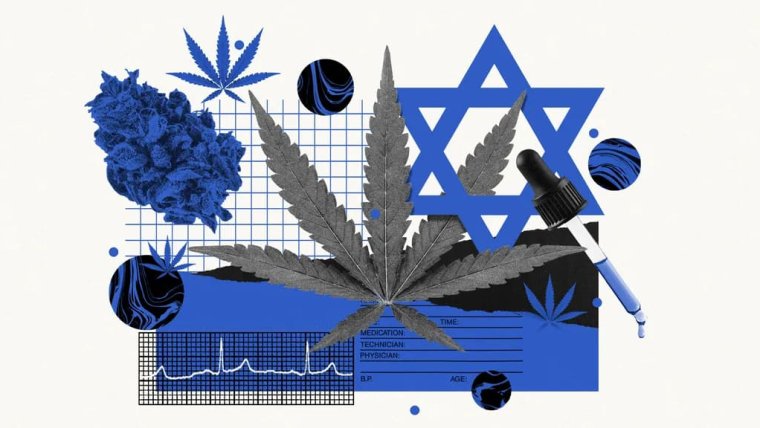
Israel has widely been acknowledged as a leading pioneer in the cannabis industry's research and development. The nation has emerged as a cornerstone for global medicinal cannabis research, offering a legacy of trailblazing studies and more flexible regulations for launching clinical trials.
His avant-garde research laid the groundwork prior to the worldwide surge in marijuana and other drug use, which subsequently sparked major cultural shifts and ignited ongoing debates over health implications and law enforcement. These boundary-pushing discoveries garnered him the honorific "the father of cannabis research." His scientific curiosity, as the Times highlighted, was rooted not in the cultural zeitgeist but in a profound interest in the chemical intricacies of plants and other organic matter. In March 2023, the revered Professor Mechoulam passed away at the age of 92 in his Jerusalem home.
Mechoulam's groundbreaking work is recognized for unveiling the endocannabinoid system, which US News notes as "the largest receptor system in the human body." His research revealed that the brain naturally produces cannabinoids, substances that activate this extensive receptor network. These findings have opened up potential therapeutic avenues for a variety of conditions such as schizophrenia, diabetes, cancer, and multiple sclerosis, among others, highlighting the possibility that these naturally occurring compounds could provide significant relief for these ailments, according to the publication.
Israel's early adoption and integration of cannabis into scientific research were cemented when it became one of the first nations to legalize medical cannabis and established, along with Canada and the Netherlands, a government-backed national medical cannabis program. Israel's comparatively relaxed cannabis policies have positioned it as an indispensable hub for international research and development.
In the United States, while more than half of the states permit medical marijuana under state law, cannabis remains federally illegal, severely hindering the initiation of clinical trials, as Rolling Stone outlined. To navigate these challenges, some American entities are conducting early-stage clinical trials in Israel, later transferring to the US for Phase 3, in a strategic move to facilitate FDA submissions.
The dependence on Israeli R&D may be a recent development, but its influence on the U.S. cannabis landscape is undeniable. Paul Armentano from NORML told Rolling Stone that without Israel's pioneering efforts, the current global scientific curiosity in cannabis would likely not exist.
Charles Pollack from the Lambert Center for the Study of Medicinal Cannabis at Thomas Jefferson University praised Israel's unique approach to cannabis research, attributing the nation's role as a nexus of high-quality cannabis studies to its amenable regulatory atmosphere, fostering an environment conducive to serious and groundbreaking scientific inquiry.
Despite Israel's status as a top exporter of medical cannabis, over 100,000 patients with medical licenses were grappling with escalating costs, increased red tape, and hurdles in obtaining their medication, according to the Jerusalem Post. To address these issues, the Israeli Ministry of Health implemented extensive reforms in August, aimed at slashing regulations, enhancing oversight of production, and shifting more responsibilities to growers.
The reforms further streamlined how patients could gain access to medical cannabis products. Based on a report by NORML, doctors have been authorized to prescribe cannabis as an initial treatment rather than as a final alternative. Qualifying conditions for licensed medical cannabis users include cancer, Crohn's disease, multiple sclerosis, Parkinson's, dementia, epilepsy, autism, and post-traumatic stress disorder. The previous requirement for a patient to have exhausted all other treatments, such as opioids, before receiving a cannabis prescription was rescinded.
These regulatory changes were slated to take effect last December, marking a significant shift in how medical cannabis is managed in Israel.
The upward trend in medical cannabis sign-ups persisted in the subsequent month, according to the Ministry of Health, with an addition of 3,254 patients, marking the steepest monthly ascend since 2021, highlighted MJ Biz Daily. This surge propelled the total number of licensed medical cannabis patients to a peak of 135,213, positioning Israel among the top-tier medical cannabis markets globally.
Despite the enrollment boom, newcomers to the program may face hurdles in obtaining their medical cannabis due to regulatory bottlenecks potentially delayed by three months amid the conflict. Some speculate the war might be driving the heightened demand; however, industry experts suggest that it is also causing the hold-up in regulatory advancements, as stated by MJ Biz Daily.
The war has also pushed back the anticipated roll-out of medical cannabis regulation reforms, initially set for December 29, 2023. IM Cannabis Corp., an Israeli cannabis producer, declared that the implementation is now expected to be delayed by a quarter.
When the regulatory revisions were announced back in August, IM Cannabis foresaw a transformation in Israel's medical cannabis landscape, with Oren Shuster, their CEO, expressing optimism for improved patient access. Despite a slowing in patient registration before November, Shuster labeled the November spike as "remarkable."
Shuster commented on the connection between the surge in new patients and the conflict, stating that while it's challenging to pinpoint the war's direct impact, they are hopeful to uncover more insights in the forthcoming months.
What has made Israel a nexus for medical cannabis research?
The prominence of Israel in the medical cannabis research field can be traced to the endeavors of Professor Raphael Mechoulam, a luminary Israeli chemist, in the 1960s. Celebrated for unlocking the mysteries of cannabis science, Mechoulam was instrumental in delineating the structure and effects of cannabis's principal compounds, as reported by The New York Times.His avant-garde research laid the groundwork prior to the worldwide surge in marijuana and other drug use, which subsequently sparked major cultural shifts and ignited ongoing debates over health implications and law enforcement. These boundary-pushing discoveries garnered him the honorific "the father of cannabis research." His scientific curiosity, as the Times highlighted, was rooted not in the cultural zeitgeist but in a profound interest in the chemical intricacies of plants and other organic matter. In March 2023, the revered Professor Mechoulam passed away at the age of 92 in his Jerusalem home.
Mechoulam's groundbreaking work is recognized for unveiling the endocannabinoid system, which US News notes as "the largest receptor system in the human body." His research revealed that the brain naturally produces cannabinoids, substances that activate this extensive receptor network. These findings have opened up potential therapeutic avenues for a variety of conditions such as schizophrenia, diabetes, cancer, and multiple sclerosis, among others, highlighting the possibility that these naturally occurring compounds could provide significant relief for these ailments, according to the publication.
Israel's early adoption and integration of cannabis into scientific research were cemented when it became one of the first nations to legalize medical cannabis and established, along with Canada and the Netherlands, a government-backed national medical cannabis program. Israel's comparatively relaxed cannabis policies have positioned it as an indispensable hub for international research and development.
In the United States, while more than half of the states permit medical marijuana under state law, cannabis remains federally illegal, severely hindering the initiation of clinical trials, as Rolling Stone outlined. To navigate these challenges, some American entities are conducting early-stage clinical trials in Israel, later transferring to the US for Phase 3, in a strategic move to facilitate FDA submissions.
The dependence on Israeli R&D may be a recent development, but its influence on the U.S. cannabis landscape is undeniable. Paul Armentano from NORML told Rolling Stone that without Israel's pioneering efforts, the current global scientific curiosity in cannabis would likely not exist.
Charles Pollack from the Lambert Center for the Study of Medicinal Cannabis at Thomas Jefferson University praised Israel's unique approach to cannabis research, attributing the nation's role as a nexus of high-quality cannabis studies to its amenable regulatory atmosphere, fostering an environment conducive to serious and groundbreaking scientific inquiry.
Recent Regulatory Shifts in Israel's Medical Cannabis Landscape
In Israel, the drive to legalize cannabis transcends political divisions, with advocates found across the ideological spectrum, notably including figures from the political right. A prominent example is Sharren Haskel of the Israeli Knesset, who was instrumental in the 2017 initiative to decriminalize marijuana. Describing cannabis as crucial for public health after witnessing its rapid effects on various conditions, Haskel remarked to US News that aiding citizens was a clear imperative.Despite Israel's status as a top exporter of medical cannabis, over 100,000 patients with medical licenses were grappling with escalating costs, increased red tape, and hurdles in obtaining their medication, according to the Jerusalem Post. To address these issues, the Israeli Ministry of Health implemented extensive reforms in August, aimed at slashing regulations, enhancing oversight of production, and shifting more responsibilities to growers.
The reforms further streamlined how patients could gain access to medical cannabis products. Based on a report by NORML, doctors have been authorized to prescribe cannabis as an initial treatment rather than as a final alternative. Qualifying conditions for licensed medical cannabis users include cancer, Crohn's disease, multiple sclerosis, Parkinson's, dementia, epilepsy, autism, and post-traumatic stress disorder. The previous requirement for a patient to have exhausted all other treatments, such as opioids, before receiving a cannabis prescription was rescinded.
These regulatory changes were slated to take effect last December, marking a significant shift in how medical cannabis is managed in Israel.
How is the Current Conflict Impacting the Cannabis Sector?
Following the outbreak of the Israel-Hamas conflict, the Ministry of Health revealed marked growth in Israel's medical marijuana program enrollment, as reported by Marijuana Moment. Notably, there was a significant rise in the number of patients joining the medical cannabis registry, predominantly for conditions such as PTSD and pain, with physicians prescribing greater quantities of cannabis. In October, there was a noteworthy uptick in enrollments, with 2,202 individuals signing up—a figure that doubles the average of preceding months.The upward trend in medical cannabis sign-ups persisted in the subsequent month, according to the Ministry of Health, with an addition of 3,254 patients, marking the steepest monthly ascend since 2021, highlighted MJ Biz Daily. This surge propelled the total number of licensed medical cannabis patients to a peak of 135,213, positioning Israel among the top-tier medical cannabis markets globally.
Despite the enrollment boom, newcomers to the program may face hurdles in obtaining their medical cannabis due to regulatory bottlenecks potentially delayed by three months amid the conflict. Some speculate the war might be driving the heightened demand; however, industry experts suggest that it is also causing the hold-up in regulatory advancements, as stated by MJ Biz Daily.
The war has also pushed back the anticipated roll-out of medical cannabis regulation reforms, initially set for December 29, 2023. IM Cannabis Corp., an Israeli cannabis producer, declared that the implementation is now expected to be delayed by a quarter.
When the regulatory revisions were announced back in August, IM Cannabis foresaw a transformation in Israel's medical cannabis landscape, with Oren Shuster, their CEO, expressing optimism for improved patient access. Despite a slowing in patient registration before November, Shuster labeled the November spike as "remarkable."
Shuster commented on the connection between the surge in new patients and the conflict, stating that while it's challenging to pinpoint the war's direct impact, they are hopeful to uncover more insights in the forthcoming months.