
Fellow growers, December 18th, 2025 just became a historic date in cannabis history - but probably not in the way you're seeing hyped all over social media. President Trump signed an executive order directing his Attorney General to fast-track moving cannabis from Schedule I to Schedule III, and we need to cut through the noise and talk about what this actually means for our community.
Let's be real: this isn't legalization. Cannabis is still federally illegal. You can still catch federal charges for growing. But there are some genuinely massive changes coming, especially for the legal cannabis industry that's been getting crushed by insane tax rates. And yeah, there's some stuff that could eventually affect home growers down the line, though not in the ways you might think.
We've spent the last day digging through the actual executive order, talking to legal experts, and figuring out what's real versus what's hype. Here's everything our community needs to know.
What Trump Actually Did (And Didn't Do)
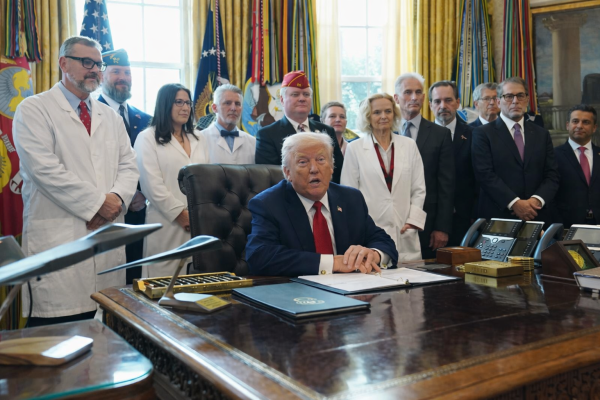
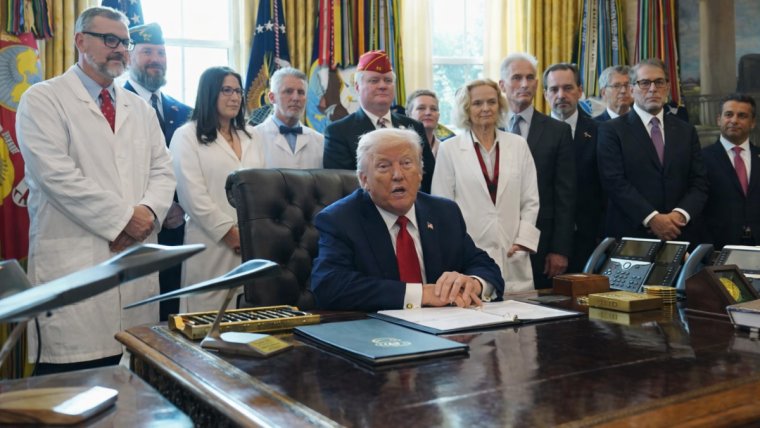
On Wednesday afternoon, Trump signed an executive order titled "Increasing Medical Marijuana and Cannabidiol Research." Despite what some headlines are screaming, he didn't wave a magic wand and make cannabis legal. What he did was tell Attorney General Pam Bondi to finish the rescheduling process that Biden started back in 2022 but got stuck in bureaucratic hell.
Here's what the order actually does:
Trump was crystal clear during the signing ceremony: "This action has been requested by American patients suffering from extreme pain, incurable diseases, aggressive cancers, seizure disorders, neurological problems and more—including numerous veterans with service-related injuries." Then he dropped the key line that everyone needs to hear: "This doesn't legalize marijuana in any way, shape or form, and in no way sanctions its use as a recreational drug."
Translation? Medical acknowledgment, yes. Legalization, absolutely not.
Schedule I vs Schedule III: The Real Difference
We've all heard "Schedule I" thrown around, but let's break down what the hell these classifications actually mean and why moving to Schedule III matters.
Schedule I (where cannabis has been since 1970):
Schedule III (where cannabis is heading):
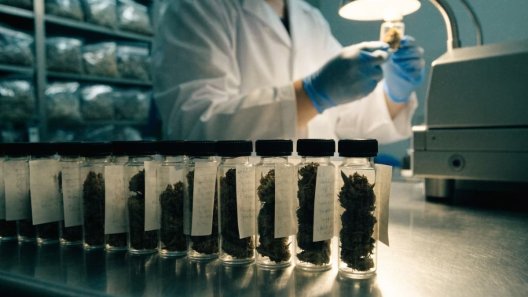
The big news here? For the first time since Nixon declared war on cannabis, the federal government is officially admitting cannabis has legitimate medical applications. The FDA found "credible scientific support" for treating anorexia, nausea/vomiting, and pain. Over 30,000 healthcare practitioners across 43 states can recommend medical marijuana to 6+ million registered patients for at least 15 conditions.
That's huge symbolically. But here's where it gets practical.
The 280E Tax Bomb Gets Defused:
This is the real game-changer, even if you're not in the legal industry. Section 280E of the tax code says businesses trafficking in Schedule I or II substances can't deduct normal business expenses. We're talking rent, payroll, utilities, marketing - nothing. This pushes effective tax rates to 70-80% for cannabis retailers and has cost the industry an estimated $2.1 billion annually.
Schedule III eliminates this entirely. Legal cannabis businesses will be able to operate under normal tax rules, potentially saving $2.3 billion per year across the industry. That means more capital for expansion, better pricing for consumers, and a healthier legal market that can compete with the black market.
Research Barriers Drop Significantly:
Schedule I requires insane DEA registration requirements, annual production quotas, strict protocols, and sourcing from federally licensed facilities. Schedule III substantially reduces these administrative nightmares. For researchers, this is massive. For growers who want to see real cannabis science instead of decades of propaganda, this could finally open the floodgates.
But Here's the Catch - Criminal Penalties Don't Change:
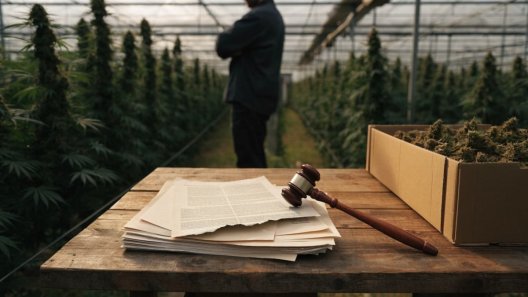
And this is critical - federal marijuana-specific penalties are based on plant counts and quantities, not scheduling classification. Cultivation of 1,000+ plants still carries 10 years to life imprisonment regardless of whether it's Schedule I or Schedule III. Simple possession penalties (up to 1 year, $1,000 minimum fine for first offense) remain codified separately in the law.
Congress would have to change those statutes. An executive order can't touch them.
What This Means for Home Growers (Spoiler: Not Much)
Let's address the elephant in the grow room: home growers receive zero new protections from Schedule III rescheduling.
NORML has been crystal clear on this: "Federal statutes specific to the criminal possession and/or trafficking of marijuana per se would not be automatically changed by rescheduling. Amending these statutory penalties would require an act of Congress."
The federal cultivation penalty structure remains 100% intact:
Now, here's the reality check we need to have as a community: federal prosecution of small-scale home growers has been extremely rare, especially in states with legal programs. The DOJ has generally focused on large-scale trafficking operations, not someone with a 4x4 tent in their basement. The Rohrabacher-Blumenauer amendment (a congressional budget rider that's been renewed since 2015) prevents the DOJ from using funds to prosecute state-legal medical marijuana activity.
But - and this is important - that protection doesn't cover adult-use/recreational grows, and it could theoretically be repealed at any time. Schedule III doesn't change any of that.
Interstate Transport Still Illegal:
Schedule III drugs still require FDA approval for interstate commerce. Your state dispensary products cannot legally cross state lines, period. Some states like California, Oregon, and Washington have passed laws permitting interstate cannabis commerce, but those laws are contingent on federal legalization - which Schedule III is not.
So if you're thinking about mailing your buddy in another state some of your latest harvest? Still a federal felony. Don't do it.
Medical vs Recreational Distinction Matters:
Schedule III acknowledges cannabis has accepted medical use, but Trump explicitly stated the order "in no way sanctions its use as a recreational drug." Recreational cultivation and possession remain completely prohibited under federal law with full CSA penalties applying.
For medical growers in states with legal medical programs, you're in the same situation you've been in - state-legal, federally prohibited, but practically unlikely to face federal prosecution if you're following state limits. For recreational growers, absolutely nothing has changed at the federal level.
The Cannabis Industry Just Got a Massive Win (While Stocks Crashed)
Here's a weird paradox that played out on Wednesday: cannabis industry executives praised this as historic progress while investors absolutely hammered cannabis stocks. The MSOS ETF dropped about 12% on signing day, with major operators posting brutal declines - Curaleaf down 30%, Trulieve down 23%, Green Thumb down 16%.
This came after MSOS had surged 77% the week before in anticipation of the news. Classic "buy the rumor, sell the news" situation, plus investor concerns about pharmaceutical companies potentially entering the market once Schedule III opens more FDA pathways for cannabis products.
But the industry executives are focused on what really matters: the 280E relief is absolutely massive.
Trulieve's CFO said the company "could realize hundreds of millions of savings in the next few years" if 280E is lifted - they paid $171.3 million in taxes on $1.1 billion in revenue over the trailing 12 months. That's not a typo. Under 280E, these businesses have been getting destroyed.
For consumers, this should eventually mean better prices and more competitive legal markets. For the industry, it means survival and growth capital instead of bleeding money to the IRS.
Banking Access Won't Magically Improve:
A lot of people think Schedule III will fix cannabis banking problems. It won't. Cannabis businesses will still be violating federal law even at Schedule III. Bank Secrecy Act and anti-money laundering obligations remain unchanged. The SAFE Banking Act is still required for comprehensive banking reform - Schedule III alone doesn't cut it.
State vs Federal: Still a Complete Mess
Here's the misconception we're seeing everywhere: people think Schedule III harmonizes state and federal cannabis laws. It absolutely does not.
State-licensed dispensaries in the 40+ states with medical or adult-use programs remain federally unauthorized. Schedule III drugs require FDA approval to be lawfully introduced into interstate commerce - exactly zero existing cannabis products have this approval.
Theoretically, licensed operations would need DEA registration and compliance with pharmaceutical distribution requirements to operate legally under federal Schedule III standards. That's impractical, expensive, and not going to happen for the existing state-legal infrastructure.
For states where cannabis is still illegal? Schedule III changes basically nothing. Federal acknowledgment of medical value might influence state legislators, but it creates zero mandate for states to change their laws. Though some Republican lawmakers who've been hesitant might take a second look now that a Republican administration is backing reform.
The bottom line: If you're in a legal state, keep operating under state law just like you have been. If you're in an illegal state, Schedule III doesn't help you at all.
This Started with Biden, Trump's Finishing It
Full context: Trump's executive order is continuing a process Biden started in October 2022 when he directed HHS and DEA to review marijuana scheduling. In August 2023, HHS issued its historic recommendation to move cannabis to Schedule III - the first time federal health officials acknowledged "currently accepted medical use." The DOJ proposed rule was published in May 2024, generating nearly 43,000 public comments (over 90% supporting rescheduling or further reform).
Then it stalled. DEA scheduled hearings, then postponed them in January 2025 after an administrative law judge criticized the agency for "deliberate defiance" regarding evidence. Trump's order is basically telling his Attorney General to cut through the red tape and finish what Biden started but couldn't complete.
Historically, five formal rescheduling petitions were denied between 1972 and 2016, with DEA and HHS consistently claiming cannabis had "no currently accepted medical use." The 2023 HHS recommendation broke that pattern.
Political Reactions Are All Over the Map
Cannabis has scrambled traditional partisan lines in fascinating ways. Twenty-two Republican Senators wrote to Trump urging him to keep marijuana Schedule I, arguing "the only winners from rescheduling will be bad actors such as Communist China" and warning about worker productivity and road safety. Twenty-six House Republicans echoed these concerns.
Democrats offered mixed reactions. Chuck Schumer called it "a step in the right direction" while pushing for decriminalization and banking reform. Ron Wyden was more critical: "Trump will try to gaslight everyone into believing he just made pot legal. Wrong. He has not decriminalized cannabis or expunged the records of Black and Latino Americans stuck in prison for minor drug offenses."
Cannabis advocates welcomed the shift while emphasizing limitations. NORML praised it as validating "the experiences of tens of millions of Americans" but warned it "still falls well short of the changes necessary" and "fails to harmonize federal marijuana policy with the cannabis laws of most states."
The Last Prisoner Project called for coupling the order "with clemency for people imprisoned for cannabis-related offenses" - which would actually help the thousands of people still serving time for cannabis convictions.
Timeline: When Does This Actually Happen?
An executive order can't unilaterally reschedule a controlled substance - the Controlled Substances Act requires formal rulemaking. Attorney General Bondi must complete the process, likely by bypassing the stalled hearing proceedings and moving directly to a final rule.
The process:
Legal challenges are expected. Anti-cannabis groups, particularly Smart Approaches to Marijuana (SAM), have signaled they'll challenge any final rule. Expect procedural challenges or allegations of bias in the rulemaking process.
International treaty implications remain contested - the DEA has historically argued Schedule III would violate the 1961 Single Convention on Narcotic Drugs, though legal analysts increasingly dispute this interpretation. Canada and Uruguay legalized without UN penalties, so that argument is looking weaker.
Realistic timeline: Even with expedited action, the formal process "could take several months." Legal challenges could push implementation significantly beyond that. Don't expect Schedule III to be official tomorrow, next week, or probably even next month.
What Our Community Should Actually Expect
Let's bring this home with real talk about what Schedule III means for the THCFarmer community:
For Home Growers:
For Medical Patients:
For the Legal Industry:
For the Black Market:
The Real Endgame: Descheduling
Schedule III is progress, but it's not the finish line. The cannabis community needs descheduling - complete removal from the Controlled Substances Act, like alcohol. That's what would:
Schedule III doesn't do any of that. It acknowledges medical value, provides massive tax relief to the industry, and makes research easier. Those are genuinely important wins. But the federal government is still classifying cannabis as a controlled substance with criminal penalties intact.
Congress would need to pass legislation to fully deschedule cannabis. That's the fight that continues after Schedule III becomes official.
Bottom Line for Growers
Trump's executive order is genuinely historic - it's the most significant federal cannabis policy shift in over 50 years. The 280E tax relief alone will fundamentally change cannabis business economics. Research barriers dropping means we'll finally get real science instead of propaganda. Federal acknowledgment of medical value after 55 years of Schedule I classification matters symbolically and practically.
But let's be crystal clear: this doesn't legalize cannabis, doesn't protect home growers from federal prosecution, doesn't resolve state-federal conflicts, doesn't enable interstate commerce, and doesn't expunge criminal records.
If you're growing in a legal state within your state limits, keep doing what you're doing - Schedule III doesn't increase or decrease your practical risk. If you're in an illegal state, Schedule III doesn't help you. If you're a patient, this opens doors for better research and potentially Medicare coverage of CBD products.
The legal industry gets a massive win with 280E relief, which should eventually benefit consumers with better pricing. But everyone in cannabis - growers, patients, businesses, advocates - still needs to push for descheduling to get the full legalization framework this plant deserves.
Stay lifted, stay informed, and keep growing. We've waited 55 years for the feds to admit cannabis has medical value. Schedule III is a meaningful step forward, but the fight for full legalization continues.
What are your thoughts on Schedule III? How do you think this will affect your state's program? Drop your take in the thread below - our community's collective wisdom is what keeps us all informed and safe.
Updated: December 19, 2025
Let's be real: this isn't legalization. Cannabis is still federally illegal. You can still catch federal charges for growing. But there are some genuinely massive changes coming, especially for the legal cannabis industry that's been getting crushed by insane tax rates. And yeah, there's some stuff that could eventually affect home growers down the line, though not in the ways you might think.
We've spent the last day digging through the actual executive order, talking to legal experts, and figuring out what's real versus what's hype. Here's everything our community needs to know.
What Trump Actually Did (And Didn't Do)
On Wednesday afternoon, Trump signed an executive order titled "Increasing Medical Marijuana and Cannabidiol Research." Despite what some headlines are screaming, he didn't wave a magic wand and make cannabis legal. What he did was tell Attorney General Pam Bondi to finish the rescheduling process that Biden started back in 2022 but got stuck in bureaucratic hell.
Here's what the order actually does:
- Directs the Attorney General to complete the Schedule III rescheduling "in the most expeditious manner"
- Orders federal agencies to work with Congress on updating hemp-derived cannabinoid definitions (THC limits, CBD-to-THC ratios)
- Tells HHS, FDA, and other agencies to develop better research methods for cannabis
- Creates a Medicare pilot program for CBD products - potentially available April 2026 with up to $500 annually in benefits
Trump was crystal clear during the signing ceremony: "This action has been requested by American patients suffering from extreme pain, incurable diseases, aggressive cancers, seizure disorders, neurological problems and more—including numerous veterans with service-related injuries." Then he dropped the key line that everyone needs to hear: "This doesn't legalize marijuana in any way, shape or form, and in no way sanctions its use as a recreational drug."
Translation? Medical acknowledgment, yes. Legalization, absolutely not.
Schedule I vs Schedule III: The Real Difference
We've all heard "Schedule I" thrown around, but let's break down what the hell these classifications actually mean and why moving to Schedule III matters.
Schedule I (where cannabis has been since 1970):
- "High potential for abuse"
- "No currently accepted medical use"
- Same category as heroin, LSD, and MDMA
- Most restrictive research requirements
- Triggers Section 280E tax penalties (the real killer for businesses)
Schedule III (where cannabis is heading):
- "Moderate to low potential" for dependence
- "Accepted medical use"
- Same category as ketamine, testosterone, anabolic steroids, Tylenol with codeine
- Much easier research requirements
- Normal business tax deductions allowed
The big news here? For the first time since Nixon declared war on cannabis, the federal government is officially admitting cannabis has legitimate medical applications. The FDA found "credible scientific support" for treating anorexia, nausea/vomiting, and pain. Over 30,000 healthcare practitioners across 43 states can recommend medical marijuana to 6+ million registered patients for at least 15 conditions.
That's huge symbolically. But here's where it gets practical.
The 280E Tax Bomb Gets Defused:
This is the real game-changer, even if you're not in the legal industry. Section 280E of the tax code says businesses trafficking in Schedule I or II substances can't deduct normal business expenses. We're talking rent, payroll, utilities, marketing - nothing. This pushes effective tax rates to 70-80% for cannabis retailers and has cost the industry an estimated $2.1 billion annually.
Schedule III eliminates this entirely. Legal cannabis businesses will be able to operate under normal tax rules, potentially saving $2.3 billion per year across the industry. That means more capital for expansion, better pricing for consumers, and a healthier legal market that can compete with the black market.
Research Barriers Drop Significantly:
Schedule I requires insane DEA registration requirements, annual production quotas, strict protocols, and sourcing from federally licensed facilities. Schedule III substantially reduces these administrative nightmares. For researchers, this is massive. For growers who want to see real cannabis science instead of decades of propaganda, this could finally open the floodgates.
But Here's the Catch - Criminal Penalties Don't Change:
And this is critical - federal marijuana-specific penalties are based on plant counts and quantities, not scheduling classification. Cultivation of 1,000+ plants still carries 10 years to life imprisonment regardless of whether it's Schedule I or Schedule III. Simple possession penalties (up to 1 year, $1,000 minimum fine for first offense) remain codified separately in the law.
Congress would have to change those statutes. An executive order can't touch them.
What This Means for Home Growers (Spoiler: Not Much)
Let's address the elephant in the grow room: home growers receive zero new protections from Schedule III rescheduling.
NORML has been crystal clear on this: "Federal statutes specific to the criminal possession and/or trafficking of marijuana per se would not be automatically changed by rescheduling. Amending these statutory penalties would require an act of Congress."
The federal cultivation penalty structure remains 100% intact:
- Less than 50 plants: Up to 5 years, $250,000 in fines
- 100-999 plants: 5-40 years mandatory minimum, $500,000 fines
- 1,000+ plants: 10 years to life, $1 million fines
- Cultivation on federal property: Enhanced penalties
Now, here's the reality check we need to have as a community: federal prosecution of small-scale home growers has been extremely rare, especially in states with legal programs. The DOJ has generally focused on large-scale trafficking operations, not someone with a 4x4 tent in their basement. The Rohrabacher-Blumenauer amendment (a congressional budget rider that's been renewed since 2015) prevents the DOJ from using funds to prosecute state-legal medical marijuana activity.
But - and this is important - that protection doesn't cover adult-use/recreational grows, and it could theoretically be repealed at any time. Schedule III doesn't change any of that.
Interstate Transport Still Illegal:
Schedule III drugs still require FDA approval for interstate commerce. Your state dispensary products cannot legally cross state lines, period. Some states like California, Oregon, and Washington have passed laws permitting interstate cannabis commerce, but those laws are contingent on federal legalization - which Schedule III is not.
So if you're thinking about mailing your buddy in another state some of your latest harvest? Still a federal felony. Don't do it.
Medical vs Recreational Distinction Matters:
Schedule III acknowledges cannabis has accepted medical use, but Trump explicitly stated the order "in no way sanctions its use as a recreational drug." Recreational cultivation and possession remain completely prohibited under federal law with full CSA penalties applying.
For medical growers in states with legal medical programs, you're in the same situation you've been in - state-legal, federally prohibited, but practically unlikely to face federal prosecution if you're following state limits. For recreational growers, absolutely nothing has changed at the federal level.
The Cannabis Industry Just Got a Massive Win (While Stocks Crashed)
Here's a weird paradox that played out on Wednesday: cannabis industry executives praised this as historic progress while investors absolutely hammered cannabis stocks. The MSOS ETF dropped about 12% on signing day, with major operators posting brutal declines - Curaleaf down 30%, Trulieve down 23%, Green Thumb down 16%.
This came after MSOS had surged 77% the week before in anticipation of the news. Classic "buy the rumor, sell the news" situation, plus investor concerns about pharmaceutical companies potentially entering the market once Schedule III opens more FDA pathways for cannabis products.
But the industry executives are focused on what really matters: the 280E relief is absolutely massive.
Trulieve's CFO said the company "could realize hundreds of millions of savings in the next few years" if 280E is lifted - they paid $171.3 million in taxes on $1.1 billion in revenue over the trailing 12 months. That's not a typo. Under 280E, these businesses have been getting destroyed.
For consumers, this should eventually mean better prices and more competitive legal markets. For the industry, it means survival and growth capital instead of bleeding money to the IRS.
Banking Access Won't Magically Improve:
A lot of people think Schedule III will fix cannabis banking problems. It won't. Cannabis businesses will still be violating federal law even at Schedule III. Bank Secrecy Act and anti-money laundering obligations remain unchanged. The SAFE Banking Act is still required for comprehensive banking reform - Schedule III alone doesn't cut it.
State vs Federal: Still a Complete Mess
Here's the misconception we're seeing everywhere: people think Schedule III harmonizes state and federal cannabis laws. It absolutely does not.
State-licensed dispensaries in the 40+ states with medical or adult-use programs remain federally unauthorized. Schedule III drugs require FDA approval to be lawfully introduced into interstate commerce - exactly zero existing cannabis products have this approval.
Theoretically, licensed operations would need DEA registration and compliance with pharmaceutical distribution requirements to operate legally under federal Schedule III standards. That's impractical, expensive, and not going to happen for the existing state-legal infrastructure.
For states where cannabis is still illegal? Schedule III changes basically nothing. Federal acknowledgment of medical value might influence state legislators, but it creates zero mandate for states to change their laws. Though some Republican lawmakers who've been hesitant might take a second look now that a Republican administration is backing reform.
The bottom line: If you're in a legal state, keep operating under state law just like you have been. If you're in an illegal state, Schedule III doesn't help you at all.
This Started with Biden, Trump's Finishing It
Full context: Trump's executive order is continuing a process Biden started in October 2022 when he directed HHS and DEA to review marijuana scheduling. In August 2023, HHS issued its historic recommendation to move cannabis to Schedule III - the first time federal health officials acknowledged "currently accepted medical use." The DOJ proposed rule was published in May 2024, generating nearly 43,000 public comments (over 90% supporting rescheduling or further reform).
Then it stalled. DEA scheduled hearings, then postponed them in January 2025 after an administrative law judge criticized the agency for "deliberate defiance" regarding evidence. Trump's order is basically telling his Attorney General to cut through the red tape and finish what Biden started but couldn't complete.
Historically, five formal rescheduling petitions were denied between 1972 and 2016, with DEA and HHS consistently claiming cannabis had "no currently accepted medical use." The 2023 HHS recommendation broke that pattern.
Political Reactions Are All Over the Map
Cannabis has scrambled traditional partisan lines in fascinating ways. Twenty-two Republican Senators wrote to Trump urging him to keep marijuana Schedule I, arguing "the only winners from rescheduling will be bad actors such as Communist China" and warning about worker productivity and road safety. Twenty-six House Republicans echoed these concerns.
Democrats offered mixed reactions. Chuck Schumer called it "a step in the right direction" while pushing for decriminalization and banking reform. Ron Wyden was more critical: "Trump will try to gaslight everyone into believing he just made pot legal. Wrong. He has not decriminalized cannabis or expunged the records of Black and Latino Americans stuck in prison for minor drug offenses."
Cannabis advocates welcomed the shift while emphasizing limitations. NORML praised it as validating "the experiences of tens of millions of Americans" but warned it "still falls well short of the changes necessary" and "fails to harmonize federal marijuana policy with the cannabis laws of most states."
The Last Prisoner Project called for coupling the order "with clemency for people imprisoned for cannabis-related offenses" - which would actually help the thousands of people still serving time for cannabis convictions.
Timeline: When Does This Actually Happen?
An executive order can't unilaterally reschedule a controlled substance - the Controlled Substances Act requires formal rulemaking. Attorney General Bondi must complete the process, likely by bypassing the stalled hearing proceedings and moving directly to a final rule.
The process:
- Final rule must be published in the Federal Register
- 30-day waiting period follows
- Parties can seek judicial review during this period
Legal challenges are expected. Anti-cannabis groups, particularly Smart Approaches to Marijuana (SAM), have signaled they'll challenge any final rule. Expect procedural challenges or allegations of bias in the rulemaking process.
International treaty implications remain contested - the DEA has historically argued Schedule III would violate the 1961 Single Convention on Narcotic Drugs, though legal analysts increasingly dispute this interpretation. Canada and Uruguay legalized without UN penalties, so that argument is looking weaker.
Realistic timeline: Even with expedited action, the formal process "could take several months." Legal challenges could push implementation significantly beyond that. Don't expect Schedule III to be official tomorrow, next week, or probably even next month.
What Our Community Should Actually Expect
Let's bring this home with real talk about what Schedule III means for the THCFarmer community:
For Home Growers:
- Federal legal status: unchanged
- Criminal penalties: unchanged
- Practical prosecution risk: unchanged (still low for small-scale, state-legal grows)
- Interstate transport: still illegal
- Bottom line: Keep following your state laws, stay within plant counts, don't cross state lines with product
For Medical Patients:
- Research will improve dramatically
- Medicare CBD pilot program starting April 2026 could be huge
- Federal acknowledgment of medical value provides legitimacy
- More doctors might be willing to recommend cannabis
- But federal protections remain limited to medical programs
For the Legal Industry:
- 280E tax relief is game-changing - potentially $2.3 billion annual savings
- Better business economics should lead to better consumer prices
- Research and development barriers drop significantly
- Banking access won't improve much without SAFE Banking Act
- State-legal markets continue operating in federal gray zone
For the Black Market:
- Legal market gets more competitive with tax relief
- Pricing gaps should narrow
- But Schedule III doesn't legalize anything, so demand for black market product in illegal states remains
The Real Endgame: Descheduling
Schedule III is progress, but it's not the finish line. The cannabis community needs descheduling - complete removal from the Controlled Substances Act, like alcohol. That's what would:
- Actually legalize cannabis federally
- Eliminate federal criminal penalties
- Resolve state-federal conflicts
- Enable true interstate commerce
- Provide comprehensive banking access
- Allow expungement of criminal records
Schedule III doesn't do any of that. It acknowledges medical value, provides massive tax relief to the industry, and makes research easier. Those are genuinely important wins. But the federal government is still classifying cannabis as a controlled substance with criminal penalties intact.
Congress would need to pass legislation to fully deschedule cannabis. That's the fight that continues after Schedule III becomes official.
Bottom Line for Growers
Trump's executive order is genuinely historic - it's the most significant federal cannabis policy shift in over 50 years. The 280E tax relief alone will fundamentally change cannabis business economics. Research barriers dropping means we'll finally get real science instead of propaganda. Federal acknowledgment of medical value after 55 years of Schedule I classification matters symbolically and practically.
But let's be crystal clear: this doesn't legalize cannabis, doesn't protect home growers from federal prosecution, doesn't resolve state-federal conflicts, doesn't enable interstate commerce, and doesn't expunge criminal records.
If you're growing in a legal state within your state limits, keep doing what you're doing - Schedule III doesn't increase or decrease your practical risk. If you're in an illegal state, Schedule III doesn't help you. If you're a patient, this opens doors for better research and potentially Medicare coverage of CBD products.
The legal industry gets a massive win with 280E relief, which should eventually benefit consumers with better pricing. But everyone in cannabis - growers, patients, businesses, advocates - still needs to push for descheduling to get the full legalization framework this plant deserves.
Stay lifted, stay informed, and keep growing. We've waited 55 years for the feds to admit cannabis has medical value. Schedule III is a meaningful step forward, but the fight for full legalization continues.
What are your thoughts on Schedule III? How do you think this will affect your state's program? Drop your take in the thread below - our community's collective wisdom is what keeps us all informed and safe.
Updated: December 19, 2025