Log In Register

18/12 Light schedule in Flower especially during stretch

  • Thread starter Thread starter Yamon
  • Start date Start date
  • Tagged users Tagged users None

18/12 Light schedule in Flower especially during stretch

Yamon 33 Replies 4,948 Views
Page 1 of 2 · Replies 1–20 of 34
Y

Yamon

Posts
61
Reactions
112
Joined
Oct 26, 2025
Points
33
Hi Y'all.

I have started an 18/12 schedule starting around day 17 of flower. I would have started at day 10 but hadn't thought of it yet.

Some thoughts to consider.

Extra Light in Flowering Doesn’t Revert Cannabis to Veg — Here’s Why
Physiology-based explanation to debunk the “extra light = reversion to veg” myth:


1. The real trigger: darkness, not light

Cannabis is a short-day (photoperiod) plant. Flowering is triggered and maintained by uninterrupted periods of darkness, not by the number of hours of light. As long as the plant receives the minimum dark window (usually ~12 hours for photoperiod strains), it will remain in flower.


2. Why people get it wrong

A common myth is that any light longer than 12 hours will force the plant back to veg. This misunderstanding comes from oversimplifying the 12‑12 schedule taught in textbooks. While 12‑12 is standard for flowering, extra light does not erase the dark signal. The plant senses darkness cues through phytochrome pathways, not by tallying light hours.


3. Natural variability

Plants evolved under variable conditions: cloudy days, shading, storms, or even volcanic dust can drastically change light intensity and duration. Cannabis has survived and flowered for millions of years under these conditions, which demonstrates that it is highly resilient and flexible in its light usage. What matters is the continuity of darkness.


4. Effects of extended light


More light hours = more energy for photosynthesis, allowing faster node stacking, taller stretch, and more biomass.


As long as dark periods are maintained, flowering continues normally.


Resin, trichome, and bud development are generally not negatively affected; in fact, extra energy may enhance overall growth.


5. Bottom line


Flowering depends on darkness continuity, not on capping light at 12 hours.


Extra light during flowering does not revert the plant to veg, it simply provides more energy to build bigger, stronger colas.


Reversion occurs only if the plant’s dark period is interrupted or shortened below the flowering threshold.


Conclusion: Growers can safely experiment with slightly longer light periods during flowering (e.g., 18‑12) to maximize stretch and energy capture, as long as the dark period remains uninterrupted.
 
Hi yeah hey I see you have a 30hr day schedule, 18 light and 12 dark , we have 24 hr days , you must have a duel timer set or something 😀 thats cool.as hell.
6 more hrs of light then a nice cool 63 temp and a 43 restful night storing energy for the nxt day.

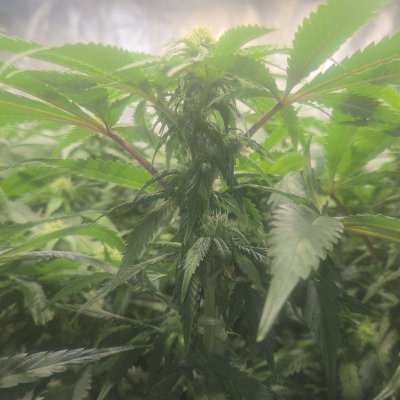
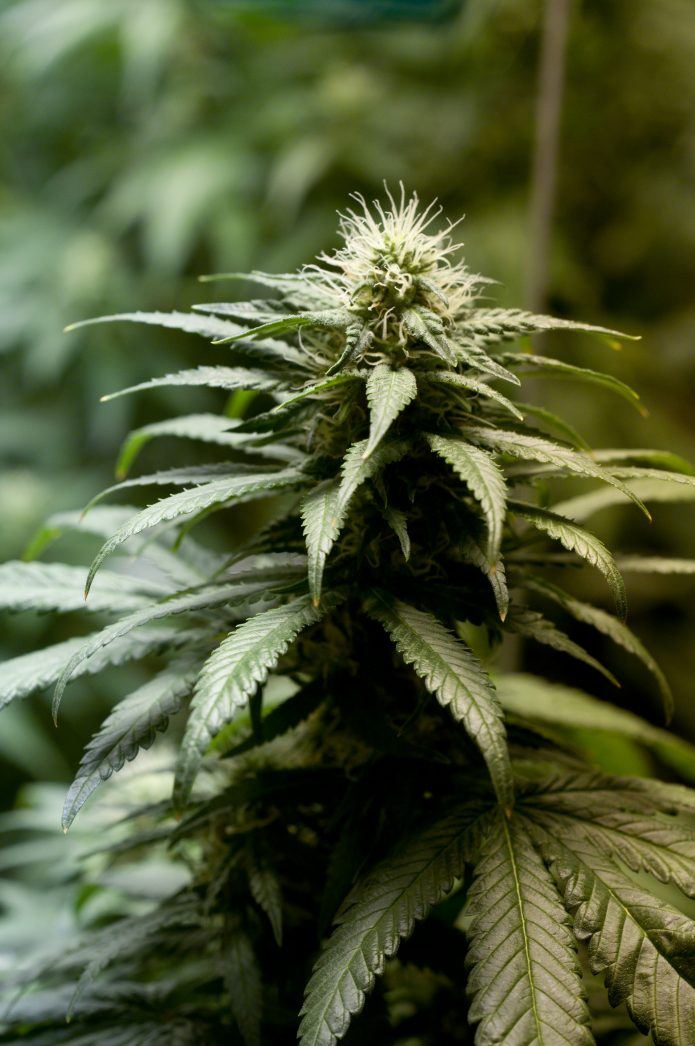
We need some pics man, this is interesting.
 

Attachments

  • 20251027_001009.jpg
    20251027_001009.jpg
    110.1 KB · Views: 1
  • 20251027_001149.jpg
    20251027_001149.jpg
    183.8 KB · Views: 1
  • 20251027_001236.jpg
    20251027_001236.jpg
    98.3 KB · Views: 2
  • 20251027_001324.jpg
    20251027_001324.jpg
    137.2 KB · Views: 1
  • 20251027_002255.jpg
    20251027_002255.jpg
    248.2 KB · Views: 1
  • 20251027_001121.jpg
    20251027_001121.jpg
    246.6 KB · Views: 1
Currently I just have to adjust the timer manually.
During the last 12 hours of light I go in and adjust the timer. Set to turn off at the appropriate time and turn them back on 12 hours later. I then repeat the process the next day.
Small inconvenience. The important thing is only that I make sure the lights turn off and remain off for 12 hours
 
There are digital timers you can set for randon times and smart plugs that can handle it i forgot what.

I want to see if this will flower normal should work as you say.and in the past i saw a few people try it but i cant remember how good it was
 
Yep you're right on the timers. I just saw that you can get like 7-day programmable timers for instance.

As for whether it’ll stay flowering — I hope it will. I've been working on it for a while. I went through a bit of a challenge today where I thought maybe this was the wrong decision. I talked at length with ChatGPT and did some extra reading.

We delved into phytochrome red (Pr) and phytochrome far red (Pfr).

Cannabis needs about 12 hours of uninterrupted darkness to trigger and maintain flowering. During the day, inactive Pr converts to active Pfr, signaling “daytime.” When the lights go off, Pfr gradually reverts to Pr, and once enough Pfr is gone, florigen is produced in the leaves. This florigen then moves through the plant, working with hormones like auxin and gibberellins to promote stem growth, bigger leaves, and fuller buds.

As long as almost all the phytochrome far red is able to change shape to become phytochrome red during the dark period, the plant should stay in flower.

I became worried that might not happen.
Further research says it will.

So I'm sticking with it unless I see signs that something's going wrong or not progressing as I expect.

More to follow...
Some of it is math.
 
Think of it like this — phytochrome acts kind of like ice and water, just two forms of the same thing. In darkness, it’s like ice (Pr) — solid and inactive. As soon as the lights come on, it “melts” almost instantly into water (Pfr), which can move and signal growth. The Pfr then triggers florigen production in the leaves, and as soon as the lights come on, florigen is released from the leaves to travel throughout the plant. When the lights go off again, it slowly “freezes” back into ice. This process repeats with every light/dark cycle.

Note: this is a metaphor — there is no actual ice or water, stoners! 😄
 
Florigen moves to the SAM (shoot apical meristem) and switches on flowering genes.

Once those genes are activated, the cascade of floral development continues regardless of how long the light period is. The plant isn’t “timing” each day; it’s responding to the signal it already received.Bud formation and development at the SAM will proceed normally because florigen already delivered the “start flowering” signal.

The extra light primarily increases photosynthesis, helping stems, leaves, and buds grow bigger, without delaying or reducing flowering.

So yes, whether florigen is produced every 24 hours or every 30 hours (in an 18/12 cycle) the end result in terms of flowering will be basically the same, assuming the dark period is still long enough to trigger it each time.

The dark-triggered florigen signal still needs to be renewed periodically (every dark period), but it doesn’t have to happen on a strict 24-hour schedule for flowering to proceed normally.


So for an 18/12 schedule, the extra light is not delaying flowering — it just gives more energy for growth while the flowering program runs continuously.
 
Was under the impression that Pfr and Pr can interchange quickly as I think you found.

Florigen has complex interactions feel more confident if the Professor described these in more detail or even just described them.

Says you can finish an eight week strain in six this way.

Doesn't recommend method for initiation of flower but assume if your creating florigen the extra light hours would speed this process by the same method it speeds flowering.

Seems full of holes, the Codex Astartes does not support your actions but I am looking forward to this 🎃
 
Was under the impression that Pfr and Pr can interchange quickly as I think you found.

Doesn't recommend method for initiation of flower...
1.The professor does clearly state "When starting a long light cycle it is advisable to force flower the plants with the traditional 12 on 12 off system. This will trigger pre-flowering much quicker than starting with the long light cycle. Once the initial pre-flowering phase passes, meaning that true flowers have started to appear, switch to the extended long light cycle to finish flowering the plants."

From elsewhere ..
2. Phytochrome Pr changes to Pfr
pretty much almost instantly when the lights turn on.
Pfr begins changing when the lights go off. It's is a slow process taking perhaps 6+ hours. Once the Pfr goes below a threshold it triggers the production of Florigen in the leaves.
The moment lights come on the Florigen production stops. The florigen goes to the shoot apical meristem (SAM) and turns on genes there. And once those genes are turned on the cascade of reactions and floral development occurs. The florigen is a signal. "Chaaaarge"
At some point the Florigen signal will need to be renewed but it is not on a schedule.
As long as the next dark period is long enough to transform Pfr to Pr.

I am learning like all of us.
18 hours is more photosynthesis.
More sugar created and more growth of leaves,stems and BUDS.

I didn't read the professor's article until after I'd already started using 18/12.
It validated the other research I had already done. I recommend exploring this and other comprehensive topics with different AI's. It's very rewarding.

It's not my goal for the strain to finish faster. Initially I wanted my plant to stretch and grow more during the stretch.
I decided to also do the this experiment to see if the plant would reveg or hermie. It won't reveg.

I have some math and also some thoughts on DLI that I'll be sharing soon.
 
In the spirit of full transparency I missed resetting the timer and the light went off after 12 hours lol.
Ordering a 7 day timer.
After 12 hours of darkness I will ve back to 18 of light.

Not worried
 
1.The professor does clearly state "When starting a long light cycle it is advisable to force flower the plants with the traditional 12 on 12 off system. This will trigger pre-flowering much quicker than starting with the long light cycle. Once the initial pre-flowering phase passes, meaning that true flowers have started to appear, switch to the extended long light cycle to finish flowering the plants."

From elsewhere ..
2. Phytochrome Pr changes to Pfr
pretty much almost instantly when the lights turn on.
Pfr begins changing when the lights go off. It's is a slow process taking perhaps 6+ hours. Once the Pfr goes below a threshold it triggers the production of Florigen in the leaves.
The moment lights come on the Florigen production stops. The florigen goes to the shoot apical meristem (SAM) and turns on genes there. And once those genes are turned on the cascade of reactions and floral development occurs. The florigen is a signal. "Chaaaarge"
At some point the Florigen signal will need to be renewed but it is not on a schedule.
As long as the next dark period is long enough to transform Pfr to Pr.

I am learning like all of us.
18 hours is more photosynthesis.
More sugar created and more growth of leaves,stems and BUDS.

I didn't read the professor's article until after I'd already started using 18/12.
It validated the other research I had already done. I recommend exploring this and other comprehensive topics with different AI's. It's very rewarding.

It's not my goal for the strain to finish faster. Initially I wanted my plant to stretch and grow more during the stretch.
I decided to also do the this experiment to see if the plant would reveg or hermie. It won't reveg.

I have some math and also some thoughts on DLI that I'll be sharing soon.
I thought four hours for Pfr Pr but six is close enough. There's a lot more to explain even the cascade but I guess results are the main thing and personally didn't think it could speed flowering by two weeks or at all but I'm no expert there.


I'm in for the long haul let's see what happens, everyone likes an experiment maybe you change the face of flowering who knows 🍿
 
I thought four hours for Pfr Pr but six is close enough. There's a lot more to explain even the cascade but I guess results are the main thing and personally didn't think it could speed flowering by two weeks or at all but I'm no expert there.


I'm in for the long haul let's see what happens, everyone likes an experiment maybe you change the face of flowering who knows 🍿
Yeah the estimate I read on converting PFR to PR was roughly halfway through the dark cycle. I don't know More than that at this point. It doesn't really matter as long as enough is converted to trigger the production of Florigen.

Some MATH I computed before beginning this strategy.

Originally I was only going to use this during the stretch. So looking at 10 days as a length of time. The math shows the following.

10 * 24 = 240 hours

In 12/12 that is 120 hours of light and 120 hours of dark.

In 18/12 the cycle is 30 hours.
240÷30=8 cycles

8×18=144 hours of light
8×12=96 hours of darkness.
144-120=24 hours more light during the same period.
That is 2 full extra lights on periods of 12 hours than the 12/12 during the same 10 days.
That's huge.
That's 20% more light. More photosynthesis more sugar production more growth of leaves, stems and BUDS. I would imagine it would affect the roots also.
 
This is about Florigen and how it relates to my 18/12

🌱 Florigen Cascade — Simplified View (Applied to Your 18/12)

[Dark period] → Florigen produced in leaves

[Translocation] → Florigen moves via phloem to SAM

[Shoot Apical Meristem (SAM)] → Florigen binds to FD → activates flowering genes (AP1, SOC1, etc.)

[Light period] → Flowering genes continue activity using available energy/light

🕒 In 12/12:
Florigen is produced roughly every 24 hours (once per dark cycle).

🕒 In your 18/12:
Florigen is produced once every 30 hours, but each production event still fully activates the flowering genes.
During the long 18-hour light phase, those genes stay active — so the plant keeps developing buds continuously.

✅ Bottom line:
Even though the signal is renewed less frequently, each “dose” of florigen is enough to sustain the flowering cascade for the extended light period — meaning your plant keeps building, not resetting or stalling.
 
Long time since I've even had to discuss these things, does Pfr Pr not convert quicker with far red before lights off too.

Really need a refresher to talk at that level 👍
 
Refresher and answering your question KG1

Here is something that I had handy that I think explains the mechanisms of what you're asking. I am definitely no expert.
It's fun to learn this stuff because you can see how it can influence what you do to your plants


The core of canopy management: Light heterogeneity (variability) versus uniformity.
The function of the large fan leaves:
"Large fan leaves are efficient at photosynthesis, but their primary long-term structural role is to shade lower parts of the plant."

Let's break down the two parts of that sentence, linking them back to the Pfr signaling we discussed:
Analyzing Light Heterogeneity and Pfr Signaling
Every leaf receives a different light environment. This difference in light directly causes different Pfr/Pr ratios throughout the canopy, which affects the local execution of the flowering signal.
* Top Leaves (Direct Light)
* Light Quality: Receive high amounts of Red Light (R) directly from the overhead source.
* Pfr Status: Pfr concentration is maximized throughout the 18h light period.
* Action: These leaves are the strongest Pfr signal generators and the primary sites for florigen synthesis during the subsequent dark period (because they have the most Pr to convert). They are executing the flowering command aggressively.

* Shaded Lower Leaves (Indirect Light)
* Light Quality: Receive very little direct Red Light; they are exposed mostly to Far-Red Light (FR) reflected or transmitted from the upper leaves.
* Pfr Status: Pfr is rapidly converted back to Pr by the FR (far red) light. The Pfr concentration remains low even during the light cycle.
* Action: These leaves are weak Pfr producers. While they might receive the circulating florigen hormone, the local Pfr status signals to the tissue that it is shaded and low-energy, resulting in weaker execution of the growth hormones (slower elongation, less mass gain).
Conclusion on Shading vs. Uniform Light
The Shading Role of Fan Leaves is a dual-edged sword:
* Pros (Structure): They are necessary to maximize light capture at the top to fuel the entire plant's energy needs (the structural support role).
* Cons (Signal Confusion/Inefficiency): They create deep shade below them, leading to lower nodes that receive a weak Pfr signal and thus execute the florigen command sluggishly, resulting in wispy, less developed lower buds.

For more clarity...

The crucial relationship between light quality and the Pfr signal. You are absolutely correct on the mechanism of light reaching the lower leaves.
Clarify exactly why a low Pfr signal results, even though the light reaching the lower leaves is primarily Far-Red (FR):
The Pfr Signal Generation Process
The key is not what light is present, but what the ratio of Red (R) to Far-Red (FR) light does to the photoreceptor Phytochrome.
* The Active Form is Pfr: The signal that tells the plant "I am in direct sunlight and should flower/behave like a top leaf" is the Pfr form of the phytochrome protein.
* Red Light (R) Creates Pfr: When the photoreceptor absorbs a Red photon, it is converted from the inactive form (Pr) to the active form (Pfr).
* Far-Red Light (FR) Destroys Pfr: When the photoreceptor absorbs a Far-Red photon, it is converted back from the active form (Pfr) to the inactive form (Pr).
Applying This to the Shaded Lower Leaves
This is why the deep shade created by the upper fan leaves results in a weak Pfr signal:
* Upper Leaves: They are in direct sun, absorbing most of the R light from the source. They convert nearly all their Pr to Pfr, resulting in a high Pfr concentration (strong signal).
* Lower Leaves (In the Shade):
* They receive very little direct R light because the fan leaves above absorbed it. Since there is little R light, the conversion Pr -> Pfr cannot happen effectively.
* The little light that does penetrate is enriched in FR (because R was absorbed). This low-energy FR light actively converts any small amount of Pfr that might be present back into Pr.
* The Net Result: Because they are starved of the R light needed to create Pfr AND they are bathed in FR light that destroys any existing Pfr, the concentration of the active signal (Pfr) remains very low.
In summary: The low Pfr signal in the shade is caused by the lack of Red light (R) needed for its creation, which is compounded by the presence of Far-Red light (FR) that actively degrades it. The FR signal is essentially the "destroyer" of the Pfr "sun
light" signal.

Now to your question
Far red light at lights off effect?

Asking if an end-of-day FR pulse works by rapidly converting the high amount of Pfr (which was built up during the light period) back into the inactive Pr form.
If that happens, the plant essentially experiences an immediate and artificial end to the "daytime" signal, causing it to "go to sleep" (initiate the transition to the dark response) much faster than if the lights just switched off.

The End-of-Day FR Pulse Effect
* Daylight Finish: Throughout the day, the high ratio of R light causes a maximal Pfr accumulation in the leaves. This Pfr is the signal that keeps the plant in its light response phase (photosynthesis, inhibiting flowering hormones in short-day plants, etc.).
* Light Off: When the lights simply switch off, the conversion from Pfr to Pr happens slowly in the dark, naturally transitioning the plant to the dark response phase.
* FR Pulse: If you immediately apply a short burst of FR light right as the main lights go out, the FR is absorbed by the abundant Pfr built up during the day.


This conversion is very fast. It immediately drops the effective Pfr/Pr ratio, triggering the dark-response pathway (which includes flowering induction in short-day plants) almost instantly.
In short: Yes, your thinking is correct. A pulse of FR light at lights-off acts like an immediate "switch-flick" that forces the plant's photoreceptors out of their "daylight" mode (Pfr) and into their "night mode" (Pr) much quicker than waiting for the natural decay in darkness.
Why Growers Use It (Beyond Just "Sleep")
While it forces the dark response, growers often use this technique to manage stem elongation (stretch):
* Stretching Control: Plants stretch most when the Pfr signal is low (i.e., shaded or in the dark). By using FR light at the end of the day, you can mimic the low Pfr conditions associated with shade, which can sometimes encourage a bit of elongation or alter how the plant handles the transition into darkness.
* Flowering Cue: In short-day plants (like cannabis flowering indoors), the critical factor for flowering is a long, uninterrupted dark period. An FR pulse ensures that the Pfr (the inhibitor of flowering) is destroyed immediately, guaranteeing the dark period starts instantly, thus optimizing the flowering signal.
This technique forces the dark response instantly. Growers use it primarily to:
* Control Flowering Cue (Short-Day Plants): By destroying the flowering inhibitor (Pfr) immediately, it guarantees the long, uninterrupted dark period required for flowering starts exactly when the main lights shut off.
* Manage Stretch: It mimics shade conditions (low Pfr), which can influence stem elongation, though this effect is more complex.
In short: You're right. The FR pulse rapidly destroys the "sunlight signal" (Pfr), forcing the plant into its night/dark phase state instantly. 💡


There we go mate
 
But I don't think any advance came from any technique to manipulate Pfr Pr in cannabis.

This is all old stuff though growers were crazy about the science at one point, some other species may get more like tomatoes.

Measuring a difference can be hard or small, we can't notice a few percent but a large indoor greenhouse could. Sometimes the biological maximum is reached and certain things can't increase that past it's already full point.

Things that are noticeable are running different flowering times say 10-14 and 14-10 which both seem to work but slow or speed a small amount. Which shows just how florigen and appropriate systems work via their time in darkness.

My conclusion was that there was lots of potential but hard to get anything from it. What your doing with the light schedule is refreshingly interesting 🎃
 
But I don't think any advance came from any technique to manipulate Pfr Pr in cannabis.

This is all old stuff though growers were crazy about the science at one point, some other species may get more like tomatoes.

Measuring a difference can be hard or small, we can't notice a few percent but a large indoor greenhouse could. Sometimes the biological maximum is reached and certain things can't increase that past it's already full point.

Things that are noticeable are running different flowering times say 10-14 and 14-10 which both seem to work but slow or speed a small amount. Which shows just how florigen and appropriate systems work via their time in darkness.

My conclusion was that there was lots of potential but hard to get anything from it. What your doing with the light schedule is refreshingly interesting 🎃
I agree with you if we were at some theoretical maximum. But there's too many variables to ever say reliably that we're at maximum. I'm using soil. I'm not using synthetic nudes. I have low humidity often. How do we train the plant.
How many colas do we create.
Every scenario changes the outcome. Understanding Pfr and Pr in relationship to defoliation really helps
Wouldn't you agree that Defoliation changes the light spectrum to the lower bud sites. The phytochrome is directly influencing how the plant develops afterwards.
Knowing the science helps one make decisions. I just finished my major defoliation at 3 weeks into flower 10 minutes ago. I will be organizing some pictures to post here. I now have stripped branches where direct light will hit every sugar leaf all the way down the colas.
And conversely I don't have a bunch of fan leaves getting in the way (shading) only allowing far red to reach them.
Right after I've finished defoliating the lights are going to go off and when they come back on they're going to bathe in light for 18 hours instead of only 12.
You don't even have to think that hard to know that that's going to make a massive difference.
Super important thing for having a well-developed cola versus one with a bunch of larf. I've had too much foliage on I probably every single grow I've ever done. This time I'm not making that mistake lol.
Some people argue against defoliation. I think understanding the phytochrome wins that discussion.

DLI is important. But it's based on a point in 3D space where you take your measurement and as soon as you move from the center or down further into the canopy the PPFD changes. So when you factor DLI based on a reading you're taking anywhere on the top of the plant it's a completely different number down below. A bushy plant is inefficient for our needs. So with this massive defoliation all that light gets to go down below. Most importantly it's red light not far red. I would say The extended 18-hour lights on would allow any grower but especially those with less powerful lights to actually accomplish DLI for the entire cola not just the top

That's an advancement I would say based on phytochrome knowledge.
Obviously I'm not saying anything new here. But I am trying to make it clear for myself and others.
I have so much to learn here from all the experience growers.

As for the two variations you listed. I think you can adjust schedules at different times. Perhaps before harvest It's more advantageous to have a longer night. Again there's so many variables to factor. What are we growing? Is it a sativa or indica and the genetics. Every plant will react differently. But you want to make sure you have a long enough dark. Always.
If we realize we don't have to base it on 24 hours then that gives you greater variability.

The purpose of this thread is can we just switch light schedules in flower to really long days paired with the 12-hour night? Using a significantly non standard day. Can we do a massive defoliation (a schwazze) in a soil grow at the same time? Perhaps the key to its success is the fact that it will get 18 hours of light every "day"

I'm finding out lol. To boldly go...
It's also fun isn't it?
Thanks for your interest and conversation man.

Editing text is a pain lol
 
Last edited:
Page 1 of 2 · Replies 1–20 of 34
Back
Top Bottom