PDXLifted
- Posts
- 52
- Reactions
- 120
- Joined
- Jul 28, 2016
- Points
- 33

121,112 growers, practical cultivation threads, real grow diaries, and community advice.
Create account → Already a member? Log inFollow along with the video below to see how to install our site as a web app on your home screen.
Note: This feature may not be available in some browsers.


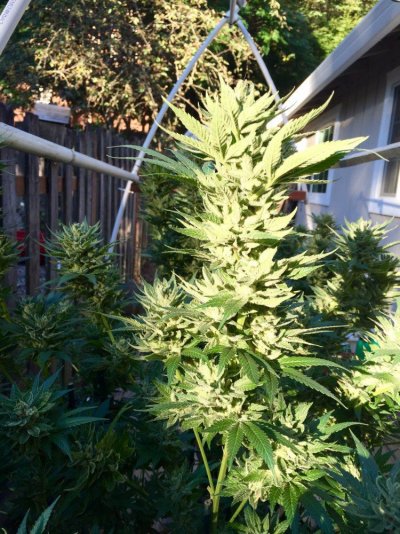
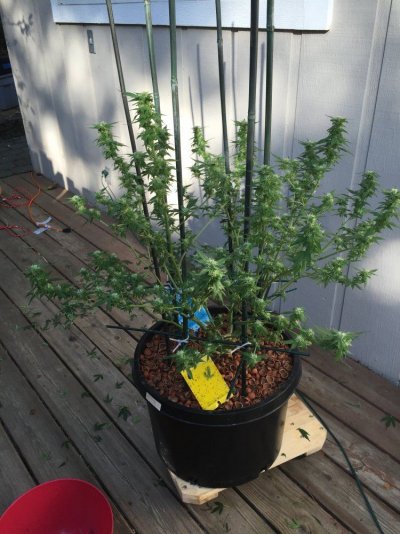
lovely broView attachment 623917 View attachment 623918 View attachment 623920 View attachment 623917 View attachment 623918 View attachment 623920 First two pictures are the citrus sap. The third picture is my strawberry cough momma that's been left outsoors - no light deprivation. Looks like it's that special time of the year here in Portlandia!
what is in clearex please?Hola fellow farmers, hope you all are doing well and that your crops are doing even better!
Day 53 of flower and we are getting very close. Tomorrow (Saturday) will be the 5th day of flush (using water + clearex); here are a few pictures of the citrus sap ladies.
About 10% of the trichs are amber under a loupe. I will post some pictures of the bubble gum tomorrow, they're at least a couple days behind the citrus saps, surprisingly.
One love
citric acid and long chain sugarwhat is in clearex please?
ok, so it is a polysaccharide but how does the citric acid work to help, esp in light of Citric acid being a principle component made by plants during the krebs cycle? I would anticipate that excess Citric acid may well harm the delicate balance of the Krebs Cycle. I have of course heard of Vitamin C being used at later stages to assist with stress relief and I am told it helps trichome production, but that same can be achieved by foliar feeding half a soluble aspirin in a litre of water to stimulate SA and so impact terps, flavs tanins and other essential oils. Wouldn't you need extra P to take advantage of this extra citric/carb content?citric acid and long chain sugar
helps with flushing
it acts as a chelator for built up salts to grab hold of and fush out of the mediumok, so it is a polysaccharide but how does the citric acid work to help, esp in light of Citric acid being a principle component made by plants during the krebs cycle? I would anticipate that excess Citric acid may well harm the delicate balance of the Krebs Cycle. I have of course heard of Vitamin C being used at later stages to assist with stress relief and I am told it helps trichome production, but that same can be achieved by foliar feeding half a soluble aspirin in a litre of water to stimulate SA and so impact terps, flavs tanins and other essential oils. Wouldn't you need extra P to take advantage of this extra citric/carb content?
I am not sure what your product is doing can you explain how it helps you? What benefits are you really seeing with its use? One can see how Citric acid is used to metabolize carbohydrates as part of the natural krebs cycle of course, but is the plant using this extra?
http://chemistry.about.com/od/biochemistry/ss/citricacidcycle.htm
Some thoughts on flushing from Silas..
Flushing additives containing EDTA (Final Phase etc..) or other chelation agents can also help breakdown and prevent salt buildup. But Warning, Adding significant EBDT to a root mass saturated with high ppms will break down trapped salts creating more ppms, as well as making the existing ppms far more absorbable, and it can KILL a plant. So always flush thoroughly with tap water (or very low strength nutes) first before using high levels of EDTA. (I will discuss this more in the the upcoming “Root Zone: article)
Also, it is a common misconception that a “final flush” (i.e. eliminating all nutrients for the last week or two) improves the “taste” of the final product by reducing “minerals” from the buds. The amount of “minerals” (technically they are colloidal elements) at any moment traveling in a plant regardless of the feeding levels is microscopic compared to the weight of the plant, and the vast majority of those miniscule levels are carried in the xylem (plant vascular system) found in the stems and leaves, NOT the flowers. So the only real, functional benefit of flushing is it reduces chlorophyll levels, i.e. it yellows out the plant, and this will improve the taste, reducing the need for curing because it is the green chlorophyll that causes the harsh taste often wrongly ascribed to “minerals.”
However, if you reduce the chlorophyll, you reduce the plants energy source and with it all aspect of growth including resin. Bottom line: flushing to the point of significant plant yellowing will improve taste, but it does it at the possible expense of resin and fragrance production, so you may be better served to flush only enough to prevent salts, and remove the chlorophyll later during the drying/curing process.