Log In Register

Tea Recipe

  • Thread starter Thread starter Capulator
  • Start date Start date
  • Tagged users Tagged users None

Tea Recipe

Capulator 1,732 Replies 370,258 Views
Page 32 of 87 · Replies 621–640 of 1,733
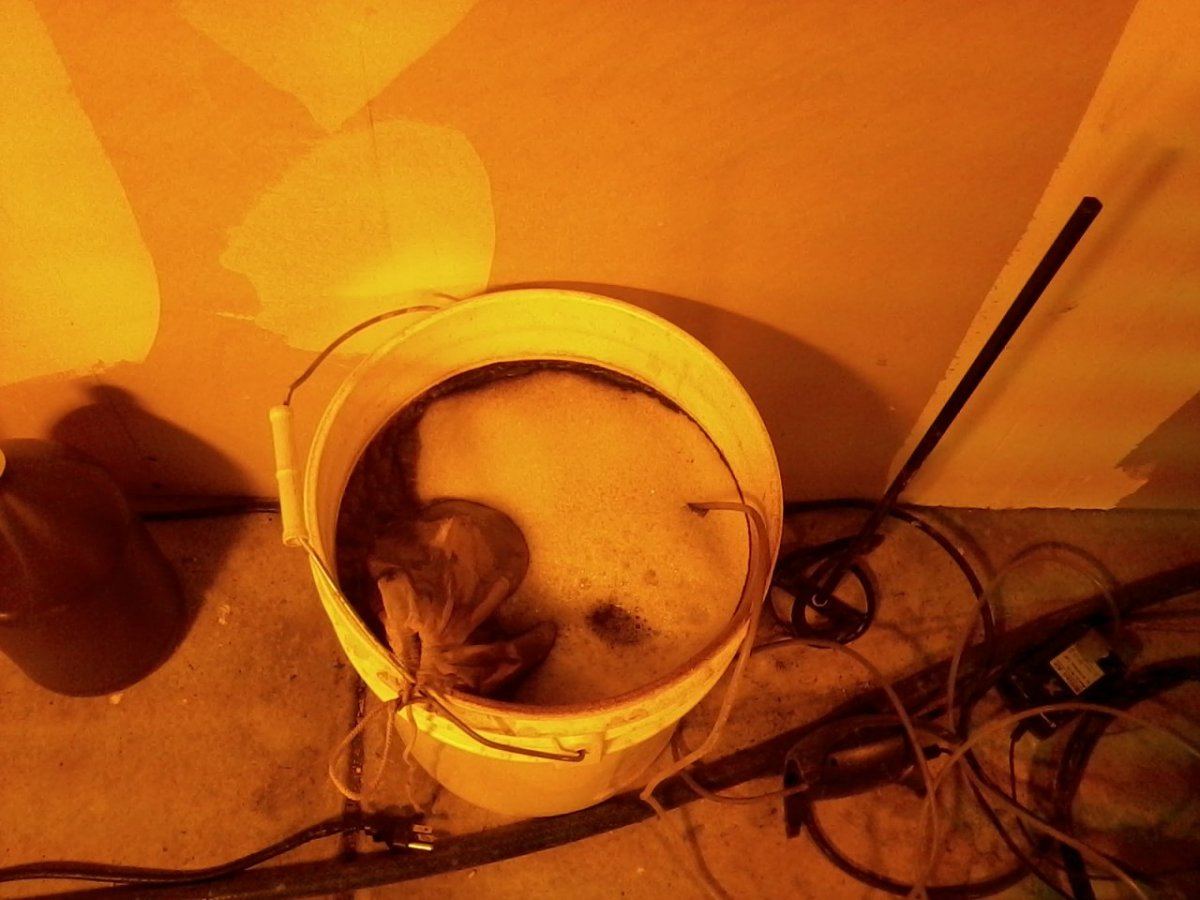
And on the second day the young farmer look into his tiny grow room and said "Let there be Foam" and a great sigh of relief overwhelmed his entire body as he had slayed the beast that had alluded him for so long:)
IMG 20120925 214209
 
My tea recipe is as follows (per gallon of filtered tap water):

1 tsp Cap's Foliar
1 tsp Cap's Roots
1 tbsp Bountea Bio-Activator
1 tbsp compost (Earth Recharge, Alaskan Humisoil, or Boogie Brew)
1 tsp insect frass (added 1-2 hours before brew is done)

Bubble for 16-24 hours. This is then diluted about 50-50 and used as a soil drench and foliar.

When using Boogie Brew, it always foams, even standalone. I also have a bottle of Earth Juice Hi-Brix that I've used instead of the Bio-Activator, which has yucca. I always get foam when I use the Bio-Activator. The powder is easier to work with as well.

outwest

Just got my Insect Frass. Have you ever used it in any way besides this tea recipe? I was thinking about first using it as a Foliar and then working it into my tea recipe same as yours except with some Cold Processed Fish Emulsion added in.
 
Just got my Insect Frass. Have you ever used it in any way besides this tea recipe? I was thinking about first using it as a Foliar and then working it into my tea recipe same as yours except with some Cold Processed Fish Emulsion added in.

I really can't comment on any approach but my own, but I believe the frass instructions say it can replace fish hydrolysate in you recipe. . .and add it in the last 2 hours of the brew.

outwest
 
I really can't comment on any approach but my own, but I believe the frass instructions say it can replace fish hydrolysate in you recipe. . .and add it in the last 2 hours of the brew.

outwest

Yup you're right on. I forgot about the link you gave on the earlier page, I was reading the bag and looking at what was on Ehydro. I love some of the prices on that site. Hortilux HPS bulbs for 69.00, I was getting ready to go buy two next week for about 119.00. Shipping and all was very cool.

Thanks again man, I am stoked. Going to go Herbivore poop tea crazy this week.
 
I won't go into a long explanation, but take my word for it, I know for a fact that when using the Foliar Pack for killing thrips, you definitely need to keep your humidity at around 70% if not higher for the 3-7 days it takes to infect the littler fuckers. It will still work at lower humidity but not with one treatment. It worked for me in one treatment on my plants I had put in the higher humidity room, the others needed two treatments. I guess I should say that this goes as far as my experience with my first, and hopefully only, thrip infestation.

I learned this the hard way, then I went a did some reading on the Beauveria Bassiana, the shit in the Foliar pack that kills thrips, among other stuff, and the spores are way more effective with humidity that high. There are some commercial products that are around 1000% more expensive than Cap's, like Mycotrol and it has the same thing, but only that, in it. With Caps you also get the other stuff.

Anyway, it's pretty cool, you can see the husks of those little fucks after the fungus has grown inside them and eviscerated them. Fuck a thrip. Nasty little bastards.
 
I got my insect frass. I mixed it for the first application at the full strength instructions and then added in a tea I had made with Root and Nute. This was about 36 hours ago. I am seeing some really nice signs. Most definitely perked up the energy. The ones I have in flower, about 5th week I think, which were doing okay anyway, have definitely reinvigorated. Lots of fresh new pistils. I think this was a very good idea. My moms, which I used it on also, are really happy.

Going to order the bigger bag this coming week for sure. I emailed the guy who makes it, or answers their email, and he straightened me up about them not updating their instructions for Hydro use which also pertains to anyone using RO water. They say now that no additional calcium is required. I still add in a little to give the water some ions before I add anything in. I just feel like it helps thing go into solution easier.

Thanks Outwest for this Frass turn on, I am thinking I will be using this stuff for a very long time.
 
I just feel like it helps thing go into solution easier.

This will have the opposite effect that you expect it to have. A solvent only has so many "spaces" in it for solutes--ions take up some of these spaces in water and will cause things to go into solution more slowly--the only exception being some types of soluble (globular) proteins--however, this only is the case at VERY low ion concentrations (in the millimolar range).

That said, frass is the business!
 
This will have the opposite effect that you expect it to have. A solvent only has so many "spaces" in it for solutes--ions take up some of these spaces in water and will cause things to go into solution more slowly--the only exception being some types of soluble (globular) proteins--however, this only is the case at VERY low ion concentrations (in the millimolar range).

That said, frass is the business!

Thanks. I understand. Does ph'ing have this effect also? I was told ph'ing will help it (it being microbial solutions) form carbon bonds? RO water that is.
 
Thanks. I understand. Does ph'ing have this effect also? I was told ph'ing will help it (it being microbial solutions) form carbon bonds? RO water that is.

pH affects the activity of microorganisms in various ways. It can alter activity (reaction rate) of enzymes and other proteins. It can straight up kill them.

Every living system prefers a certain pH level (which is why your blood consists of a triple-buffered system--if we go even a LITTLE bit outside of our blood pH, it kills us pretty quick fast).

As for forming "carbon bonds" that's a bunch of gobbledygook. Don't listen to that friend again--he doesn't know what the hell he's talking about :)
 
pH affects the activity of microorganisms in various ways. It can alter activity (reaction rate) of enzymes and other proteins. It can straight up kill them.

Every living system prefers a certain pH level (which is why your blood consists of a triple-buffered system--if we go even a LITTLE bit outside of our blood pH, it kills us pretty quick fast).

As for forming "carbon bonds" that's a bunch of gobbledygook. Don't listen to that friend again--he doesn't know what the hell he's talking about :)

Well that totally makes me want to got back to Chem 101.

I thought Carbohydrate metabolism through respiration or fermentation required, for the electron transport chain, during any energy transfer in solution, especially cellular oxidations, that there are free hydroxide and hydronium ions? ..thanks i think....lol. Back to basics.

But not only that, and please correct me if I am wrong....here is a cut and paste from my Micro class....sorry bad scan but readable I hope.

Requirements for Growth
Physical Requirements
Temperature.Theminimumgrowth temperature is the lowest temperature at which the species will
grow, and the maximumis the highest. The optimum growth temperature is that at which it grows best.
Psychrophilesare organisms capable of growth at 0°C. Some microbiologists define psychrophiles
as having an optimum growth temperature of about 15°. These usually are found in oceans or arctic
environments. The term psychrotrophs(or sometimes, moderate psychrophilesor facultative psychrophiles)
has been proposed for organisms that grow well at refrigerator temperatures but that have an optimum
growth temperature of 20–30°C. It is the term we will use for organisms causing refrigerated-food
spoilage. Mesophilesare the most common microbes; their optimum temperatures are 25°to 40°C.
Thermophilesare capable of growth at high temperatures. Many have an optimum of 50°to 60°C.
Many are not capable of growth below about 45°C. Hyperthermophiles(extreme thermophiles) are
found among the archaea and have an optimum growth temperature of 80°C or higher.
pH.Most bacteria grow best in a narrow pH range near neutrality, between pH 6.5 and 7.5. Very few
grow below pH 4.0. However, many bacteria, such as the acidophilesresponsible for acid fermentations,
are remarkably tolerant of acidity. Abufferis sometimes added to media to neutralize acids. Examples of
buffers are phosphate salts, peptones, and amino acids.
Osmotic Pressure.If a microbial cell is in a solution in which the concentration of solutes is higher
than that found in the cell, cellular water passes through the cytoplasmic membrane in the direction of
the high solute concentration. During the loss of water, the cytoplasmic membrane collapses away
from the cell wall, which is called plasmolysis. Extreme halophiles(sometimes called obligate
halophiles) are organisms that have so adapted to high salt concentrations (as high as 30%) that they
require them for growth. Facultative halophilesdo not require high salt concentrations, but they are
able to grow at salt concentrations as high as 15% that tend to inhibit the growth of many other bacte-
ria. Osmotic effects are roughly related to the numbers of molecules in a given volume of solution. For
a given weight/volume, therefore, sodium chloride is more effective than sucrose. Under unusually
low (hypotonic) osmotic pressure, such as distilled water, water tends to enter the cell.
63
Chemical Requirements
Carbon.Besides water, which is needed because nutrients must be in solution in order to be used, car-
bon is a primary requirement for growth. It is the structural backbone of living matter. Its valence of four
allows it to be used in constructing complicated organic molecules. Sources of carbon are carbon dioxide
or organic materials.
Nitrogen, Sulfur, and Phosphorus.Some organisms use proteinaceous material as a nitrogen
source; others use ammonium ions (NH4+) or nitrate ions (NO3–). Afew bacteria and Cyanobacteriaare
able to use gaseous nitrogen (N2) directly from the atmosphere. This process is called nitrogen fixation.
The Rhizobiumand Bradyrhizobiumbacteria, in symbiosis with leguminous plants, also fix nitrogen. Sulfur
sources are sulfate ion (SO42–), hydrogen sulfide (H2S), and the sulfur-containing amino acids. An impor-
tant source of phosphorus is the phosphate ion (PO43–). Nitrogen and sulfur are required to synthesize
proteins. DNA, RNA, and ATPrequire nitrogen and phosphorus.
Trace Elements.Mineral elements such as iron, copper, molybdenum, and zinc are referred to as trace
elements.Although sometimes added to laboratory media, they usually are assumed to be naturally
present in water and other media components.
Oxygen.Microbes that use molecular oxygen are aerobes;if oxygen is an absolute requirement,
they are obligate aerobes. Facultative anaerobesuse oxygen when it is present but continue growth
by fermentation or anaerobic respiration when it is not available. Facultative anaerobes grow more
efficiently aerobically than they do anaerobically. Obligate anaerobesare bacteria totally unable to
use oxygen for growth and usually find it toxic. Hydrogen atoms in the electron transport chain
may be passed to oxygen, forming toxic hydrogen peroxide (H2O2). Aerobic organisms usually pro-
duce catalase,an enzyme that breaks down hydrogen peroxide to water and oxygen; anaerobes usu-
ally lack catalase. Aerotolerant anaerobescannot use oxygen for growth but tolerate it fairly well.
They will grow on the surface of a solid medium without the special techniques required for
cultivation of less oxygen-tolerant anaerobes. Common examples of aerotolerant anaerobes are the
bacteria that ferment carbohydrates to lactic acid, a process that occurs in making many fermented
foods. Afew bacteria are microaerophilic,meaning they grow only in oxygen concentrations lower
than that found in air. They are aerobic, however, in the sense that they require oxygen. They are
probably unusually sensitive to superoxide free radicals and peroxides, which they produce under
oxygen-rich conditions.
Oxygen has a number of toxic forms.
1.Singlet oxygenis normal molecular oxygen (O2) that has been boosted into a higher energy state
and is extremely reactive.
2.Superoxide free radicals(O2–) are formed in small amounts by aerobic organisms; they are so toxic
that the bacteria must neutralize them with superoxide dismutase.This enzyme converts superox-
ide free radicals into oxygen and toxic hydrogen peroxide (which contains the peroxide anion),
which in turn is converted into oxygen and water by the enzyme catalase:2 H2O2→2 H2O + O2.
Another enzyme that breaks down hydrogen peroxide is peroxidase.It does not produce oxygen:
H2O2+ 2 H+→2 H2O. Anaerobic bacteria often cannot neutralize the superoxide free radicals they
produce and do not tolerate atmospheric oxygen.
3. The hydroxyl radical(OH) is formed in cytoplasm by ionizing radiation and as a by-product of aer-
obic respiration. It is probably the most reactive form.
Organic Growth Factors. Organic growth factorsare organic compounds such as vitamins, amino
acids, and pyrimidines that are needed for life, but that a given organism is unable to synthesize.
64Chapter 6
 
I thought Carbohydrate metabolism through respiration or fermentation required, for the electron transport chain, during any energy transfer in solution, especially cellular oxidations, that there are free hydroxide and hydronium ions? ..thanks i think....lol. Back to basics.

But not only that, and please correct me if I am wrong....here is a cut and paste from my Micro class....sorry bad scan but readable I hope.

That is correct--but this refers to the intracellular needs--not the needs outside of the cell. Keep in mind where this carbohydrate synthesis is happening. The cell maintains a proton gradient (and can get OH from water). Hydronium (H30+) is just a fancy way of saying you have water with free protons in it. If you're growing bennies--what you'll find is that your pH will swing (up usually). It IS good to have it more on the acidic side if anything because there are various proton pumps which operate at the cell/solution interface.

Often I find that pH is too difficult a concept to properly explain to people in short fashion--because it involves various equations and such that do not really lend themselves to quick working (and most of the answers are non-obvious from the outset).

I've often found the best way to describe what is happening is that in PURE water, OH- and H+ have a large affinity for one another, and so they stick together as water. Even in the best of conditions, however--for any volume of water there is a constant, albeit small, amount of water molecules which exist as a free OH- and H+--very briefly--and probably in different localities in the water sample at any given time.

This number has been calculated and it is ~ 1.0x10^-7 mol/L and it is called ionization constant of water. Water undergoes this process of autoionization even in the purest of samples.

As we add different things into the water--we change the affinities of these molecules for one another, either shifting the equation to the right or to the left. This is how an acid or base solution is formed. If we add something which can grab a proton more tightly than free molecules of water can (the ionization constant)--we leave an OH- in solution and make it more basic.

When we add something which likes to grab an OH- more tightly than a proton (also the ionization constant), we leave a free proton in solution and make it more acidic.

If we plug these coefficients into the Henderson-Hesselbach equation pH= pKa + log ([A-]/[HA]) in the proper places we end up with the following:

pKa water = -log(Ka water) = -log (1.0x10^-7) = 7

log [A-]/[HA] = log(1.0x10^-7/1.0x10^-7) = log (1) = 0

pH= pKa + log ([A-]/[HA])

pH = 7 + 0

pH = 7

Which is what we expect for pure water.

p denotes negative log. and pH is really -log ([H+]) where [] denotes concentration in molarity.

If we solve the equation above, pH = 7, for [H+], we end up back at the dissociation constant of water, 1.0x10⁻⁷. IE, at neutral pH, this is how many free protons are in solution in moles/liter (and you'll find that there are the same number of hydroxide ions).

Protons are never really "free", water grabs them pretty tightly still to form hydronium, or H3O+.
 
Small addition--this is a fairly simple explanation, and it works very well when considering strong acids and bases and how they will affect pH (because we can count them as either 1 molecule of OH or 1 molecule of H+)--they dissociate completely which is what makes them "strong".

Most things that will change your pH are weak acids and these require subsequent workings of the same equation(Henderson-Hesselbach)--as well as fairly good understanding of stoichiometry and mole conversions to work out. This is where pH gets buggery--and its where we all reside when it comes to feeding plants. Otherwise there would be some fail safe guide (or chemical) to pH stability for growing in a given medium.

It is unfortunately not this easy in practice--if only everything were sulfuric acid.

Also noteworthy is the distinction that most of the protons and oxygen being used to create reducing power (NADH equiv) as well as ATP equivalents are coming from water.

These energy currency are sent to the calvin cycle which is where carbon fixation via CO2 occurs.

Here's a great pic which shows this:

400px-Thylakoid_membrane.png
 
That is correct--but this refers to the intracellular needs--not the needs outside of the cell. Keep in mind where this carbohydrate synthesis is happening. The cell maintains a proton gradient (and can get OH from water). Hydronium (H30+) is just a fancy way of saying you have water with free protons in it. If you're growing bennies--what you'll find is that your pH will swing (up usually). It IS good to have it more on the acidic side if anything because there are various proton pumps which operate at the cell/solution interface.


Thank you for both for posts....I am rotating them around in the cranium. My problem with Chem, and with all my science classes, is my math skills suck. I really have to work at it to get it through my brain. I do eventually get it though.

I also always wonder if mixing in bennies with straight RO can cause cell lysis (sp). Or just can kind of shock them because of osmotic shock.

Anyway, again thanks for those posts.
 
Does anyone use SnowStorm or Gravity or the new Crystal Burst with bennies or have any opinions? I was given some Gravity by a store owner and was going to use it as a test on about ten plants. I think the directions said start at about week 4 which will I am almost at and wanted to know if this stuff is not good, waste of time, or just anyones experience with any of those products. I have always felt Snowstorm was relatively safe since it's probably just Triacontanol and some enzyme additive. I don't know about the others. Labeling requirements suck in the industry and I really doubt that it is just B vitamins and kelp in the Gravity which is why I am kind of hesitant.
 
I hear gravity makes for dense flowers that do nto smell as good. Be careful... also risk the chance of botrytis when running PGR's/
 
Thank you for both for posts....I am rotating them around in the cranium. My problem with Chem, and with all my science classes, is my math skills suck. I really have to work at it to get it through my brain. I do eventually get it though.

I also always wonder if mixing in bennies with straight RO can cause cell lysis (sp). Or just can kind of shock them because of osmotic shock.

Anyway, again thanks for those posts.

Because they are endospores, I imagine they will be a bit heartier than what we'd expect to see from say, a human cell in water. The answer to your question, however, is--without question--yes. This is referred to as "cytolysis" (when the lysis is caused by osmotic pressure).

That said, all that is needed to correct this is EXCEEDINGLY LOW concentrations of solutes--about 150-300mM. I imagine that the carbohydrate source you add will *just* about get you there such that it's not really a big issue. Bacteria and protozoa are a bit less sensitive to osmotic forces--because many of them are able to shed a great deal of solutes if they come under osmotic pressure which is to great. A good example of this is Leishmania--which can not only move solutes out, but actually constantly pumps acid phosphatase enzymes into its surroundings as a part of its natural processes (regardless of osmotic pressure) That's right, this thing actually has a "protein pump", which is in itself a transmembrane protein.
 
thanks squiggly. So many people think i get bogged down in the science. I think since my dad is an organic chemist his way of viewing things in general rubbed off on me.
 
thanks squiggly. So many people think i get bogged down in the science. I think since my dad is an organic chemist his way of viewing things in general rubbed off on me.

Organic is also my chosen are of expertise--and that doesn't surprise me one bit. We're a questioning bunch--because we know that a single atom can make the difference.
 
Page 32 of 87 · Replies 621–640 of 1,733
Back
Top Bottom