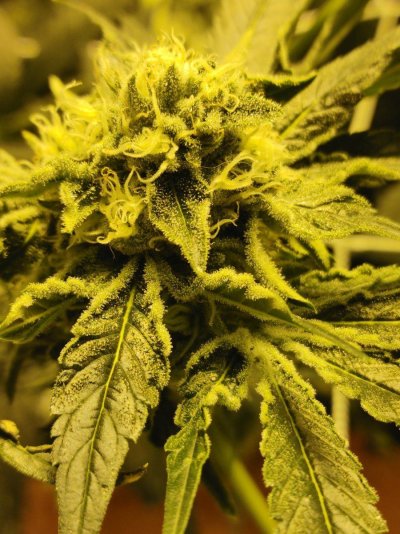
Looking good PT. Nice training. She looks like shes going to blow up during stretch. I was just reading up on sst. I am going to use them next run.

Thanks Mike and I hope you are right.
SSTs are interesting huh? I have a friend back in Chicago that has told me a lot about them. He actually just recently advised I used corn instead of alfalfa at this stage in veg. Have you looked much into Triacantonol or Cytokinins and Gibberellins? Cool shit and seems they are kind of like steroids for plants and can be beneficial in the tight dosages and times
"Chitosan-
Derived from chitin this organic molecule is found in the exoskeletons of crustaceans, from Mantis shrimps to Beatles. Chitosan provides structural support in the hard shells of these animals. It is a vastly abundant biodegradable material with a low molecular weight. When chitosan is applied as a foliar or soil drench to plants it has been found to exhibit PGR qualities. Targeting a plant cells plasma membrane and nucleus, chitosan regulates gene expression and other cellular processes.
NASA have also taken interest, experimenting with chitosan to aid plant growth in space! This is because Chitosan has been found to increase photosynthesis, enhance plant growth, stimulate nutrient uptake and aid in seed propagation. Chitosan also has strong anti-pathogenic properties, naturally up-regulating innate defence responses in plants to combat insects, pathogens and soil-borne diseases. Further research has also shown chitosan applications to increase flavonoid and terpenoid production in a variety of resinous plant species.
Triacantonol -
This plant growth stimulant can be found in a variety of natural sources such as alfalfa meal, sugarcane and bees wax.
Triacontanol is a "fatty alcohol" and is sometimes referred to as Melissyl or Myrcicyl alcohol. It is non-toxic, environmentally friendly and safe to consume. Research has shown
Triacontanol to be a powerful growth stimulant, effecting basic metabolic processes such as photosynthesis, enzyme activity, nutrient uptake CO2 assimilation and much more. In the correct doses
Triacontanol significantly increases the amount of chlorophyll in leaves, improving the rate of photosynthesis. Similarly in root systems cell growth is enhanced creating stronger root networks allowing for greater nutrient uptake. Due to its up-regulating qualities many
studies have shown the application of triaconantonl as a foliar feed, increased yields dramatically compared to control groups. When applied to mint plants in experiments it has also been found to increase the overall yields and interestingly the mints essential oil content, suggesting similar results could be obtained for Cannabis"



 and invite them to the bbq. In addition maybe let top could inches of soil dry out on top. Also I believe homedawg


 , but Fingers crossed, the epoxy og might just finish. She still looks a ways out, and slacking compared to the other strains, Im think atleast another 4 weeks???