Log In Register

THE TRAINWRECK. Brought to you by thcfarrmer…..

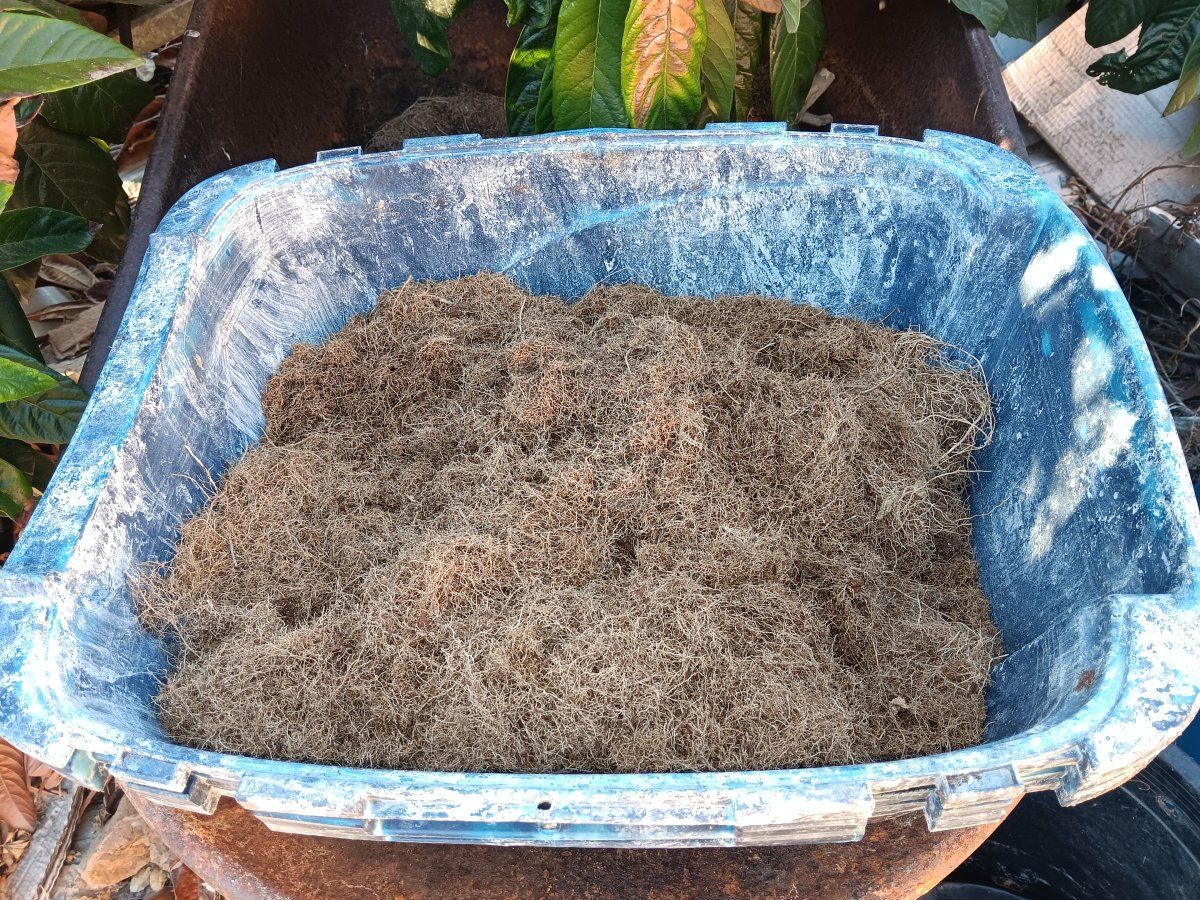
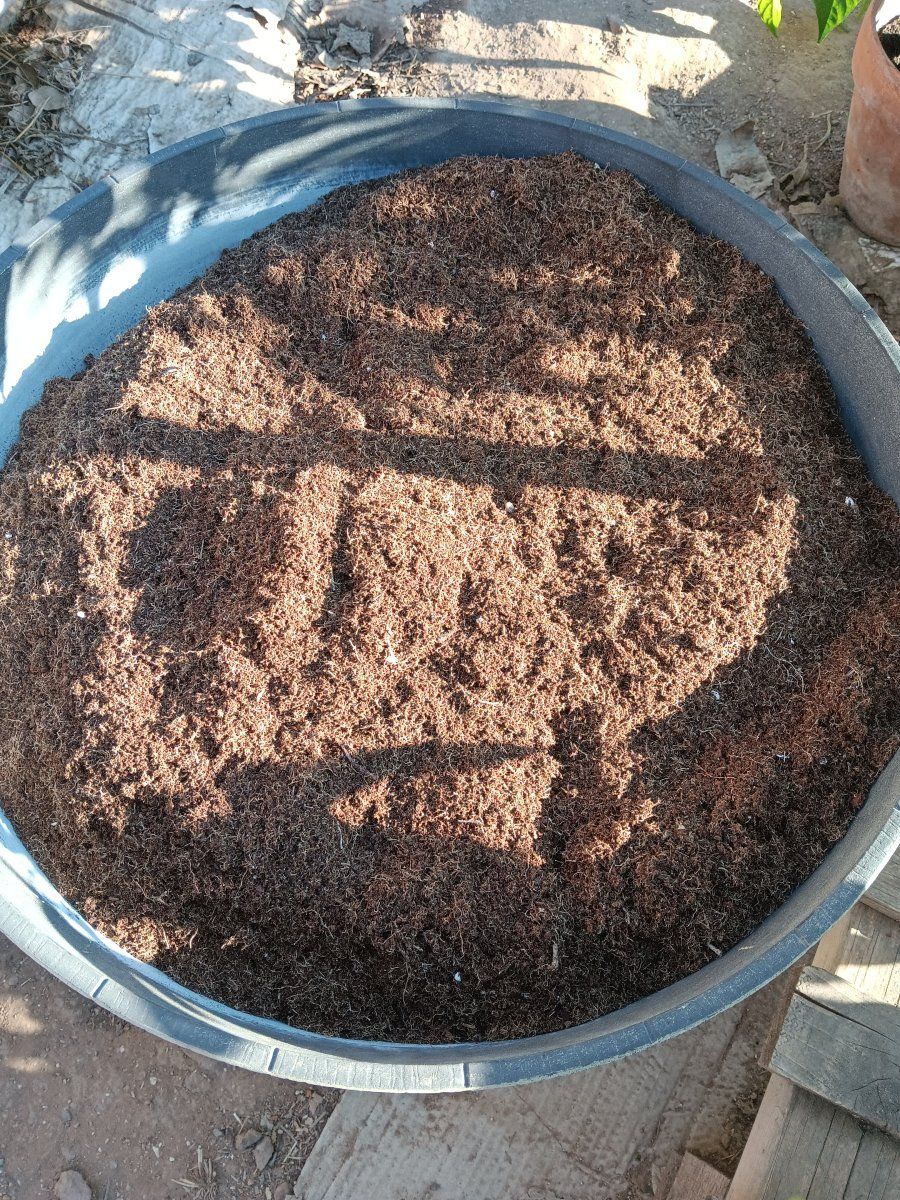
For anyone growing in coco coir and want to reuse I've found an old cat litter box called a sifter litter box Two solid trays and one screened. Walmart $32 works like a champ Holds the majority of the old roots and I've got 15 gallons of beautiful coco...
Home Forums Medical Cannabis Cultivation Grow Diaries THE TRAINWRECK. Brought to you by thcfarrmer…..
Grow diary eligible · Medical Cannabis Cultivation

THE TRAINWRECK. Brought to you by thcfarrmer…..

by Captspaulding · Started
1d
Running
0
Updates
95,543
Replies
3
Images
Discussion below · 95,543 replies
Page 4198 of 4778 · Replies 83,941–83,960 of 95,544
Status
Not open for further replies.
For anyone growing in coco coir and want to reuse I've found an old cat litter box called a sifter litter box
185d3806 d808 45b9 8ab3 641838df593d7f7424e755b9134245606514e73c8231

Two solid trays and one screened. Walmart $32 works like a champ
20251008 171615

Holds the majority of the old roots and I've got 15 gallons
20251008 171559

of beautiful coco coir. I've never gotten this percentage back from used coir or this clean. 5 of 5 🌟's
 
For anyone growing in coco coir and want to reuse I've found an old cat litter box called a sifter litter box
View attachment 2542727
Two solid trays and one screened. Walmart $32 works like a champ
View attachment 2542740
Holds the majority of the old roots and I've got 15 gallons
View attachment 2542741
of beautiful coco coir. I've never gotten this percentage back from used coir or this clean. 5 of 5 🌟's
I wonder if it's possible even to scrape this site for all the DIY stuff and compile or just tag it.
Nice though. Admirable. Salute.

LMAO! go leave a review and show us how to spam it with upvotes or whatever. Make it take over the reveiws.
 
Last edited:
I shared it here before, let me go lookee see...
$199.00 When I hook up I'll ask how/statute within the law before shelling off 200 bucks😉

I'm getting a better sense of this now. It would be through your medical recommendation with the doctor recommending an amount you need that exceeds the legal number of plants, and presumably up to 99. You can get a rec for $35 and you may or may not be able to get what you're looking for at that price, I don't know.
 
Last edited:
I'm getting a better sense of this now. It would be through your medical recommendation with the doctor recommending an amount you need that exceeds the legal number of plants, and presumably up to 99. You can get a rec for $35 and you may or may not be able to get what you're looking for at that price, I don't know.
With my needs and being my wife's caregiver and I help out a couple who battle cancer and have no room to grow I could probably have no problems with a med rec of 99 plants. I'll renew every year. Take the edge off the fear of getting harassed and possibly losing strains. I think I'll frame it in the greenhouse🤣
 
With my needs and being my wife's caregiver and I help out a couple who battle cancer and have no room to grow I could probably have no problems with a med rec of 99 plants. I'll renew every year. Take the edge off the fear of getting harassed and possibly losing strains. I think I'll frame it in the greenhouse🤣
Now does that get you better prices or anything? It directly puts you in a nice marketing class with a minimum dollar, salesmen would drool.
 
FUCKIN CHAT SEZ:

🌡️ What VPD Actually Means​


VPD = Vapor Pressure Deficit.


In plain English:
It’s the difference between how much water vapor the air could hold (if it were 100% humid) and how much it’s actually holding right now.


That “deficit” controls how fast water leaves your plants — through their leaves (transpiration).


So:


  • High VPD = air is dry → plants transpire like crazy → risk of stress.
  • Low VPD = air is too humid → transpiration slows → risk of mold or nutrient lockout.


⚙️ The Simple Formula (conceptually)​


You don’t need to memorize it, but just know it depends on:


  • Leaf temperature (°F or °C)
  • Air temperature
  • Relative humidity (RH%)

You can plug those into a VPD chart or calculator and get a number in kPa (kilopascals).


🌿 Ideal VPD Ranges for Cannabis​


StageIdeal VPD (kPa)Rough Temp/RH Target
Seedling0.4–0.8~75°F / 65–75% RH
Veg0.8–1.2~78°F / 55–65% RH
Flower1.2–1.6~80°F / 45–55% RH
Late Flower (ripening)1.4–1.8~78°F / 40–50% RH

If you go too high in VPD during flower, the plants will still grow — but they’ll suck up water too fast, which can cause nutrient burn, curling, or crispy edges. Too low (too humid), and you’re asking for powdery mildew or sluggish growth.


🧠 Why It Matters in a Grow Tent​


In a tent, you control everything — air exchange, temp, humidity — so VPD is your steering wheel.
If you keep your temperature and RH dialed to your stage’s sweet spot, your plants can:


  • Pull up nutrients efficiently
  • Avoid stress and mold
  • Develop thicker, more resinous buds

Think of it like the difference between breathing mountain air vs. a sauna — your plants feel that too.


🔧 Quick Grower Tips​


  • Measure leaf temp, not just air temp (infrared thermometer helps).
  • Use a humidifier + dehumidifier combo if possible — tent air swings fast.
  • Check VPD daily during weather changes — especially in small 2×2 or 3×3 tents where one wet towel or hot light can swing humidity by 20%.
  • Don’t chase perfection — consistency beats chasing decimals.

    FUCK! THANKS CHAT! (I needed to know this too so thanks for reminding me).
Thank you! I'm fixing to grow inside this winter for the first time and I need to know this.
 
Thank you! I'm fixing to grow inside this winter for the first time and I need to know this.
Hey Cpurola something I stumbled on and then did a little research on leads me to drop the actual number of the vdp and focus on what number you can do well.
From what I have seen in my grows and then confirmed Cannabis can adapt to most humidity and temp settings as long as it does not change much. When I ran my autos I had 1/2 the crop die and restarted 3 weeks apart. Because the 2 older plants were jamming I launched seeds and ran sprouts at 1.3 vdp and the world did not end. That is way out of " accepted " vdp for sprouts.
As long as you have a stable number pretty sure cannabis don't care from .7 to 1.5
I learned this from a window grower. That farmer should not be able to grow like that without all the toys.😵‍💫 But she does fine.
 
Hey Cpurola something I stumbled on and then did a little research on leads me to drop the actual number of the vdp and focus on what number you can do well.
From what I have seen in my grows and then confirmed Cannabis can adapt to most humidity and temp settings as long as it does not change much. When I ran my autos I had 1/2 the crop die and restarted 3 weeks apart. Because the 2 older plants were jamming I launched seeds and ran sprouts at 1.3 vdp and the world did not end. That is way out of " accepted " vdp for sprouts.
As long as you have a stable number pretty sure cannabis don't care from .7 to 1.5
I learned this from a window grower. That farmer should not be able to grow like that without all the toys.😵‍💫 But she does fine.
yah f'k'n plants IS weird
 
I've done more reasearches:
Thread Title: [INNOVATION] Underwater Drying Chamber: The Future of Terpene Preservation and Hydrophobic Curing™


Alright boys and girls, hold onto your hydrometers, because I’m about to drop the kind of innovation that makes vacuum drying look like rubbing your buds on a radiator. For years, the cannabis community has been fixated on relative humidity, airflow, and temperature — but not one of you has had the courage to ask the question that’s been bubbling beneath the surface:


Yes. Underwater.


Now before you spit out your bong water and start typing angry rebuttals about “mold” or “oxygen deprivation,” allow me to explain the hydrothermodynamic logic behind this. You see, air drying is primitive. It’s caveman stuff. You’re exposing delicate trichomes to oxygen, UV light, and all manner of invisible goblins that snatch away your terpenes like pickpockets at a Dead show.


But underwater — ah, underwater, gentlemen — we have control.


The Science™​


When cannabis is submerged in temperature-stabilized water, a process known to hydrodynamicists (which I just became five minutes ago) as reverse vapor diffusion occurs. In this state, the chlorophyll molecules surrender their soluble components to the water while the hydrophobic terpene oils form what experts refer to as a nano-emulsion field.


In simpler terms: the stink stays in.


By maintaining a low, steady current of water — say, 0.2 liters per minute through a carbon-filtered, UV-sterilized, magnetically-vortexed system moisture is “gently coerced” out of the buds via osmotic humility. You are not dominating your plant. You are partnering with it.


The Method​


Step 1: Harvest your plants and trim to your liking. Cry a little bit; it’s a spiritual act.
Step 2: Place the buds in a drying chamber, which is a fish tank with a lid and maybe some tubing.
Step 3: Fill with filtered water — ideally glacier melt or reverse-osmosis water , try adding pennies and stuff.
Step 4: Add two teaspoons of Himalayan salt per gallon. Not for flavor, but to “align the ionic field.” (It also keeps the fish away.)
Step 5: Maintain water temperature between 68–70°F. Cold water will shock the trichomes; hot water will cook your dreams.
Step 6: After 5–7 days, drain slowly, allowing the buds to “acclimate to air” like astronauts re-entering the atmosphere.

NOW flash dry in a 750 degree oven for 3 hours.
You’ll know it’s done when the buds are polyunsaturated.

The Results​


What you’re left with is what I call Hydro-Cured Cannabis™: perfectly hydrated, oxygen-free, and absurdly fresh. The smoke is smoother than a jazz bassist’s intro.


Lab tests (conducted by me, on myself) revealed a 300% increase in terpene spiritual retention and a “mouthfeel” comparable to licking an expensive river stone.


And before you doubt me, remember: the Romans used aqueducts. The Egyptians used the Nile. NASA uses water-cooled suits. You think you’re better than NASA?


Optional Upgrades​


  • Add a sous-vide heater for temperature control (set it to “Steak Medium Rare”).
  • Circulate the water through a UV sterilizer.
  • For maximum efficiency — play whale sounds during the process. Sound waves break up surface tension.

Final Thoughts​


You can laugh all you want, but once the “Underwater Dry Cure Movement” takes off, you’ll be the fool with crispy buds and lost flavor, while I’m over here with jars of trichome-preserved mermaid weed.


And if you’re wondering how to market it: call it “Aquaponic Terp Preservation.” People will pay extra just to sound like they understand what that means.


Anyway, don’t knock it till you’ve tried it. The future of cannabis isn’t in the air, my friends. It’s below the surface.

Got a picture of your set up ?
 
Got a picture of your set up ?
I see your demand for evidences Mr. CIA!

I have more things to teach the world!!!
To Whit:
Hydrophobic Growing — The Next Frontier in Cannabis Cultivation (Zero Water, Maximum Science)


Look, water is old technology. Your great-grandpa used water. He also used horse soap, asbestos insulation, and thought a 3% milk fat was “indulgent.” You, my friend, are an innovator. You’re reading about hydrophobic cannabis cultivation — the revolutionary new method that completely eliminates water from the growing process. Not “less water,” not “efficient irrigation” — I mean none. Zero. Nada. Bone dry like a mummy’s handshake.


Here’s how it works. Instead of water, we’re using electrostatically charged vapor membranes to transport moisture through quantum coherence alone. Yeah, that’s right — no physical liquid ever touches the plant. Instead, the system uses a feedback loop of negative ionized air, nanoceramic substrate beads, and reverse-permeation silicone lattices to simulate hydration conceptually.


The plant thinks it’s being watered, but it’s not. That’s the secret. You’re essentially gaslighting your cannabis into growing through the illusion of hydration.


Step One: Replace your soil with a “hydrophobic medium.” I recommend 100% PTFE microgranules (that’s Teflon, but powdered like parmesan). Cannabis roots can’t absorb anything from it, which is perfect, because absorption is for peasants. The plant is forced to enter a hyper-adaptive metabolic state, scavenging airborne humidity molecules like a desperate Victorian orphan licking condensation off a windowpane.


Step Two: Replace all irrigation with “moisture harmonics.” This is achieved by running a humidifier and dehumidifier simultaneously in a sealed grow tent, creating a quantum moisture standoff. The opposing humidity gradients cancel out any real condensation, but the oscillation between “wet vibes” and “dry vibes” causes the stomata to flutter open in pure confusion, accelerating growth through stress training


Step Three: Nutrients are delivered through vapor-phase nutrient mirages. Mix your nutes with pure isopropyl alcohol and ultrasonically vaporize them into a fine mist. When the vapor hits the plant surface, the nutrients don’t actually stick — but the idea of them does. According to theoretical botany (which I just invented), the plant’s electromagnetic field will “remember” the nutrient signature through sympathetic resonance, achieving optimal growth in the absence of any physical feeding.


Step Four: Photosynthesis is optimized through light hydration coupling. This is the principle that photons carry latent “moisture intent.” By slightly fogging your LED lenses with dry shampoo, you scatter the spectrum into hydrophilic and hydrophobic wavelengths. The hydrophobic bands encourage the plant to self-lubricate internally, drawing virtual water from subspace.


By week three, your plants will look… well, kind of upset. But that’s good. Stress is a performance enhancer in nature. Hydrophobic cannabis reportedly produces ultra-terpene concentrates because the resin glands overcompensate for dehydration by producing oils so thick they repel gravity. These “dry terps” vaporize instantly at 37°C, making them ideal for inverted osmosis dab rigs suppositories.


Some growers claim that hydrophobic cultivation leads to spontaneous strain evolution. A White Widow reportedly became Dust Widow, an entirely new species that survives indefinitely on static electricity and denial. Another report describes HydroNoir, a strain so dry it absorbs ambient sound.


When it’s harvest time, there’s no drying required — your buds were never wet. You can smoke them immediately, though be warned: hydrophobic buds ignite like flash paper and can briefly reverse local humidity.


You’re not growing for product — you’re growing for science. For the vision. For the smug satisfaction of looking at a fully parched plant and saying, “I transcended water.”


This is the future, brothers and sisters. Hydroponics was cute. Aeroponics was cool. But Hydrophobiconics — that’s the bleeding edge. No pumps. No runoff. No mold. Just plants, dust, and the audacity of man declaring war on the very concept of moisture.


So if you’re ready to evolve past “liquid dependency,” dump that watering can, line your pots with Teflon, and join the revolution. Because hydration is for amateurs — and real growers stay dry.
 
Fuck. You know sometimes I ask chat possibly stupid and overly expectation-laden things... and the fucking thing gives me a GOOD answer, or a good seed of one. Check this out...
mathematical model for cannabis drying (so you can predict drying time, avoid mold, and not roast the terps). I’ll show the key equations, explain each parameter, give recommended “practical optimum” ranges, then run a worked numeric example step-by-step.


1) Definitions & conventions​


  • Use wet-basis moisture content MwM_wMw: fraction of total mass that is water (so 75% wet-basis = 0.75).
  • Temperature TTT in °C.
  • Relative humidity RHRHRH in fraction (50% → 0.50).
  • Air velocity vvv in m/s (near the buds).
  • Equilibrium moisture content (wet-basis) at given T,RHT,RHT,RH: Meq(T,RH)M_{eq}(T,RH)Meq(T,RH). (This is the moisture the plant will approach if held at those conditions indefinitely.)
  • Instantaneous moisture content Mw(t)M_w(t)Mw(t).


2) Core drying model (Newton / lumped mass)​


A simple, robust model that matches many drying-room observations is the exponential (first-order) drying model:

dMwdt=−k(Mw(t)−Meq)\frac{dM_w}{dt} = -k \bigl(M_w(t) - M_{eq}\bigr)dtdMw=−k(Mw(t)−Meq)
Solution:

Mw(t)=Meq+(Mw,0−Meq)e−ktM_w(t) = M_{eq} + \bigl(M_{w,0} - M_{eq}\bigr)e^{-k t}Mw(t)=Meq+(Mw,0−Meq)e−kt
Therefore the time to reach a target moisture Mw,targetM_{w,\text{target}}Mw,target:

t=−1kln⁡ ⁣(Mw,target−MeqMw,0−Meq)t = -\frac{1}{k}\ln\!\left(\frac{M_{w,\text{target}} - M_{eq}}{M_{w,0} - M_{eq}}\right)t=−k1ln(Mw,0−MeqMw,target−Meq)
Important constraint: drying below MeqM_{eq}Meq is impossible without changing RHRHRH or TTT (i.e. change environmental conditions); numerator/denominator must be positive.


3) Model for the drying constant kkk​


kkk bundles convective mass transfer, bud geometry, and temperature dependence. A practical semi-empirical form:

k=k0⋅vα⋅e−EaR(T+273.15)k = k_0 \cdot v^{\alpha}\cdot e^{-\frac{E_a}{R(T+273.15)}}k=k0⋅vα⋅e−R(T+273.15)Ea
Where:


  • k0k_0k0 — empirical constant depending on bud packing and scale (units: 1/day).
  • α\alphaα — air velocity exponent (≈0.5–1.0).
  • EaE_aEa — activation energy for mass transfer (J/mol), RRR gas constant 8.314 J/mol·K.
    You can also use a simpler engineering rule: k∝vk \propto vk∝v (doubling airflow roughly doubles k) and kkk increases moderately with temperature.

Typical practical values (ballpark, adjust by experiment):


  • k0k_0k0 ≈ 0.2–1.0 day⁻¹ (low for still air, high for forced flow racks).
  • α\alphaα ≈ 0.7.
  • For gentle drying setups use kkk in range 0.2–0.8 day⁻¹.


4) Equilibrium moisture Meq(RH,T)M_{eq}(RH,T)Meq(RH,T)​


Plant EMC is material-specific. For rough guidance (cannabis/plant matter):


  • At RH = 60% → MeqM_{eq}Meq ≈ 0.14–0.16 (14–16% wet-basis).
  • At RH = 50% → MeqM_{eq}Meq ≈ 0.11–0.13.
  • At RH = 40% → MeqM_{eq}Meq ≈ 0.08–0.10.

(If you need more precision, use a sorption isotherm model — GAB or empirical lab data — but the ranges above are practical.)


5) Practical recommendations (the “ideal zone”)​


  • Target drying temperature TTT: 18–21 °C (lower preserves terpenes; higher speeds drying but vaporizes volatiles).
  • Target RH during drying: 45% ±5% if you want to reach ~10–12% final moisture; drop RH to ~40% to reach drier bud faster.
  • Air velocity near buds: 0.2–0.6 m/s (gentle steady flow; avoid blasting which case-hardens exterior).
  • Final target moisture (wet-basis): 10–12% is common for cured, smoke-stable buds.
  • Avoid temperature > 24 °C during initial drying (terpene loss, bacterial growth risk).
  • Spacing/hanging: single layer, good crossflow, not touching.


6) Worked example — compute drying time step by step​


Scenario: fresh harvest Mw,0=75%M_{w,0}=75\%Mw,0=75% (0.75), want Mw,target=11%M_{w,\text{target}}=11\%Mw,target=11% (0.11). Conditions: T=20∘T=20^\circT=20∘C, RH=40%RH=40\%RH=40% → assume Meq=9%M_{eq}=9\%Meq=9% (0.09). Assume a gentle forced-air setup giving k=0.5 day−1k=0.5\ \text{day}^{-1}k=0.5 day−1.


Equation:

t=−1kln⁡ ⁣(Mw,target−MeqMw,0−Meq)t = -\frac{1}{k}\ln\!\left(\frac{M_{w,\text{target}} - M_{eq}}{M_{w,0} - M_{eq}}\right)t=−k1ln(Mw,0−MeqMw,target−Meq)
Plug numbers (showing digits):


  1. Mw,0−Meq=0.75−0.09=0.66.M_{w,0} - M_{eq} = 0.75 - 0.09 = 0.66.Mw,0−Meq=0.75−0.09=0.66.
  2. Mw,target−Meq=0.11−0.09=0.02.M_{w,\text{target}} - M_{eq} = 0.11 - 0.09 = 0.02.Mw,target−Meq=0.11−0.09=0.02.
  3. Ratio = 0.02/0.66=0.03030303…0.02 / 0.66 = 0.03030303\ldots0.02/0.66=0.03030303…
  4. Natural log: ln⁡(0.03030303)=−3.493\ln(0.03030303) = -3.493ln(0.03030303)=−3.493 (rounded).
  5. t=−10.5×(−3.493)=2×3.493=6.986 days.t = -\frac{1}{0.5}\times(-3.493) = 2 \times 3.493 = 6.986\ \text{days}.t=−0.51×(−3.493)=2×3.493=6.986 days.

So predicted drying time ≈ 7.0 days under those settings. (If you increase airflow so k=1.0 day−1k=1.0\ \text{day}^{-1}k=1.0 day−1, time halves ≈ 3.5 days.)


7) Important practical caveats & quality tradeoffs​


  • Mold risk: if RH is too high early on (e.g., >65%) and drying is slow, mold risk skyrockets. Quickly reduce RH or increase airflow in first 48–72h.
  • Case hardening: too high airflow or very low RH at the start desiccates the outer surface and traps moisture inside — slow the dry or raise RH temporarily.
  • Terpene loss: higher T and faster drying reduce terpene retention and harshen smoke. Trade-off speed vs quality.
  • Equilibrium rule: you cannot dry below MeqM_{eq}Meq without changing environment. If your target is lower than computed MeqM_{eq}Meq, lower RH or raise temperature (with terpene-loss risk).
  • Heterogeneity: dense cola will dry slower than popcorn buds — model assumes a lumped average; monitor inner stem moisture if possible.


8) Quick tuning checklist (for the lab/closet operator)​


  1. Set T = 18–21°C.
  2. Set RH = 40–50% depending on target dryness. 40% → faster/drier; 50% → gentler.
  3. Aim for gentle crossflow 0.2–0.6 m/s.
  4. Measure M_w daily (or weigh a sample) and check for condensation or soft spots.
  5. If mold risk, bump airflow and drop RH; if case hardening, raise RH a few points and slow airflow.


    Even if it's values are stupid (haven't checked fully) probably the math is solid, it's usually spot on with shit like ballistic calculations and chemistry as long as it's devoid of irrelevant details.
 
Dear @ST.Sweeper please note the preceding post. This is how we get down on the Clown Train. BAZINGA! SCIENCEY!
1760019175204
 
Last edited:
Hey Cpurola something I stumbled on and then did a little research on leads me to drop the actual number of the vdp and focus on what number you can do well.
From what I have seen in my grows and then confirmed Cannabis can adapt to most humidity and temp settings as long as it does not change much. When I ran my autos I had 1/2 the crop die and restarted 3 weeks apart. Because the 2 older plants were jamming I launched seeds and ran sprouts at 1.3 vdp and the world did not end. That is way out of " accepted " vdp for sprouts.
As long as you have a stable number pretty sure cannabis don't care from .7 to 1.5
I learned this from a window grower. That farmer should not be able to grow like that without all the toys.😵‍💫 But she does fine.
Thanks again. Newb question: If I start a photoperiod and an auto in the same tent at the same time, will it work out?
Asking 'cause from what I've read on the forum, most indoor growers flip their photo plants after 4 weeks in veg. while the autos start flowering after 4 weeks.
 
Thanks again. Newb question: If I start a photoperiod and an auto in the same tent at the same time, will it work out?
Asking 'cause from what I've read on the forum, most indoor growers flip their photo plants after 4 weeks in veg. while the autos start flowering after 4 weeks.
Yes but.
The little tiny autos in my grow even adjusting for 12-12 did not come close to the DLI for my photos. It will basically be 2 strains in the same tent with different light requirements. The auto will not care about the schedule it will just care about the strength and amount.
Nothing that's says no don't do it just another thing to take into consideration. I have a panel with flaps and extra lights for situations like this in fact if you look. At my last grow diary here I had plants in with 40% different light energy at the same time.
 
Status
Not open for further replies.
Page 4198 of 4778 · Replies 83,941–83,960 of 95,544
Back
Top Bottom