
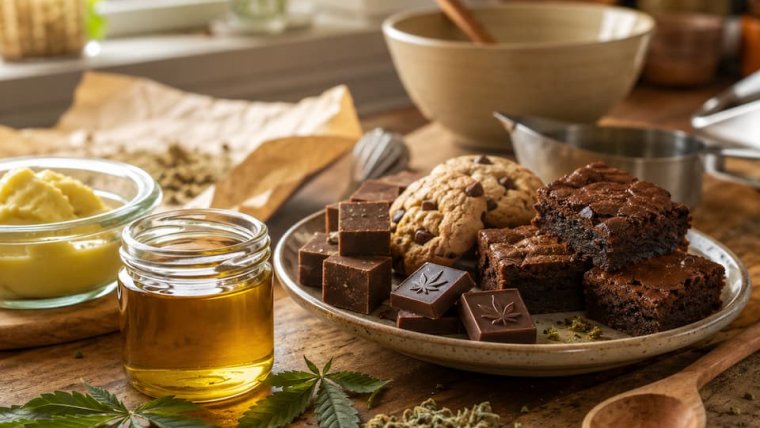
If you grow your own cannabis, harvest leaves you with more than jars of flower. There may be trim, larf, small buds, test batches, and older jars that are perfect for learning cannabis recipes and edibles. The hard part is not finding a recipe. The hard part is choosing the right starting point, keeping potency realistic, and making sure the finished food is labeled, portioned, and stored like an adult-use cannabis product instead of a mystery snack.
Quick answer
Start with one infused fat, one simple recipe, and one small test batch. Cannabutter recipes and infused coconut oil are the best foundation for most home edibles. Once your butter or oil is stable, branch into weed chocolate, THC chocolate, cannabutter cookies, cannabis fudge, gummies, lollipops, and other recipe threads. Keep doses conservative, wait before taking more, label everything clearly, and keep all infused foods away from kids, pets, and anyone who did not knowingly choose cannabis.
This hub gives THCFarmer growers an organized way into the recipe side of the community. Use it to pick the right path, compare the top chocolate Learn guide and cannabutter threads, browse real member recipes, and start a recipe thread when you need help with ratios, texture, infusion methods, or troubleshooting.
01 · Before You Cook Potency and Safety Basics
Edibles are different from smoking or vaping. They are slower, longer, and easier to overdo because the first serving may not feel like much right away. Treat every batch as experimental until you have tested it carefully. This is not medical advice, and it is not a substitute for lab testing. It is a practical safety baseline for adults cooking with cannabis where it is legal.
Start low and wait
If you do not know the exact potency, assume the edible may be stronger than expected. Many adult-use programs use a low serving size as a beginner reference, and official safety guidance commonly reminds consumers that edibles can take up to two hours to begin and up to four hours to fully show effects. For home batches, that means do not judge a cookie, chocolate, or fudge square after 20 minutes and immediately eat more. Wait, write down what happened, and adjust the next batch. For public consumer-safety baselines, compare guidance from the California Department of Cannabis Control, Los Angeles County, and Ontario.
Potency math is an estimate
Home growers often start with this rough chain: grams of flower multiplied by THC percentage, adjusted for decarb conversion and extraction loss, then divided by the number of servings. That can help you avoid obvious mistakes, but it is still not lab testing. Flower labels can be wrong, home-grown flower may be untested, decarb can vary, extraction efficiency can vary, and mixing can be uneven. If your numbers say each piece is strong, believe the warning and make smaller pieces.
| Potency step | What to write down | Why it matters |
|---|---|---|
| Starting material | Flower, trim, hash, kief, concentrate, or ABV | Different inputs extract and dose differently |
| Weight | Grams used, measured on a scale | Guessing by handful makes dosing impossible |
| Estimated strength | THC percentage if known, or "unknown" if not | Unknown material should be dosed conservatively |
| Infused fat amount | Cups, tablespoons, grams, or milliliters | Lets you repeat or dilute a batch later |
| Final servings | Number of cookies, chocolates, squares, or candies | Potency depends on final portion count |
| Test notes | Serving size, onset, peak, duration, and comfort level | Turns one batch into a repeatable recipe |
Decarboxylation reminders
Most edible recipes need decarboxylated cannabis before infusion because raw THCA is not the same as activated THC. The exact method depends on your material and recipe, but the principle is simple: use controlled heat, avoid scorching, and do not rely on smell as your only guide. If you are new, read a decarb guide first and use an oven thermometer or device you trust. Too little heat can leave the batch weak. Too much heat can degrade cannabinoids and make the kitchen smell like regret.
Label and store clearly
Every edible should be labeled with "contains cannabis," date made, estimated dose per serving if known, strain or input if known, and any major allergens. Store infused foods away from normal snacks, ideally locked up or otherwise inaccessible to kids and pets. This matters even more for chocolate, cookies, fudge, gummies, and lollipops because they look like regular treats.
Do not mix safety signals
Do not drive, work with equipment, or make important decisions after testing edibles. Avoid combining edibles with alcohol or other intoxicants. Do not serve infused food to anyone without explicit consent. Do not use edibles as medical treatment instructions on a forum thread. If someone has a bad reaction, is a child, or may have eaten cannabis accidentally, contact local poison control or emergency help rather than waiting for the thread to diagnose it.
Ready to browse first? Browse Cannabis Recipes for member-tested ideas or scan the Cooking Learn category, then come back here when you are ready to choose a base infusion.
02 · Guide Cannabutter and Infused Oils
Cannabutter is the classic starting point because so many baked goods already use butter. Infused coconut oil is nearly as common because it handles heat well, works in chocolate and candy projects, and is useful for many dairy-free recipes. Olive oil, MCT oil, cocoa butter, ghee, and other fats can also work, but most new edible makers should master one butter or oil before chasing every variation.
Why cannabutter recipes still matter
A good cannabutter recipe teaches the basics: decarb, low heat, fat binding, straining, cooling, and portioning. Once you know how your butter behaves, you can use it in cookies, fudge, brownies, caramel corn, sauces, and other recipes. The mistake is treating cannabutter as a magic step that fixes bad dosing. It does not. Strong butter plus uneven mixing still makes unpredictable food.
Slow cooker cannabutter
Slow cooker cannabutter is popular because it keeps heat gentle and steady. The long-running cannabutter crockpot vs double boiler thread is useful because growers compare water-plus-butter methods, long low infusions, and double-boiler approaches. The practical takeaway is simple: low heat, patience, and consistent stirring beat panic-boiling your harvest. Water can help buffer temperature and carry away some green flavor, but it also adds a separation step after cooling.
Double boiler and saucepan methods
A double boiler gives you more direct control and can be better for smaller batches. It also demands attention. If the butter gets too hot, boils hard, or scorches, you can damage flavor and waste potency. A plain saucepan can work, but it is the easiest method to overheat. If you use it, keep the heat low, stir often, and stay in the kitchen. Edibles reward boring consistency.
Coconut oil and candy-friendly infusions
Coconut oil shows up in gummies, chocolate, and lollipop discussions because it is easy to work with and solidifies at cooler room temperatures. It can also separate if you push too much oil into a recipe that does not want it. For candy, the challenge is not only potency. It is texture, emulsification, and temperature control. Compare the coconut oil infused lollipop walkthrough before scaling up, and start with small batches so a failed texture does not waste your whole infusion.
Common infusion mistakes
- Using unknown-strength flower and pretending the dose is exact.
- Skipping decarb when the recipe requires activated cannabinoids.
- Letting butter or oil boil aggressively instead of staying low and controlled.
- Straining poorly and leaving gritty plant matter in chocolate or fudge.
- Changing flower amount, fat amount, cook time, and recipe all in the same batch.
- Making one giant batch before testing one small batch.
- Forgetting to label the finished butter or oil before it goes into the fridge.
Best first-batch workflow
Pick one input, one fat, and one recipe. Write down your weights. Decarb carefully. Infuse gently. Strain well. Chill or store the infusion in a labeled container. Make a small recipe from part of the infusion, not the whole jar. Cut the finished food into clearly counted pieces. Test one small serving and wait. That boring notebook is what turns "I made butter once" into a repeatable cannabutter recipe.
03 · Guide Chocolate, Cookies, Fudge, and Candy
Once your infused fat is predictable, the fun part opens up. THCFarmer already has a strong THC chocolate Learn page, a cannabutter chocolate chip cookie thread, a cannabis fudge thread, and a coconut-oil lollipop walkthrough. Use those as recipe lanes instead of trying to force every edible into one master method.
| Recipe lane | Best starting point | Watch closely |
|---|---|---|
| THC chocolate | Infused coconut oil or cocoa butter plus good chocolate | Water contamination, tempering, oil separation, portion size |
| Cannabutter cookies | Stable cannabutter mixed evenly into dough | Even distribution, batch yield, oven heat, serving size |
| Cannabis fudge | Cannabutter folded into a simple fudge base | Boiling, grainy texture, square size, sweetness masking strength |
| Lollipops and hard candy | Coconut oil infusion and candy-temperature control | Oil separation, hot sugar burns, molds, child-safe storage |
| Gummies and beverages | A recipe designed for emulsification | Separation, preservatives, refrigeration, accidental overuse |
Weed chocolate and THC chocolate
Chocolate is one of the best Learn-page bridges because the site already has a detailed THC chocolate guide. Chocolate rewards precision. Keep water away from melted chocolate, use a thermometer, and make small pieces. A chocolate square can look harmless even when it carries a strong dose, so this is where labeling and portion count matter. If you are using the existing chocolate guide, pair it with this hub's safety checklist and the cannabutter thread when you need a base infusion.
Cannabutter cookies
Cookies are forgiving, familiar, and easy to share, which is exactly why they need careful labeling. Mix infused butter evenly into the dough. Make the cookies the same size. Count the batch before anyone tastes one. If you split a batch between infused and non-infused dough, keep them physically separate and label the trays before baking. The cannabutter and chocolate chip cookie thread is a good place to compare texture, butter ratios, oven behavior, and whether a recipe can handle cannabutter without turning greasy.
Cannabis fudge
Fudge can hide cannabis flavor and create neat squares, but it is easy to underestimate because the pieces are small and sweet. The old Quick & Easy Canna Butter Fudge thread is useful because it keeps the method simple and reminds cooks not to boil cannabutter while melting it. Cut fudge into measured squares, store it away from regular desserts, and write the estimated dose on the container. If the batch is too strong, do not try to rescue it by telling people to "just eat half" unless the pieces are cut accurately.
Lollipops, hard candy, and gummies
Candy is more technical than cookies. Hot sugar can burn you badly, oil can separate, and the finished product looks especially attractive to kids. If you are making lollipops or gummies, read the coconut oil infused lollipop walkthrough and related candy threads first, prepare molds before cooking, and avoid improvising with a large amount of infused oil. Hard candy also creates slow consumption, so effects may feel delayed and layered. Treat each piece as a full serving unless you have tested otherwise.
When a recipe fails
Failed texture does not always mean failed potency. Seized chocolate, separated gummies, grainy fudge, or greasy cookies may still contain cannabinoids, but dosing becomes less predictable if the infusion separated. Do not hand out a failed batch casually. Keep it labeled, ask the forum what happened, and decide whether it is safe and useful for personal testing. Sometimes the best move is to learn from the notes and start smaller next time.
Want the recipe lanes without the noise? Start with the THC chocolate Learn guide, compare the cannabutter crockpot vs double boiler thread, then browse Cannabis Recipes for cookies, fudge, candies, gummies, and newer member experiments.
04 · Guide Join the Recipe Discussion
The best cannabis recipes on THCFarmer are not just ingredient lists. They are conversations: what material was used, what method worked, what failed, what tasted too green, what separated, what felt too strong, and what the cook would change next time. That is why this page should route readers back into the forum instead of pretending one static article can answer every kitchen problem.
Browse first
The Cannabis Recipes forum has hundreds of threads across butter, oils, gummies, chocolate, drinks, sauces, candy, and "what went wrong?" troubleshooting. Search before posting. You may find that someone already tested the exact issue: butter flavor, decarb temperature, oil separation, gummy texture, hard candy color, keto recipes, or how to use older harvest material. If the question is more about extraction, hash, oils, or processing than a food recipe, use Concentrates & Processing as the better lane.
Start a recipe thread when you need help
A good recipe thread includes more than "how much weed do I use?" Post your starting material, estimated potency if known, weight, decarb method, fat or solvent, cook temperature, cook time, recipe yield, target serving size, and what went wrong. Photos help for texture problems. If you are asking about effects or dosing, be clear that home potency is an estimate and that you are not asking for medical advice.
Use clear thread titles
A title like "Coconut oil separating from gummies after cooling" will get better help than "edible question." Use the recipe lane in the title: cannabutter, slow cooker cannabutter, THC chocolate, cannabutter cookies, cannabis fudge, gummies, lollipops, tincture, or infused coconut oil. Future growers will find your thread faster too.
FAQ: Cannabis recipes and edibles
Start with a small cannabutter or infused coconut oil batch, then use it in a simple cookie, chocolate, or fudge recipe. The goal is not the fanciest edible. It is learning decarb, infusion, straining, mixing, serving count, and labeling without risking your whole harvest.
Slow cookers are beginner-friendly because they hold low heat for a long time. Double boilers are good for smaller controlled batches. Either can work if you avoid high heat, stir, strain well, and document the amount of cannabis and butter used.
Start with a known amount of infused oil or butter, mix thoroughly, use molds or a scored slab for equal pieces, and label each piece or container with an estimated dose. Test a small piece and wait before taking more.
Only with adults who knowingly consent, where local law allows it, and only when the food is clearly labeled as cannabis. Never leave infused food where someone could mistake it for regular chocolate, cookies, fudge, or candy.
Use the Cannabis Recipes forum for butter, oil, chocolate, cookies, fudge, gummies, drinks, and candy. Use Concentrates & Processing when the question is more about extracts, hash, oils, or processing methods than a food recipe.
Bottom line
Edibles are one of the best ways to use home-grown cannabis thoughtfully, but they punish guessing. Keep your first batches small, your notes clear, your doses conservative, and your storage serious. Use the Learn chocolate guide when you want a polished walkthrough, the cannabutter thread when you want real method discussion, and the Cannabis Recipes forum when you want help from growers who have already made the same glorious kitchen mistakes.
Browse Cannabis Recipes or start a recipe thread with your ingredients, infusion method, target dose, batch yield, photos, and what you want to improve.
More Cooking questions?
Browse Cannabis Recipes or start a recipe thread with your ingredients, infusion method, target dose, batch yield, photos, and what you want to improve.

logic has been posting on THCFarmer since 2008 and now carries 558 learn guides for growers who want the real numbers, tradeoffs, and failure points before they spend time or money.