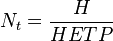
Despite the math, the results fly in the face of our practical experimentation. Our yield was higher from a 1" tube, than a 1 1/2" tube.
Removing the material and examining under a microscope revealed that the flow channeled and missed more trichomes heads in the larger diameter column, especially towards the injection end.
True story that soaking works better and is less sensitve to column ID. A thermos, Terpenator, or Lil Terp both get higher yield than a single pass column.
If you are in the area, by all means swing by for tea and crumpets!
Yes, the channeling is the issue to be sure--but this is caused by many factors (perhaps the least of which is the diameter of the column--although this does have an effect under these specific circumstances due to pressure concerns and instability of flow).
To my mind, the best methodology would be to combat the channeling by different methods (such as splitting I mentioned above, tighter packing, or--most importantly--modulation of particle size).
Other factors which are important here:
1. Flow rate.
2. Constancy of flow rate.
3. Solvent delivery apparatus: Is it one hole of a significantly smaller diameter than the column delivering the solvent? If so this is a huge problem--and the most likely culprit behind channeling. This is why, to my mind, hexane is the best choice for a solvent. For no reason other than it is a liquid. This type of extraction is meant for a solvent in the liquid phase--not one which is rapidly interconverting between phases during its pass through the column. This is all but guaranteed to cause channeling. For lack of a better way to say it, it's just not the correct way to do this--that is why your terpenator is so badass, it's allowing proper contact with the material. In a sentence, using butane doesn't allow fine control over #2 at atmospheric pressure, and that is going to cause channeling (and the terpenator is a soak correct--so no channeling there).
Discussing which is the best method by which to extract with butane at atmospheric pressure is really counter-intuitive. The answer is that the best method is not to do this
at all. There is almost no opportunity to control either flow rate or injection geometry (I can't think of a better way to say that--I'm sure I need an engineering word that I don't know).
The addition of sand in "splitting" helps by reducing channeling through uniform particle size, and this ensures that as solvent leaves the sand layer--it will do so along the entire area of the column (i.e. flow being directed which matches the diameter of the column--rather than a single hole).
A good practice would be to pack the top of a column with sand or silica anyway to achieve this effect at the initial injection point.
I realize that isn't going to stop anyone--but I think if we're going to tackle these issues that we, as a community, should understand them.
In short, it's not failing to work necessarily because of the diameter of the tube--although if we restrict ourselves in this area we can get "better" results. However, better isn't best--and in this case it can't even be classified as proper.