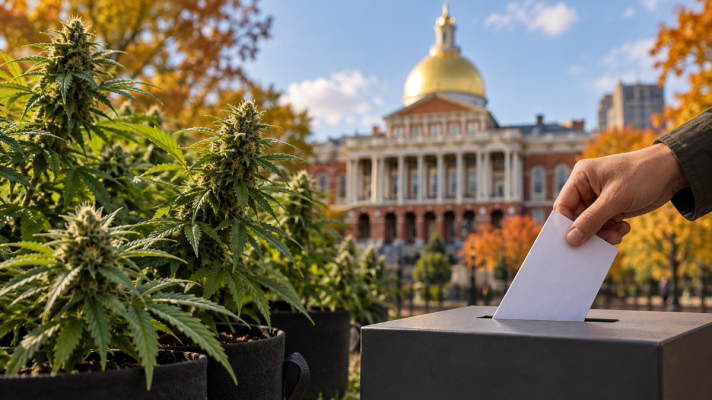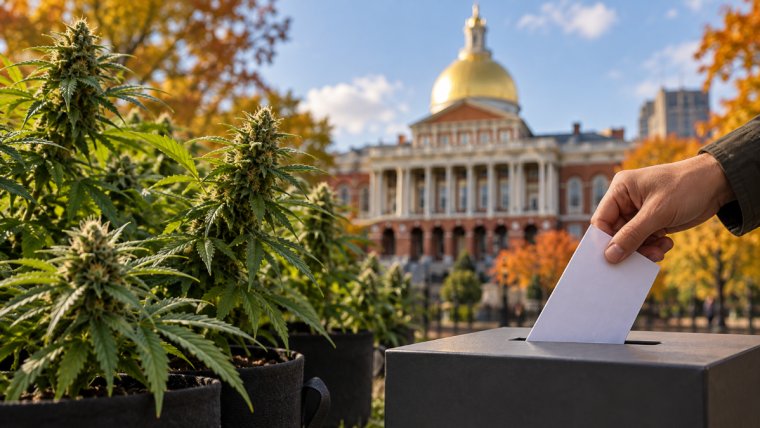
Massachusetts could become the first state to dismantle an established, voter-approved recreational cannabis market if voters approve Question 8 on November 3.
The proposal would reach across the industry, from dispensary counters and commercial cultivation facilities to the personal gardens of adults growing their own cannabis. It would repeal the laws governing the state's recreational market while keeping its medical marijuana program.
Supporters say commercial legalization has created public health problems that justify closing recreational stores. Opponents argue that removing regulated sales would shift customers toward illicit suppliers, disrupt businesses and eliminate a substantial source of public revenue.
For home growers, another consequence deserves attention: keeping small amounts of cannabis legal to possess would not preserve the current right to grow it.
The proposal has not become law. If approved, its scheduled effective date would be January 1, 2028, giving Massachusetts more than a year between the election and the proposed repeal.
Recreational home growing would lose its legal protection
Massachusetts currently allows adults aged 21 and older to cultivate cannabis at their primary residence. Cannabis Control Commission guidance permits up to six plants for an individual, with a maximum of 12 where more than one adult aged 21 or older lives.
The rules also require plants to be secured and kept out of public view. Landlords can restrict cultivation in rental properties.
Question 8 would repeal Chapter 94G, the law that protects recreational cultivation as well as the adult-use commercial market. NORML has identified the removal of home-growing rights as a central consequence of the initiative.
That matters even to consumers who seldom enter a dispensary. A personal garden provides a source of flower independent of retail prices and store availability. Removing cultivation protections would take away that option for adults relying on the recreational law.
The proposal's allowance for limited possession would not authorize a recreational grow. Possession, cultivation and commercial sales have separate legal protections; retaining one would not preserve the others.
Medical cultivation falls under a different framework. The survival of the medical program should therefore not be read as a promise that any existing recreational garden could continue.
Possession would remain legal within narrower limits
The proposed law would allow adults aged 21 and older to possess up to one ounce of marijuana, including no more than five grams in concentrate form.
Adults could give cannabis to another adult within those limits without payment, provided the transfer was not publicly advertised or promoted. Possessing more than one ounce and up to two ounces would carry a $100 civil penalty and forfeiture.
These provisions explain why Question 8 is more complicated than a blanket prohibition. It would retain limited possession and private gifting while removing the recreational retail and cultivation framework.
The distinction also creates a practical question for consumers: being permitted to possess cannabis would no longer come with the same in-state options for buying it or growing it themselves.
That question is at the center of the opponents' argument about where demand would go after repeal.
Medical cannabis would continue under a separate system
Massachusetts' medical program serves registered qualifying patients and their caregivers. It allows access to licensed medical marijuana treatment centers through a system based on qualifying conditions and healthcare-provider certification.
That is different from recreational access, where an eligible adult can buy cannabis without enrolling as a patient.
Keeping the medical program would preserve a legal route for qualifying patients, but would not automatically turn every recreational customer into a medical customer. It would also not automatically convert every existing business into a medical operator.
Question 8 provides an expedited application route for adult-use licensees seeking to enter the medical program. It also allows existing recreational inventory to be sold to licensed medical treatment centers.
Those provisions could help some operators make a transition. They do not guarantee that the surviving medical market would absorb the same volume of production or support every business currently serving recreational consumers.
A $10 billion market faces a fundamental change
The repeal proposal comes after years of growth in Massachusetts' regulated industry.
In September, the Cannabis Control Commission reported that adult-use retailers had crossed $10 billion in cumulative gross sales since the first recreational stores opened in November 2018. Adult-use sales reached approximately $1.65 billion during 2025.
The commission also reported about 15,000 individual employees in the adult-use industry as of August 2026, and approximately $336 million in cannabis sales, local and excise tax revenue for fiscal year 2026.
The stakes extend beyond storefronts. The market includes cultivators, manufacturers, delivery businesses, transport providers and testing laboratories.
For commercial growers, ending recreational retail sales would remove a major destination for their harvests. Businesses that supply those growers would also have reason to watch the transition closely.
The figures illustrate the industry's scale, rather than establish a precise forecast of job losses or lost revenue. Some businesses could seek medical licenses, and the eventual effect would depend on how operators, customers and regulators respond.
Supporters say commercialization has gone too far
The Coalition for a Healthy Massachusetts is campaigning for a yes vote, presenting Question 8 as a response to the consequences of commercial marijuana sales.
Its campaign emphasizes impaired driving, youth exposure and concerns about mental health. It argues that preserving personal possession and medical marijuana while closing recreational stores would reduce the influence of a commercial industry promoting cannabis use.
Kevin Sabet, who leads the national anti-legalization organization Smart Approaches to Marijuana, has framed the initiative around the business of cannabis rather than a complete ban on possession.
“Question 8 is simply about the commercialization of marijuana,” Sabet told WBUR.
That framing is central to the yes campaign: adults would retain limited possession rights, but the state would no longer maintain a licensed recreational market.
Whether closing that market would deliver the public health benefits supporters predict remains the disputed question. The campaign's position is an argument for repeal, rather than an established finding about what would happen afterward.
Opponents argue regulation is the safer option
Campaigns opposing Question 8 emphasize the safeguards attached to licensed sales, including product testing, labeling and age verification.
Their argument is that cannabis demand would continue even if recreational businesses were forced to stop serving it. They say ending the regulated market would leave consumers with fewer legal options and give unlicensed sellers more room to operate.
Massachusetts Cannabis Coalition executive director Ryan Dominguez told WBUR that repeal would push customers toward products without the same testing and age restrictions. He also argued that some consumers would shop outside Massachusetts, taking spending and tax revenue elsewhere.
For growers and consumers, the disagreement is about how cannabis would be supplied and overseen. Supporters of repeal want to remove commercial incentives they consider harmful; opponents want to retain a regulated system and address problems within it.
Neither position makes cannabis risk-free. The policy dispute concerns which system would best manage those risks while accounting for existing demand.
Campaign funding reflects the national stakes
The fight has drawn substantial financial support on both sides.
In October reporting, GBH said the Coalition for a Healthy Massachusetts had raised more than $3 million, with the overwhelming majority supplied by SAM's fundraising arm.
The same report said the Committee to Protect Cannabis Regulation had raised more than $2 million. Contributions to the opposition came primarily from cannabis retailers and manufacturers, including multistate operators.
Those figures were snapshots of campaign finance activity at the time of reporting, rather than final election totals.
The funding also reflects different interests in the outcome. Anti-legalization advocates see Massachusetts as an opportunity to challenge an established recreational system, while cannabis operators face a direct threat to the market their businesses serve.
The measure survived challenges before reaching voters
Massachusetts voters approved recreational legalization in 2016, and the first adult-use stores opened two years later.
The repeal campaign began gathering signatures in 2025. Opponents subsequently challenged aspects of the initiative and the signature process, but those efforts did not keep it off the November ballot.
CommonWealth Beacon reported that the Supreme Judicial Court upheld the attorney general's certification and summary in June. Signature objections also failed to prevent the measure from moving forward.
Separately, a majority of the Legislature's Special Joint Committee on Initiative Petitions raised concerns about implementation, regulatory uncertainty and disruption to businesses and public safeguards.
The committee's report recommended taking no action on the petition. That recommendation did not prevent voters from receiving the question; the initiative process continued.
Polling favors keeping the current system
September polling suggested the repeal campaign faced a difficult path.
A MassINC Polling Group survey for CommonWealth Beacon found 61 percent of likely voters opposed Question 8, while 27 percent supported it. Eleven percent were undecided and one percent preferred not to answer.
The survey covered 800 likely voters, with responses collected September 14–22. Its reported credibility interval was approximately four percentage points.
A separate September University of New Hampshire poll, reported by WBUR, found 71 percent planned to vote against the repeal.
Both polls measured preferences before Election Day. They do not establish the result, and the difference between their figures should not be treated as evidence of a trend without comparing their methods and respondents.
For now, the available polling indicates stronger support for retaining the recreational system than dismantling it.
November's decision would shape the next phase of legalization
Question 8 arrives in a year when Massachusetts lawmakers have also pursued changes within the existing cannabis system.
In April, the Legislature advanced reforms to restructure the Cannabis Control Commission, change business requirements and raise the adult possession limit from one ounce to two ounces. That approach sought to revise the regulated market rather than repeal it.
November's ballot presents a much broader choice.
A yes vote would approve Question 8's repeal and possession changes, scheduled for January 1, 2028. A no vote would leave marijuana law unchanged by this initiative.
Until then, the current recreational framework remains in place. For Massachusetts growers, consumers and businesses, the question is whether that framework will continue into 2028 or give way to a system retaining medical access and limited possession while ending recreational sales and home cultivation.
Sources
- Massachusetts official voter guide: Proposed law and legislative report
- Cannabis Control Commission: Home cultivation guidance
- Cannabis Control Commission: Medical program
- Cannabis Control Commission: Sales, employment and tax figures
- NORML: Repeal initiative and home growing
- Coalition for a Healthy Massachusetts: Yes campaign
- Always Keep It Legal: No campaign
- WBUR: Campaign arguments and polling
- GBH: Campaign funding
- CommonWealth Beacon: Ballot measure history
- MassINC Polling Group: September survey results and methodology
- Massachusetts Legislature: April cannabis reforms
- Forbes: October 12 election analysis