Colorado’s cannabis safety system has significant gaps that could allow contaminated or inaccurately labeled products to reach consumers, according to a state performance audit released October 19.
The review examined oversight by the Marijuana Enforcement Division, known as MED, and the Colorado Department of Public Health and Environment. Auditors identified problems across several layers of the system, including laboratory oversight, product testing, business inspections and the speed of public warnings.
The findings put renewed attention on a basic promise of legalization: consumers should be able to buy cannabis from a licensed business with confidence that meaningful safety checks stand behind it.
Thousands of harvest batches went untested
One of the audit’s most striking findings concerns Colorado’s Reduced Testing Allowance program, which allows qualifying businesses to perform certain tests less frequently.
Auditors examined records associated with 207 participating cultivators that were active at the end of 2025. Those records showed that approximately 41,000 harvest batches went untested between January 2023 and December 2025, representing 26% of the nearly 160,000 batches included in MED’s program report.
That figure describes a gap in testing coverage. It does not establish that those batches were contaminated.
Reduced testing is intended to lower costs for businesses that demonstrate consistent compliance. However, auditors found weaknesses in how eligibility and continued participation were monitored. They also identified limitations in the information available to regulators about which businesses qualified for exemptions.
For growers, the distinction matters: previous passing results can support confidence in a production process, but regulators still need a reliable way to check whether the conditions supporting reduced testing remain in place.
The sample reaching the lab matters
The audit also brings attention to who selects cannabis for testing.
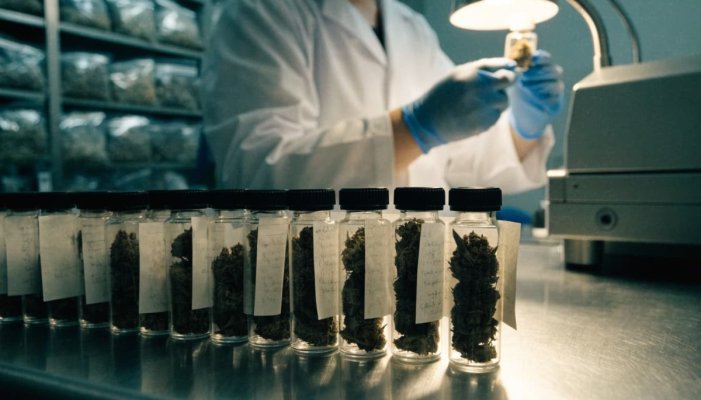
Colorado allows businesses to collect the samples they submit to private laboratories. That creates a potential weakness before laboratory analysis even begins: a carefully selected sample may not represent the full batch available to consumers.
Earlier reporting cited in coverage of the audit documented cases involving samples that differed from products sold in stores, along with other testing violations.
A laboratory can accurately analyze the material it receives while the result still gives an incomplete picture of the wider batch. This makes sample collection, documentation and independent checks central parts of a credible testing system.
The practical question extends beyond whether a certificate shows a passing result. Buyers and regulators also need confidence that the tested material fairly represents the product carrying that certificate.
Public warnings arrived months after products reached consumers
The time taken to warn consumers was another major concern.
According to The Denver Gazette’s reporting on the audit, products eventually covered by health and safety advisories had been on the market for more than seven months on average during the 2023–2025 review period. In some cases, the period exceeded three years.
That interval includes time before regulators became aware of a problem; it should not be interpreted as proof that officials knowingly allowed every affected product to remain available throughout that period.
However, the review also identified delays within the response process. A more focused examination of 2025 cases found that investigations took roughly three and a half months, on average, to reach a public advisory. Around a month could pass even after investigators determined that a warning was needed.
A warning issued after a purchase may still help consumers identify affected products, but its usefulness depends heavily on how quickly it reaches them.
Inspections and laboratory oversight need improvement
Testing was only one part of the problem.
The Denver Gazette reported that some businesses had gone as long as five years without an inspection, despite MED’s goal of conducting an on-site inspection at least once every two years.
The audit’s published highlights also identified shortcomings in oversight of private testing laboratories and the absence of a fully functional state reference laboratory capable of providing comprehensive independent testing support.
Together, those weaknesses affect the state’s ability to verify compliance, compare results and investigate concerns.
Auditors called for stronger monitoring and clearer communication, while recognizing that Colorado already has a regulatory framework that provides some assurance of product safety.
Earlier recalls show why follow-through matters
The findings follow previous reporting about contaminated products and delays in Colorado’s safety response.
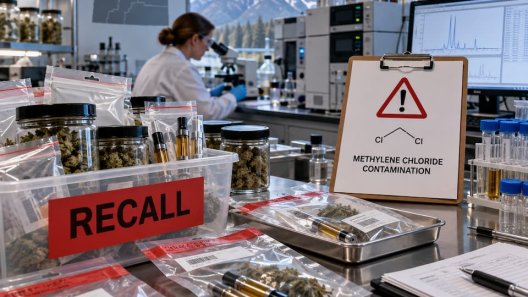
In September, The Denver Gazette and ProPublica reported that manufacturer StayCon had voluntarily recalled 49 products after methylene chloride was detected. The recalled products included cannabis vapes, and the company’s notice identified a botanically derived flavoring ingredient as the source of contamination.
That case illustrates why oversight must extend beyond cultivation. Finished products can contain additional ingredients, and the safety of those inputs also needs scrutiny.
A system that checks flower production but misses a contaminated ingredient introduced during manufacturing can still leave consumers exposed. Effective oversight needs to follow the product through processing, packaging and retail distribution.
What the findings mean for growers and buyers
For the THCFarmer community, the audit raises practical questions about the relationship between good growing practices and reliable verification.
Growers put considerable effort into clean production, drying, storage and handling. A trustworthy testing system should help distinguish that work and give buyers useful information about what they are purchasing.
Product conditions can also change after an initial test. In earlier reporting by Colorado Public Radio, industry specialists explained how humidity and storage conditions can allow microbial growth later in the supply chain.
That makes retail checks and clear recall notices valuable additions to initial compliance testing.
Consumers also need enough information to recognize an affected purchase. Colorado Public Radio previously highlighted concerns about notices that rely heavily on batch identifiers without making the associated consumer brands sufficiently clear.
A warning works best when people can connect it to the package in their hands.
Agencies accept recommendations, but changes will take time
The audit’s highlights list 14 recommendations, with the agencies agreeing to all 14.
Their acceptance does not mean every proposed improvement is already operating. The report’s responses set different implementation dates, including work scheduled for 2027 and a broader inspection strategy extending into March 2028.
MED senior director Dominique Mendiola told lawmakers that the recommendations would guide further improvements to the agency’s work, according to The Denver Gazette.
The next test will be implementation: whether Colorado improves sampling controls, makes inspections more consistent and gets useful warnings to consumers faster.
For a legal market built partly on the promise of safer, accountable production, those are measures that growers and buyers have good reason to watch.
Sources
- Colorado Office of the State Auditor: Marijuana Consumer Safety performance audit
- Colorado Office of the State Auditor: Report highlights
- The Denver Gazette: Marijuana regulations put consumers at risk, Colorado auditor says
- Hoodline: Colorado audit examines cannabis testing and oversight gaps
- The Denver Gazette and ProPublica: Contaminated products recalled amid regulatory delays
- Colorado Public Radio: Cannabis recall raises questions about market safety regulation