California’s licensed cannabis growers face another potential increase in operating costs, with water regulators proposing a 28% rise in Cannabis Cultivation General Order enrollment fees for fiscal year 2027–28.
The proposal comes as hundreds of existing enrollments are at risk of termination for overdue payments. Losing that coverage can also put a grower’s state cannabis cultivation license in jeopardy, making the consequences considerably greater than an outstanding bill.
The figures appear in the State Water Resources Control Board’s October 6 executive director’s report and were highlighted in reporting published October 16 by The Marijuana Herald.
The proposed increase would fund the program’s existing 10 regulatory positions. Although 31 fee-funded positions are authorized, revenue shortages have prevented the Water Boards from filling most of them.
Annual enrollment fees support the people responsible for overseeing the program. When collections fall short, the agency has fewer resources for both enforcement and helping cultivators meet environmental requirements.
The report acknowledges the instability of California’s legal cannabis market and the other regulatory costs growers already face. Those pressures have made officials reluctant to pursue larger increases in recent years.
The 28% figure is a proposal for fiscal year 2027–28. The October report does not describe an immediate increase taking effect this December.
Approximately 4,000 Cannabis Cultivation General Order enrollments remain active, roughly 400 fewer than a year earlier. Regulators anticipate terminating around 500 additional enrollments in December because fees have gone unpaid for multiple years.
Those figures count enrollments, rather than establishing that 500 separate businesses will close.
The Water Boards say they contact delinquent fee payers before termination. Their report warns that losing enrollment also jeopardizes the associated Department of Cannabis Control license.
For affected operators, that makes the overdue balance a licensing issue as well as a financial one. The December terminations and the proposed future fee increase are separate developments with different timelines.
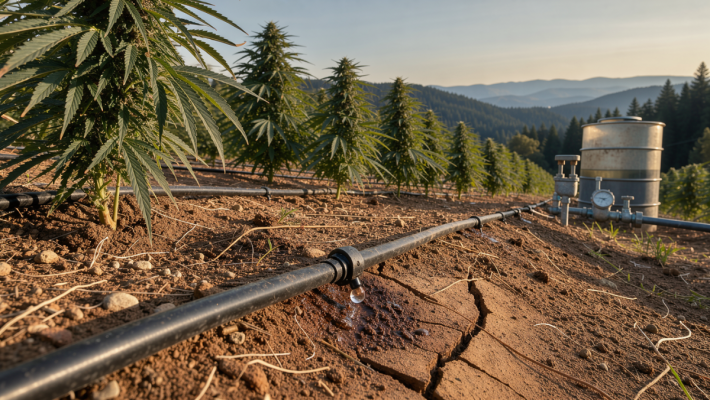
California’s Cannabis Cultivation General Order addresses the waste discharges and environmental risks associated with growing cannabis and developing cultivation properties.
Its reach extends beyond the irrigation system. The Water Boards identify potential problems including fertilizer runoff, erosion from grading and roads, pond failures, and waste generated by cultivation activities.
Those issues can affect streams, groundwater and neighboring habitat even when the crop itself is being grown under a cannabis license.
The state’s water-quality guidance explains that compliance with the Cannabis Policy is required to obtain a Department of Cannabis Control license. After an enrollment application is submitted and the applicable fee is paid, the Water Board issues a Notice of Applicability documenting coverage.
For a commercial grower, that document forms part of the regulatory foundation of the operation. Keeping cultivation licensing records current therefore involves more than dealing with the cannabis regulator alone.
The fee proposal concerns enrollment under the Cannabis Cultivation General Order, which regulates waste discharges. Authorization to divert and use surface water is another part of California’s cultivation rules.
The Water Boards’ water-rights guidance says growers planning to divert surface water need an appropriate water right. Its Cannabis Policy prohibits surface-water diversions for cultivation during the April 1–October 31 dry-season forbearance period.
Growers relying on those supplies generally need to divert water into storage during the permitted wet-season window for use later in the year, subject to the applicable conditions.
The Cannabis Small Irrigation Use Registration program provides a streamlined route for qualifying small diversions and storage. Other appropriate water rights may also be available, depending on the property and project.
A grower’s water source therefore matters. Municipal supplies, qualifying groundwater sources and rainwater catchment can involve different water-rights requirements, while the cultivation site’s water-quality obligations still need attention.
For operators reviewing their records, the useful starting point is to establish which approvals cover the property and whether any correspondence remains unresolved.
The Water Boards maintain an application and reporting portal for General Order enrollment, annual monitoring reports and termination requests. Their official guidance also provides separate contacts for water-quality enrollment and water-rights questions.
A practical records review can bring together the Notice of Applicability, fee notices, monitoring submissions and documentation identifying the farm’s water supply. Checking those records against the actual operation can help identify questions that need to be resolved with the relevant agency.
For farms named in delinquency notices, the approaching December termination process gives that review particular urgency.
Sources
The proposal comes as hundreds of existing enrollments are at risk of termination for overdue payments. Losing that coverage can also put a grower’s state cannabis cultivation license in jeopardy, making the consequences considerably greater than an outstanding bill.
The figures appear in the State Water Resources Control Board’s October 6 executive director’s report and were highlighted in reporting published October 16 by The Marijuana Herald.
Higher fees would maintain a reduced workforce
The proposed increase would fund the program’s existing 10 regulatory positions. Although 31 fee-funded positions are authorized, revenue shortages have prevented the Water Boards from filling most of them.
Annual enrollment fees support the people responsible for overseeing the program. When collections fall short, the agency has fewer resources for both enforcement and helping cultivators meet environmental requirements.
The report acknowledges the instability of California’s legal cannabis market and the other regulatory costs growers already face. Those pressures have made officials reluctant to pursue larger increases in recent years.
The 28% figure is a proposal for fiscal year 2027–28. The October report does not describe an immediate increase taking effect this December.
December terminations pose a separate risk
Approximately 4,000 Cannabis Cultivation General Order enrollments remain active, roughly 400 fewer than a year earlier. Regulators anticipate terminating around 500 additional enrollments in December because fees have gone unpaid for multiple years.
Those figures count enrollments, rather than establishing that 500 separate businesses will close.
The Water Boards say they contact delinquent fee payers before termination. Their report warns that losing enrollment also jeopardizes the associated Department of Cannabis Control license.
For affected operators, that makes the overdue balance a licensing issue as well as a financial one. The December terminations and the proposed future fee increase are separate developments with different timelines.
Why water-board enrollment matters to a cannabis farm
California’s Cannabis Cultivation General Order addresses the waste discharges and environmental risks associated with growing cannabis and developing cultivation properties.
Its reach extends beyond the irrigation system. The Water Boards identify potential problems including fertilizer runoff, erosion from grading and roads, pond failures, and waste generated by cultivation activities.
Those issues can affect streams, groundwater and neighboring habitat even when the crop itself is being grown under a cannabis license.
The state’s water-quality guidance explains that compliance with the Cannabis Policy is required to obtain a Department of Cannabis Control license. After an enrollment application is submitted and the applicable fee is paid, the Water Board issues a Notice of Applicability documenting coverage.
For a commercial grower, that document forms part of the regulatory foundation of the operation. Keeping cultivation licensing records current therefore involves more than dealing with the cannabis regulator alone.
Water-quality coverage and water rights serve different purposes
The fee proposal concerns enrollment under the Cannabis Cultivation General Order, which regulates waste discharges. Authorization to divert and use surface water is another part of California’s cultivation rules.
The Water Boards’ water-rights guidance says growers planning to divert surface water need an appropriate water right. Its Cannabis Policy prohibits surface-water diversions for cultivation during the April 1–October 31 dry-season forbearance period.
Growers relying on those supplies generally need to divert water into storage during the permitted wet-season window for use later in the year, subject to the applicable conditions.
The Cannabis Small Irrigation Use Registration program provides a streamlined route for qualifying small diversions and storage. Other appropriate water rights may also be available, depending on the property and project.
A grower’s water source therefore matters. Municipal supplies, qualifying groundwater sources and rainwater catchment can involve different water-rights requirements, while the cultivation site’s water-quality obligations still need attention.
What growers can check now
For operators reviewing their records, the useful starting point is to establish which approvals cover the property and whether any correspondence remains unresolved.
The Water Boards maintain an application and reporting portal for General Order enrollment, annual monitoring reports and termination requests. Their official guidance also provides separate contacts for water-quality enrollment and water-rights questions.
A practical records review can bring together the Notice of Applicability, fee notices, monitoring submissions and documentation identifying the farm’s water supply. Checking those records against the actual operation can help identify questions that need to be resolved with the relevant agency.
For farms named in delinquency notices, the approaching December termination process gives that review particular urgency.
Sources
- State Water Resources Control Board — October 6, 2026 Executive Director’s Report, Appendix B
- The Marijuana Herald — October 16 coverage
- Water Boards — Cannabis Cultivation Program
- Water Boards — Cannabis Cultivation Water Quality
- Water Boards — Cannabis Cultivation Water Rights
- Water Boards — Cannabis Cultivation FAQs