Log In Register

water pH of 7.5

  • Thread starter Thread starter kolah
  • Start date Start date
  • Tagged users Tagged users None

water pH of 7.5

kolah 112 Replies 33,442 Views
Page 2 of 6 · Replies 21–40 of 113
I got problems in the transition also GLR but I've hardened off fine before with GLR and this spring just one plant out of ten transitioned smooth

I thought GL was a prob but even some plants that weren't under that light program have gone sour. I did have some early flowering from plants that got GLT and I am not so sure I will do that regimen in the future.
 
My issues are from huge root temp swing freezing at night to blazing midday no greenhouse I'll post some new pics tomorrow if you'd like there starting to come around now?
 
yeah Caveman, my plants experienced that too...30's at night with 80-90 in the day in the GH. In past years night time temps are 40- 50.
 
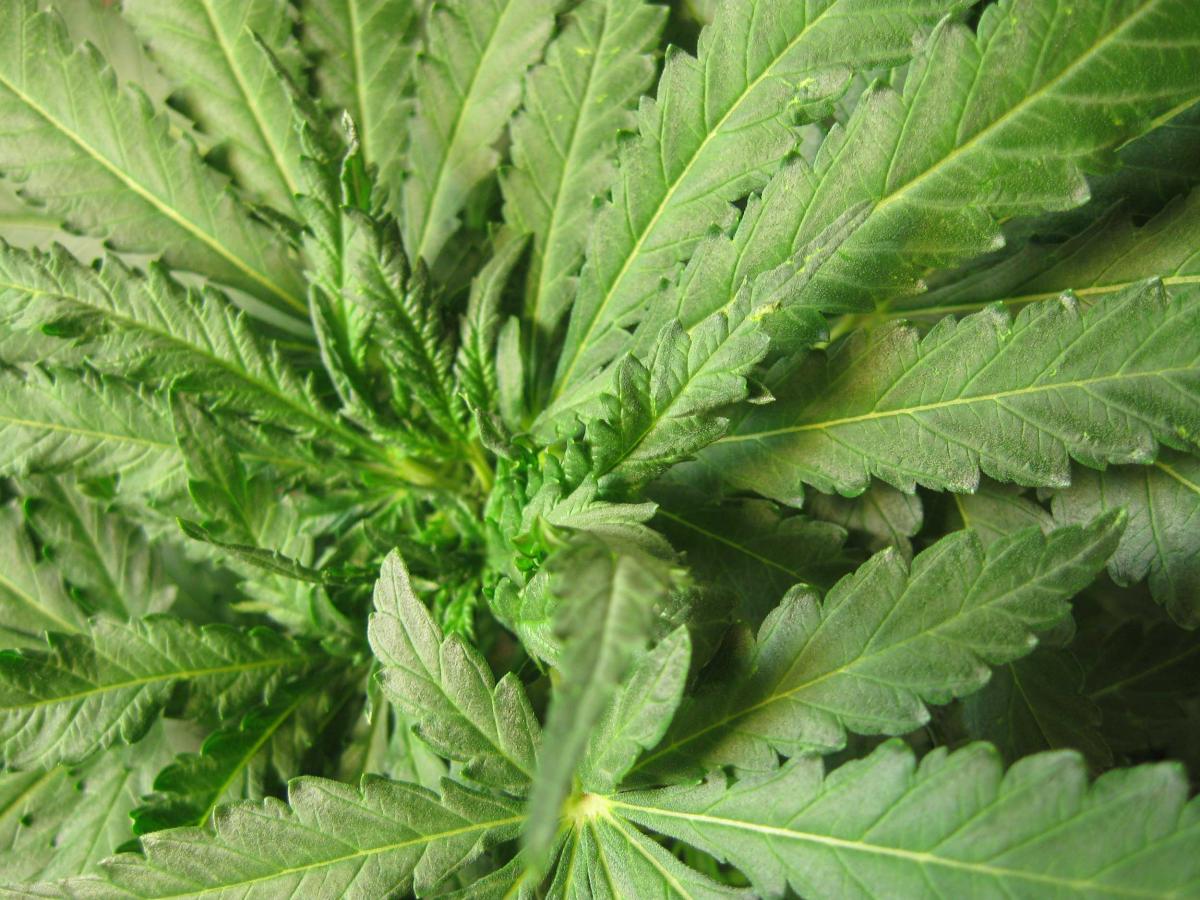
Well... shit kolah. I really don't like how that new growth looks. And I have to be honest, it makes me think of pest or disease, and I'm thinking of a rather specific pest offhand, though I think you said you scoped, yes? Because that's reminding me of the broad mite threads, hard.

If it's a deficiency, then I'm not familiar with anything that would cause corkscrewing of new growth. But it's a great search string to start with!
 
Well... shit kolah. I really don't like how that new growth looks. And I have to be honest, it makes me think of pest or disease, and I'm thinking of a rather specific pest offhand, though I think you said you scoped, yes? Because that's reminding me of the broad mite threads, hard.

If it's a deficiency, then I'm not familiar with anything that would cause corkscrewing of new growth. But it's a great search string to start with!


Sorry Sea..I just now saw your post. I hate it when I miss posts..esp the ones I started. lol


You thinking this is broad mites? Is that different than the run of the mill spider mites?
And Yes I scoped leafs stems new growth and roots with 30x, 60x and 100x. Nuttin.
And I continue to inspect them every 2-3 days or so.

I have researched high and low online for help and still come up empty. I did find this today as Soma was talking about stressing MJ and how the plants react. He was speaking more in line with making fem seeds, using STS and mentioned how MJ reacts to the STS and how just the new growth tips cringe from the stress.

Many of my plants have this new growth "cringe" which he mentions. My only thoughts are that :

1. some unknown chemical in my air, water or soil has severely stressed out the plants ( but whether it will trigger them to produce seeds is unknown at this time as it is much too early being only mid July here)

2. the cold night temps created a huge stressor condition. And more specifically effecting a hormonal stress?

Could it be that 1 or 2 (or a combo) has triggered the plants into a self preservation mode
to possibly force-seed them or just half-ass confusing them to save the species?

OR :

3 or it's a bad-ass highly contagious virus/bacterial/mold/spore rare disease of some some kind.

switching gears here: I just got a new cellphone with a decent camera on it which should take better close ups than my 14 year old digital camera. I'll post some new pics.

 
Last edited:
Here's Soma's article. I know my theories sound a bit far fetched but it's the closest thing I have found to date. I guess I am desperate, lol. I highlighted his mentioning of the new grow tips cringing (OTOH it's a pretty cool article about fem seed production)

Feminized Plants

When you start working with plants as a hobby, there is no end to the wisdom that can be gathered. I started working with the sacred cannabis plant in 1971, I now know so much more than when I first started, I can teach it to others.My main activity these days with the Holy plant is breeding seeds. I am constantly cross breeding in search of the finest of medicines. There is such a huge diversity in the genetics of Cannabis. Everything from industrial strength, to medicinal strength. Whenever two new strains are bred together for the first time, you get the hybrid vigor effect. This gives you a very potent fast growing mother plant. When creating seeds from males crossed to females, you can’t help but get several phenotypes.


When making seeds from females turned male, you can keep it down to one phenotype.Through the years I have made female seeds many different ways. Light stress, heat stress, cold stress, fertilizer stress, and gibberillic acid stress. Although they all worked and gave me female seeds, I still kept searching for something better.

Then came STS solution. Silver Thiosulphate Solution. It is an equal mixture of silver nitrate mixed with sodium thiosuphate.
What happens when you spray this mixture on a female cannabis plant is hormonal stress.All cannabis plants have the capability to change from female to male. The reason they can do this is survival of the species. The inherent drive within life forms to preserve the species is all-powerful and will supercede all impulses. As an example lets say a cannabis plant gets subjected to very low temperatures when it should be warm. The plant says to itself, as an individual I feel severely threatened, I might even die from the cold, therefore I must make my species survive. The stressed female plant then manifests a male branch and with it makes seeds to make its species survive even if as an individual it perishes.When you spray a plant with STS solution, this is what happens. Within the first 24 hours all the tips of the branches wither and turn color almost looking dead. The large fan leaves stay green, just the tips cringe from the stress.

They stay that way for several days, and it will make you wonder whether you have killed your plant. Don’t worry you have not killed it. The plant starts to recover by the 5th day. You can see the tips of the branches start to regenerate.Making female seeds is done in this way. First you select females that you want female seeds from. You vegetate them until you have reached the desired size and height under 24 hour light. Right at the time you are going to turn the lights down to 12 hours is when you select your one female of the group to become the male sex partner. You spray the plant away from the others carefully saturating the plant both under the leaves and on top of them, it is good to wear rubber gloves so as not to get the STS spray on your skin. You let the plant fully dry and then place it back with the others. You carefully mark down the date that the plant has been sprayed, and turn the lights down to 12 hours, or flowering light. It takes 28 to 35 days for the sprayed plant to turn to a male depending on the species. One female turned male plant can get many females pregnant as the pollen is microscopic and is in plentiful supply. You can also help spread the male pollen by shaking the plant gently over the tops of the other females.

It takes the plants 6 weeks to finish making healthy seeds that are hard and dark. These finished seeds are 100% female, they have no male chromosomes. They will also carry only the phenotype that was used, making every single plant uniform. This is the state of the art in making female seeds, and within the next 6 months I will have the whole top of my Soma’s Sacred Seeds line in female form as well as standard.Wishing you much fun with your plants.

In Love and Light,

Soma
 
No indications of Broad Mites. Here's a link with some good pics of them.
https://www.google.com/search?q=broad mites vs spider mites&rlz=1C1AVSJ_enUS462US525&espv=2&tbm=isch&imgil=5J_zdQDeiKOelM%3A%3Bhttps%3A%2F%2Fencrypted-tbn3.invalid.com%2Fimages%3Fq%3Dtbn%3AANd9GcQ4tkJlwnQNTqgli2CqSncGavxCC2wsQ2p9rIfFpC3KNePfWXKcuw%3B277%3B200%3BjgzLzGcW6nvJrM%3Bhttp%253A%252F%252Fwww.entomology.umn.edu%252Fcues%252Finter%252Finmine%252FMitesb.html&source=iu&usg=__LoN9NQDwFQhPZisCHVPdL79wOkM=&sa=X&ei=gxfJU4DdN4yHyATlk4D4BA&ved=0CDgQ9QEwAw&biw=1260&bih=671#facrc=_&imgdii=_&imgrc=5J_zdQDeiKOelM%3A;jgzLzGcW6nvJrM;http%3A%2F%2Fwww.entomology.umn.edu%2Fcues%2Finter%2Finmine%2Finimage%2Fbroadmites.jpg;http%3A%2F%2Fwww.entomology.umn.edu%2Fcues%2Finter%2Finmine%2FMitesb.html;277;200

Broad Mite info
 
I have not ruled this out yet:


marijuana.

Tobacco Mosaic Virus

The tobacco mosaic virus can attack a wide range of plants, including tomato, pepper, eggplant, tobacco, spinach, petunia, marigold, and our beloved herb marijuana.

On marijuana the virus infection causes light and dark green mottled areas on the leaves.
The dark green areas tend to be somewhat thicker than the lighter portions of the leaf. The leaf mottling is seen more easily if the affected plant surface is partially shaded.
Stunting of young plants is common and often is accompanied by a distortion and fern-like appearance of the leaves. Older leaves curl downward and may be slightly distorted.
Certain strains of the virus can cause a mottling, streaking and necrosis of the buds. Infected plants are not killed, but they produce poor quality buds and low yields.
Tobacco mosaic, is incited by a virus. The tobacco mosaic virus is very stable and can persist in contaminated soil, in infected plant debris, on or in the seed coat, and in manufactured tobacco products. The virus is transmitted readily from plant to plant by mechanical means.
This may simply involve picking up the virus while working with infected plant material, then inoculating healthy plants by rubbing or brushing against them with contaminated tools, clothing, or hands. Aphids are not vectors of the virus, although certain chewing insects may transmit the pathogen.
Solution: Virus diseases cannot be controlled once the plant is infected.
Therefore, every effort should be made to prevent introduction of virus diseases into the garden.
Sanitation and cleanliness is the primary means of controlling virus diseases.
Infected plants should be removed immediately to prevent spread of the pathogens.
The use of tobacco products during cultural practices should be avoided to prevent inoculation of plants with the tobacco mosaic virus.
Those people using tobacco or working with infected plant material should wash their hands thoroughly in soapy water before handling your plants.
 
Tobacco mosaic virus marijuana
they talk of a "fern-like appearance." here's a closer shot of TMV:
 
I found this is my travels...pretty cool ELISA test kits for just about any disease,


and this:

Here are the viruses that can infect cannabis -

At least five viruses cause problems in hemp: the hemp streak virus (HSV), alfalfa mosaic virus (AMV), cucumber mosaic virus (CMV), arabis mosaic virus (ArMV) and hemp mosaic virus (HMV)
(McPartland 1999).

http://www.druglibrary.org/olsen/hemp/IHA/iha03111.html
 
From what I know many viruses can not survive in high temps. I am going to close up my greenhouse and let the inside temps hit 100-110 Fuck it, it's sink or swim time.

And lower down my water pH as well.


I found this pic online, it;s not my plant but very similar looking.
Spindly2a 1
 
Last edited:
Good morning kolah. Yes, I was thinking broad mites, not spider mites, but looking at these other pix of mosaic virus-infected plants, that's certainly something worth examining too. Unfortunately, if that is the case, they can never be cured, just gotten through the infection. It can be passed on through seeds, and obviously cuttings as well. Milk is used to prevent vectoring viral diseases via tools to good end.
 
Good morning kolah. Yes, I was thinking broad mites, not spider mites, but looking at these other pix of mosaic virus-infected plants, that's certainly something worth examining too. Unfortunately, if that is the case, they can never be cured, just gotten through the infection. It can be passed on through seeds, and obviously cuttings as well. Milk is used to prevent vectoring viral diseases via tools to good end.

Yep SM, it does has some of the signs of TMV but I am still buried deep reading about it. I am headed out for one more further examination, pop off some pictures, and close up the GH to turn up the heat.
 
This is a massive temp swing and most likely the cause of most of your problems imo.close up the gh at night and run a heater to maintain 60f or better and I bet all your problems go away.

I have no power to heat the GH....just a small fireplace that I use in the fall. It's a lot of work ot get up in the night and make 3-3 fires per evening. The GH is not insulated very well being sheathed in only GH plastic.
 
I've come to the conclusion that this is TMV. The strong plants have survived it..so far. I have one monster Kush that is still hanging on but from what I have read it may not flower properly or lay down trichromes. I just can't come to grips with chopping it down as I want to see what will happen.

The others are not effected at all and have started to flower..although they're a bit smaller than my usual summer grows but I tack that onto the abnormally cold nighttime temps. And all but one are in 5 gallon pots. Normally they are in ground but this year I decided to keep them in buckets.

I hope get a harvest this year...it's been a wacky season up here at 9400 feet above sea level in the CO Rockies. I really need to set up some type of frugal indoor grow setup where I can have better control of things. A small 3 plant indoor set up may be the ticket. I'd still use the natural sun and supplement with T-5's to conserve power as I am pretty limited with my current off-grid solar setup . I'll get some pics up soon. I got some OG Kush, Cannatonic, Big Bud, Forum Cut GSC all crossed with Dub King (all testers from Lion Genetics), one monster Cheetokush (from DG) and one Superskunk x Alien.
 
Last edited:
So sorry to hear of these issues kolah

I wanted to note, for what its worth, that the temp swings probably have little to nothing to do with it.
In march in my GH it was getting to the 20's at night and to the 100's during the day all the time and my girls thrive. I did run a kerosene heater a few times, but realized it didnt matter and I hate using fuel I do not NEED to.

I will watch your thread more closely now to see how you work things out

Man every year now more and more folks are getting issues with this fantastic plant outdoors, makes me sad.

Good luck, keep your head up bro!
 
Really 20f.night temps? Any pics of those plants or temp gauges lol?
no temp guages but I have no reason to lie, lol

at 3500 feet elevation

Look at the beginning of my thread to see the ones I am talking about
 
Yeah, I've had plants thrive in cold temps in the past, this has been an odd year. I also think we may get snow early in September (that's one of the reasons I kept the others in buckets so I can move them inside if need be.)

Honestly I do not think my CheetoKush is going to flower correctly. I lost 10 plants and this is the only one left. It doesn't mimic full blown TMV but it's still damaged. I'll watch to see how she flowers out. If she ain't going to kick into gear I'll chop her down to give room for my other plants.

If I do get any type of harvest I think I will remove all my GH soil and disinfect everything. I'll have to read up more about cleaning up after TMV .
 
Any ideas how you may have gotten TMV if that is what you have?

I have not seen that around here yet, out of hundreds of gardens (all large outdoor)that I have been to the only issues that seem to pop up around here is the mites in a few forms, and of course caterpillars at times.

Just curious as to the source of the virus so I can do my best to avoid it.

Thanks for any speculation or info in advance
 
Page 2 of 6 · Replies 21–40 of 113
Back
Top Bottom